• HOME
  • NEWS
  • EXPLORE
    • CAREER
      • Companies
      • Jobs
    • EVENTS
    • iGEM
      • News
      • Team
    • PHOTOS
    • VIDEO
    • WIKI
  • BLOG
  • COMMUNITY
    • FACEBOOK
    • INSTAGRAM
    • TWITTER
Thursday, July 16, 2026
BIOENGINEER.ORG
No Result
View All Result
  • Login
  • HOME
  • NEWS
  • EXPLORE
    • CAREER
      • Companies
      • Jobs
        • Lecturer
        • PhD Studentship
        • Postdoc
        • Research Assistant
    • EVENTS
    • iGEM
      • News
      • Team
    • PHOTOS
    • VIDEO
    • WIKI
  • BLOG
  • COMMUNITY
    • FACEBOOK
    • INSTAGRAM
    • TWITTER
  • HOME
  • NEWS
  • EXPLORE
    • CAREER
      • Companies
      • Jobs
        • Lecturer
        • PhD Studentship
        • Postdoc
        • Research Assistant
    • EVENTS
    • iGEM
      • News
      • Team
    • PHOTOS
    • VIDEO
    • WIKI
  • BLOG
  • COMMUNITY
    • FACEBOOK
    • INSTAGRAM
    • TWITTER
No Result
View All Result
Bioengineer.org
No Result
View All Result
Home NEWS Science News Health

UM researchers receive $700,000 in NIH funding to study tick-borne lyme disease

Bioengineer by Bioengineer
July 11, 2018
in Health
Reading Time: 2 mins read
0
Share on FacebookShare on TwitterShare on LinkedinShare on RedditShare on Telegram
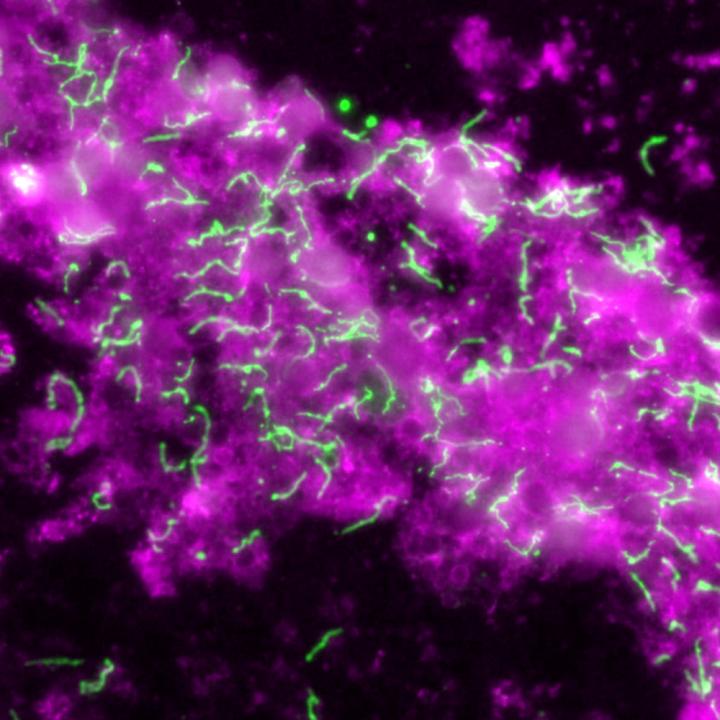
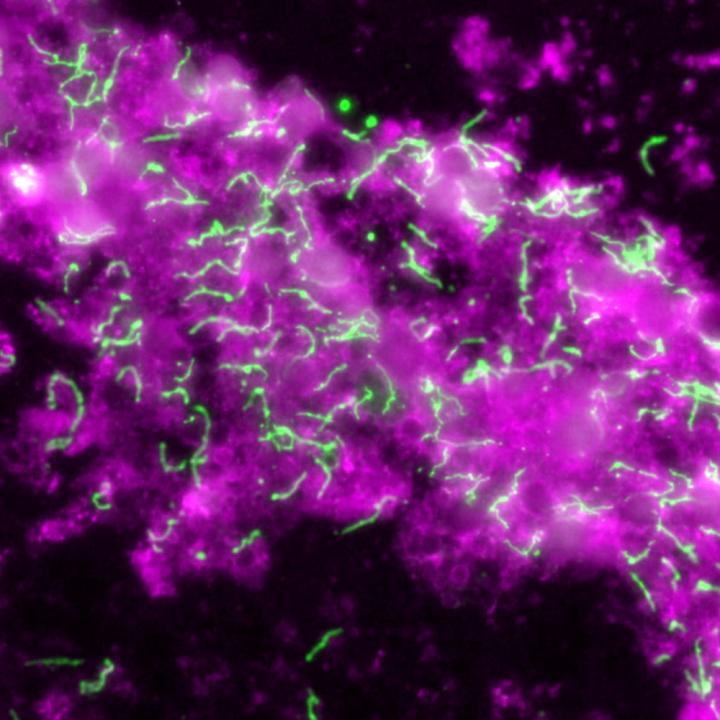
IMAGE

Credit: Micrograph by Dan Drecktrah.

MISSOULA – University of Montana researchers Dan Drecktrah and Scott Samuels were recently awarded $449,998 from the National Institutes of Health for the first year of a five-year project to study the bacterium that causes Lyme disease.

They will work in conjunction with Meghan Lybecker of the University of Colorado – Colorado Springs. Lybecker earned her Ph.D. from UM in 2007.

Together they will investigate the "Regulation of glycerol utilization in Borrelia burgdorferi." With an estimated 300,000 cases annually, Lyme disease is the most prevalent vector-borne illness in the United States. It results from infection with the spirochete Borrelia burgdorferi transmitted via the bite of a tick.

The objective of their work is to understand the regulatory mechanisms that allow B. burgdorferi to respond and adapt to varied carbon sources in tick-to-mammal transmission and in Lyme disease pathogenesis, which will lead to improved diagnostic, prevention and treatment strategies. The long-term objective is to alleviate the human disease.

Drecktrah also recently received nearly $260,000 in NIH funding for his project titled "Metabolic regulation during the two-host lifecycle of Borrelia." In this project, he will investigate a novel signaling pathway that regulates the interaction of B. burgdorferi with its tick vector. The long-term objective of this project is to understand the unique strategies and mechanisms B. burgdorferi uses to persist in the tick and transmit to mammals.

###

Media Contact

Sara Jestrab
[email protected]
406-243-6003

http://www.umt.edu

Original Source

http://news.umt.edu/2018/07/071018tick.php

Share12Tweet8Share2ShareShareShare2

Related Posts

Piceatannol Targets Radiation-Induced Senescence Markers in a Mouse Model

July 16, 2026

Network Analysis of Gastritis Symptoms in Elderly Patients, Repeated Over Time

July 16, 2026

Study Uncovers a Winter-Adjusted Biological Clock in Living Organisms

July 16, 2026

Black and Asian doctors face up to 30 times fewer specialty training posts

July 16, 2026
Please login to join discussion

POPULAR NEWS

  • New Drug Candidate Developed at McMaster Shows Potential for Treating Brain Cancer

    58 shares
    Share 23 Tweet 15
  • Scientists Overcome Antimicrobial Resistance in Bacteria Linked to Cystic Fibrosis

    42 shares
    Share 17 Tweet 11
  • Porcine Heart Transplant

    50 shares
    Share 20 Tweet 13
  • A varied menu

    51 shares
    Share 22 Tweet 12

About

We bring you the latest biotechnology news from best research centers and universities around the world. Check our website.

Follow us

Recent News

White Matter Microstructure and Brain Network Changes in Children With Global Developmental Delay

Piceatannol Targets Radiation-Induced Senescence Markers in a Mouse Model

Network Analysis of Gastritis Symptoms in Elderly Patients, Repeated Over Time

Subscribe to Blog via Email

Enter your email address to subscribe to this blog and receive notifications of new posts by email.

Join 85 other subscribers
  • Contact Us

Bioengineer.org © Copyright 2023 All Rights Reserved.

Welcome Back!

Login to your account below

Forgotten Password?

Retrieve your password

Please enter your username or email address to reset your password.

Log In
No Result
View All Result
  • Homepages
    • Home Page 1
    • Home Page 2
  • News
  • National
  • Business
  • Health
  • Lifestyle
  • Science

Bioengineer.org © Copyright 2023 All Rights Reserved.