

• HOME
  • NEWS
  • EXPLORE
    • CAREER
      • Companies
      • Jobs
    • EVENTS
    • iGEM
      • News
      • Team
    • PHOTOS
    • VIDEO
    • WIKI
  • BLOG
  • COMMUNITY
    • FACEBOOK
    • INSTAGRAM
    • TWITTER
Saturday, February 7, 2026
BIOENGINEER.ORG
No Result
View All Result
  • Login
  • HOME
  • NEWS
  • EXPLORE
    • CAREER
      • Companies
      • Jobs
        • Lecturer
        • PhD Studentship
        • Postdoc
        • Research Assistant
    • EVENTS
    • iGEM
      • News
      • Team
    • PHOTOS
    • VIDEO
    • WIKI
  • BLOG
  • COMMUNITY
    • FACEBOOK
    • INSTAGRAM
    • TWITTER
  • HOME
  • NEWS
  • EXPLORE
    • CAREER
      • Companies
      • Jobs
        • Lecturer
        • PhD Studentship
        • Postdoc
        • Research Assistant
    • EVENTS
    • iGEM
      • News
      • Team
    • PHOTOS
    • VIDEO
    • WIKI
  • BLOG
  • COMMUNITY
    • FACEBOOK
    • INSTAGRAM
    • TWITTER
No Result
View All Result
Bioengineer.org
No Result
View All Result
Home NEWS Science News Biology

Certain antibodies against a sugar are associated with malaria protection

Bioengineer by Bioengineer
July 9, 2018
in Biology
Reading Time: 2 mins read
0
Share on FacebookShare on TwitterShare on LinkedinShare on RedditShare on Telegram
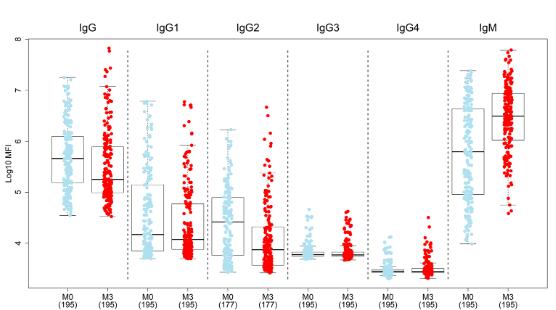
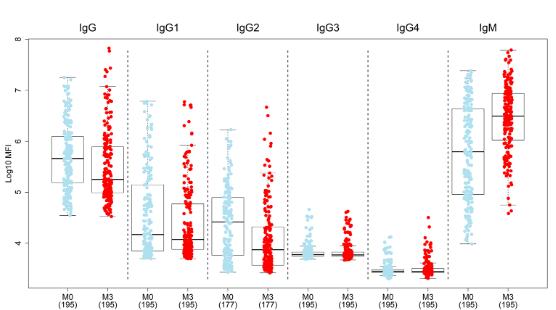
IMAGE

Credit: Adapted from Aguilar R et al. 2018

Certain type of antibodies against α-Gal- a carbohydrate expressed by many organisms including the malaria parasite- could protect against malaria, according to a new study led by ISGlobal, an institution supported by "la Caixa" Foundation. The results, published in Scientific Reports, indicate that a-Gal is an interesting candidate to include in future vaccines against malaria and other infectious diseases.

The magnitude and type of immune response against the malaria parasite is key in controlling the disease. To date, most studies have focused on the antibody response to parasite proteins. However, sugars (or glycans) expressed on the surface of the parasite could also trigger an immune response.

Alpha-gal is a particularly interesting glycan: it is expressed by practically all organisms on the evolutionary scale, from bacteria in out gut, to pathogenic bacteria such as Salmonella, protozoan parasites such as P. falciparum (that causes malaria) or mammals such as cows. Only humans, apes and old-world monkeys lack the enzyme to synthesize it and generate a strong immune response against it. Recent studies suggest that antibodies to α-Gal could protect against malaria.

In this study, the teams led by Luis Izquierdo and Carlota Dobaño, ISGlobal researchers, joined forces to assess the magnitude and type of antibody responses against α-Gal in infants and children from Mozambique (a low malaria transmission region) and Ghana (a high transmission region). They used a technique recently developed by Dobaño's group that allowed measuring for the first time different subclasses of antibodies against this and other parasite antigens in a single reaction and from one drop of blood.

"The relevance of this study is that it provides new information on a response (anti α-Gal) that plays a potential protective role against a variety of infectious diseases, not only malaria," explains Dobaño.

The results show that the levels of different α-Gal antibodies vary according to age and are higher in low malaria transmission zones. A significant increase in IgM ?-Gal antibodies was observed in the initial months of life, while IgG antibodies increased later in life. Importantly, an IgM response was associated with protection against clinical malaria, especially in the first months of life, while total IgG were associated with malaria risk.

"It would be really interesting to identify the specific α-Gal glycan expressed by the malaria parasite, and to confirm the potential association between certain IgG subclasses and protection," says Izquierdo. "In any case, these results confirm that α-Gal could be a promising molecule to include in future malaria vaccines," he adds.

###

Media Contact

Adelaida Sarukhan
[email protected]
0034-932-271-816

http://www.isglobal.org/en/

Original Source

https://www.isglobal.org/en/new/-/asset_publisher/JZ9fGljXnWpI/content/ciertos-anticuerpos-dirigidos-contra-un-azucar-estan-asociados-con-la-proteccion-frente-a-la-malari http://dx.doi.org/10.1038/s41598-018-28325-w
Share13Tweet8Share2ShareShareShare2

Related Posts

Florida Cane Toad: Complex Spread and Selective Evolution

Florida Cane Toad: Complex Spread and Selective Evolution

February 7, 2026
New Study Uncovers Mechanism Behind Burn Pit Particulate Matter–Induced Lung Inflammation

New Study Uncovers Mechanism Behind Burn Pit Particulate Matter–Induced Lung Inflammation

February 6, 2026

DeepBlastoid: Advancing Automated and Efficient Evaluation of Human Blastoids with Deep Learning

February 6, 2026

Navigating the Gut: The Role of Formic Acid in the Microbiome

February 6, 2026
Please login to join discussion

POPULAR NEWS

  • Robotic Ureteral Reconstruction: A Novel Approach

    Robotic Ureteral Reconstruction: A Novel Approach

    82 shares
    Share 33 Tweet 21
  • Digital Privacy: Health Data Control in Incarceration

    63 shares
    Share 25 Tweet 16
  • Study Reveals Lipid Accumulation in ME/CFS Cells

    57 shares
    Share 23 Tweet 14
  • Breakthrough in RNA Research Accelerates Medical Innovations Timeline

    53 shares
    Share 21 Tweet 13

About

We bring you the latest biotechnology news from best research centers and universities around the world. Check our website.

Follow us

Recent News

Phage-Antibiotic Combo Beats Resistant Peritoneal Infection

Boosting Remote Healthcare: Stepped-Wedge Trial Insights

Barriers and Boosters of Seniors’ Physical Activity in Karachi

Subscribe to Blog via Email

Enter your email address to subscribe to this blog and receive notifications of new posts by email.

Join 73 other subscribers
  • Contact Us

Bioengineer.org © Copyright 2023 All Rights Reserved.

Welcome Back!

Login to your account below

Forgotten Password?

Retrieve your password

Please enter your username or email address to reset your password.

Log In
No Result
View All Result
  • Homepages
    • Home Page 1
    • Home Page 2
  • News
  • National
  • Business
  • Health
  • Lifestyle
  • Science

Bioengineer.org © Copyright 2023 All Rights Reserved.