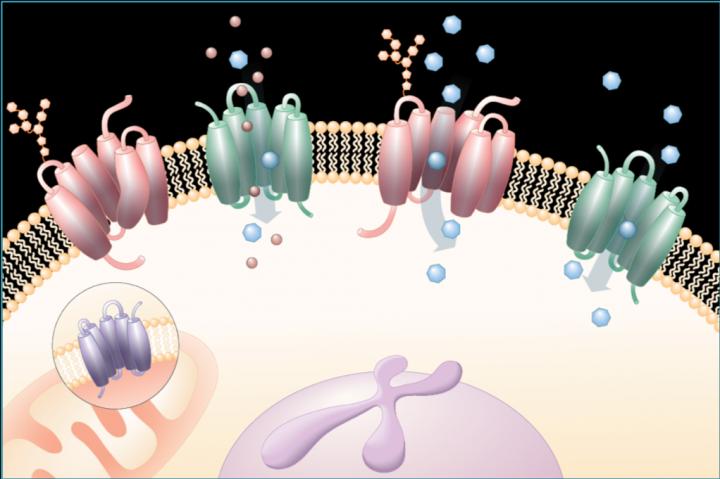
Credit: Resolute Consortium / Bojan Vilageos
By combining an inclusive, open-access ethos to the techniques and results of the research with the highest-possible quality of research output, RESOLUTE expects to accelerate research in the field of SLCs to the global benefit of both basic academic research and applied research in small biotech and pharmaceutical companies.
The RESOLUTE consortium successfully applied for an IMI grant within the H2020 Programme of the European Union. The project costs will be covered by a €12 million grant under the auspices of the IMI joint undertaking and in-kind contributions from industry partners totalling €11.85 million.
The RESOLUTE consortium includes universities, research institutes, SMEs and European Federation of Pharmaceutical Industries and Associations (EFPIA) members. Project coordination is shared between academia and industry. Giulio Superti-Furga from CeMM Research Center for Molecular Medicine of the Austrian Academy of Sciences is the academic coordinator and Claire Steppan, Ph.D., a scientist from Pfizer Inc. is the EFPIA project lead. Other partner organisations within the consortium are The University of Oxford, The University of Manchester, AXXAM Spa, The Leiden University, The Max Planck Gesellschaft zur Förderung der Wissenschaften eV, The University of Vienna, Novartis Pharma AG, Boehringer Ingelheim International GmbH, VIFOR Pharma Group, Sanofi-Aventis Recherche &Developpement (SARD), and Bayer AG.
"RESOLUTE was formed to accelerate the pace of research of the solute carrier class of protein transporters," said Giulio Superti-Furga, RESOLUTE academic project coordinator. "The research output and techniques will be available openly and pre-competitively to the scientific community. This will lead to a considerable gain in knowledge, and is expected to have a large impact on medicine and drug discovery and also on our general understanding of the interface between biological systems and the environment."
Claire Steppan, of Pfizer, said, "The approximately 400 members of the different SLC families represent a largely untapped source of new potential drug targets, and merit the efficiency of scale that can be achieved through systematic and coordinated research efforts. We are looking forward to a fruitful collaboration among all consortium members and within the larger scientific community."
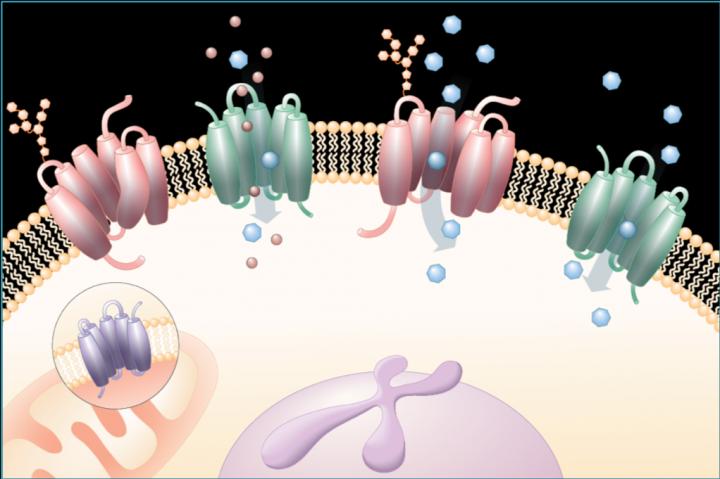
SLC membrane transport proteins control essential physiological functions, including nutrient uptake, ion transport and waste removal. SLCs can be seen as gatekeepers and include over 400 membrane proteins arranged into 65 families based on sequence similarity. SLCs are the second-largest group of membrane proteins in the human genome. They can use ion gradients to drive uphill transports, work as exchangers or facilitate passive diffusion of specific molecules. SLCs are vital for maintaining homeostasis in the body and in individual cells, and genetic polymorphisms in SLCs are associated with several diseases, such as amyotrophic lateral sclerosis (ALS), Alzheimer's disease, and schizophrenia. Furthermore, SLCs can function as drug targets, as well as constitute paths for drug absorption into specific organs.
The IMI is a partnership between the European Union and the European pharmaceutical industry. Since 2008, IMI has facilitated open collaboration in research to advance the development of, and accelerate patient access to, personalised medicines for the health and wellbeing of all, especially in areas of unmet medical need. https://www.imi.europa.eu/
###
For more information visit: https://re-solute.eu/
The RESOLUTE project has received funding from the Innovative Medicines Initiative 2 Joint Undertaking under grant agreement No 777372. This Joint Undertaking receives support from the European Union's Horizon 2020 research and innovation programme and EFPIA.
This communication reflects only the authors' views and neither IMI nor the European Union and EFPIA are responsible for any use that may be made of the information contained therein.
Media Contact
Daniel Lackner
[email protected]
@CeMM_News
http://www.cemm.oeaw.ac.at
Original Source
https://cemm.at/fileadmin/img/News/RESOLUTE_Press_Release_English.pdf