

• HOME
  • NEWS
  • EXPLORE
    • CAREER
      • Companies
      • Jobs
    • EVENTS
    • iGEM
      • News
      • Team
    • PHOTOS
    • VIDEO
    • WIKI
  • BLOG
  • COMMUNITY
    • FACEBOOK
    • INSTAGRAM
    • TWITTER
Saturday, February 7, 2026
BIOENGINEER.ORG
No Result
View All Result
  • Login
  • HOME
  • NEWS
  • EXPLORE
    • CAREER
      • Companies
      • Jobs
        • Lecturer
        • PhD Studentship
        • Postdoc
        • Research Assistant
    • EVENTS
    • iGEM
      • News
      • Team
    • PHOTOS
    • VIDEO
    • WIKI
  • BLOG
  • COMMUNITY
    • FACEBOOK
    • INSTAGRAM
    • TWITTER
  • HOME
  • NEWS
  • EXPLORE
    • CAREER
      • Companies
      • Jobs
        • Lecturer
        • PhD Studentship
        • Postdoc
        • Research Assistant
    • EVENTS
    • iGEM
      • News
      • Team
    • PHOTOS
    • VIDEO
    • WIKI
  • BLOG
  • COMMUNITY
    • FACEBOOK
    • INSTAGRAM
    • TWITTER
No Result
View All Result
Bioengineer.org
No Result
View All Result
Home NEWS Science News Biology

Anemones take the heat with a little help from their friends

Bioengineer by Bioengineer
July 2, 2018
in Biology
Reading Time: 2 mins read
0
Share on FacebookShare on TwitterShare on LinkedinShare on RedditShare on Telegram
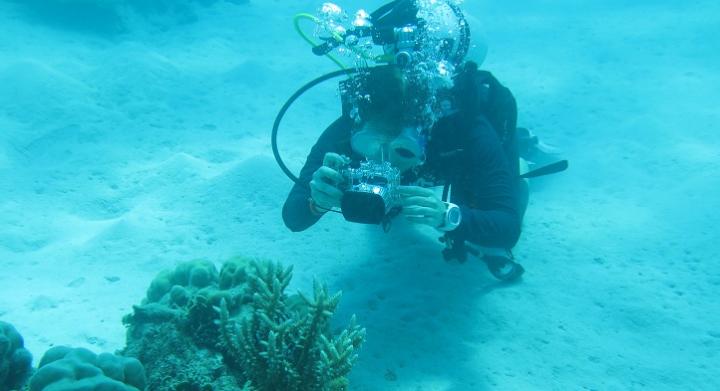
IMAGE

Credit: © 2018 KAUST

A core set of heat-stress-response genes has been identified in anemones in a study that also highlights the role of symbiotic algae in coping with temperature, an important revelation for planning conservation efforts.

Researchers from KAUST's Red Sea Research Center profiled gene transcripts and proteins expressed by sea anemones–three strains of the model organism Aiptasia pallida–from locations that experience different temperatures throughout the year: North Carolina, Hawaii and the Red Sea.

The research team found significant differences between a strain's transcriptome and proteome at the baseline temperature and even more pronounced differences in their heat-stress response. This is in line with recent findings that transcript and protein profiles don't always match, highlighting the need to study both responses.

The team identified a core set of 170 responsive genes in all three strains, many of which were related to coping with oxidative stress. As expected, anemones from the Red Sea had the best heat tolerance and also expressed more oxidative stress genes. However, by comparing different strains at the same temperature rather than the effect of different temperatures on a single strain, the researchers discovered that strongest expression of oxidative stress genes was in the North Carolina strain. "This was a big surprise because it showed us that the Red Sea strain itself didn't actually have the best capacity to respond to oxidative stress," says Maha Cziesielski, the study's lead author.

Until now, molecular studies have focused only on the anemones. When the team tested the symbiotic algae that live in the anemones, they found that the symbionts drove the response patterns seen in the hosts. The Red Sea symbiont produced the least reactive oxygen, which causes oxidative stress. "So even if all three strains had the same antioxidant capacity, the Red Sea strain would probably cope best, simply because overall it would have less exposure thanks to the symbiont," says Cziesielski.

"Transcriptomic data can give us really great insight into important changes in regulatory mechanisms," says Cziesielski, "but we need to validate these at the physiological level because that's what really tells us about the organism's capacity to respond."

While these findings may help guide conservation of anemones and corals, the importance of the symbiont may present a challenge. The host-symbiont relationship has been fine-tuned through evolution, and though corals can switch symbionts, "you can't just take a symbiont of your liking, expose the coral to it and expect it to pick it up," says Czielsielski.

###

Media Contact

Carolyn Unck
[email protected]
966-128-087-131

http://kaust.edu.sa/

Original Source

https://discovery.kaust.edu.sa/en/article/537/anemones%250atake-the-heat-with-a-little-help-from-their-friends http://dx.doi.org/10.1098/rspb.2017.2654


Share13Tweet8Share2ShareShareShare2

Related Posts

Florida Cane Toad: Complex Spread and Selective Evolution

Florida Cane Toad: Complex Spread and Selective Evolution

February 7, 2026
New Study Uncovers Mechanism Behind Burn Pit Particulate Matter–Induced Lung Inflammation

New Study Uncovers Mechanism Behind Burn Pit Particulate Matter–Induced Lung Inflammation

February 6, 2026

DeepBlastoid: Advancing Automated and Efficient Evaluation of Human Blastoids with Deep Learning

February 6, 2026

Navigating the Gut: The Role of Formic Acid in the Microbiome

February 6, 2026
Please login to join discussion

POPULAR NEWS

  • Robotic Ureteral Reconstruction: A Novel Approach

    Robotic Ureteral Reconstruction: A Novel Approach

    82 shares
    Share 33 Tweet 21
  • Digital Privacy: Health Data Control in Incarceration

    63 shares
    Share 25 Tweet 16
  • Study Reveals Lipid Accumulation in ME/CFS Cells

    57 shares
    Share 23 Tweet 14
  • Breakthrough in RNA Research Accelerates Medical Innovations Timeline

    53 shares
    Share 21 Tweet 13

About

We bring you the latest biotechnology news from best research centers and universities around the world. Check our website.

Follow us

Recent News

Evaluating Pediatric Emergency Care Quality in Ethiopia

TPMT Expression Predictions Linked to Azathioprine Side Effects

Improving Dementia Care with Enhanced Activity Kits

Subscribe to Blog via Email

Success! An email was just sent to confirm your subscription. Please find the email now and click 'Confirm' to start subscribing.

Join 73 other subscribers
  • Contact Us

Bioengineer.org © Copyright 2023 All Rights Reserved.

Welcome Back!

Login to your account below

Forgotten Password?

Retrieve your password

Please enter your username or email address to reset your password.

Log In
No Result
View All Result
  • Homepages
    • Home Page 1
    • Home Page 2
  • News
  • National
  • Business
  • Health
  • Lifestyle
  • Science

Bioengineer.org © Copyright 2023 All Rights Reserved.