

• HOME
  • NEWS
  • EXPLORE
    • CAREER
      • Companies
      • Jobs
    • EVENTS
    • iGEM
      • News
      • Team
    • PHOTOS
    • VIDEO
    • WIKI
  • BLOG
  • COMMUNITY
    • FACEBOOK
    • INSTAGRAM
    • TWITTER
Saturday, February 7, 2026
BIOENGINEER.ORG
No Result
View All Result
  • Login
  • HOME
  • NEWS
  • EXPLORE
    • CAREER
      • Companies
      • Jobs
        • Lecturer
        • PhD Studentship
        • Postdoc
        • Research Assistant
    • EVENTS
    • iGEM
      • News
      • Team
    • PHOTOS
    • VIDEO
    • WIKI
  • BLOG
  • COMMUNITY
    • FACEBOOK
    • INSTAGRAM
    • TWITTER
  • HOME
  • NEWS
  • EXPLORE
    • CAREER
      • Companies
      • Jobs
        • Lecturer
        • PhD Studentship
        • Postdoc
        • Research Assistant
    • EVENTS
    • iGEM
      • News
      • Team
    • PHOTOS
    • VIDEO
    • WIKI
  • BLOG
  • COMMUNITY
    • FACEBOOK
    • INSTAGRAM
    • TWITTER
No Result
View All Result
Bioengineer.org
No Result
View All Result
Home NEWS Science News Biology

Citizen science — A powerful tool to combat invasive giant slugs

Bioengineer by Bioengineer
June 12, 2018
in Biology
Reading Time: 2 mins read
0
Share on FacebookShare on TwitterShare on LinkedinShare on RedditShare on Telegram
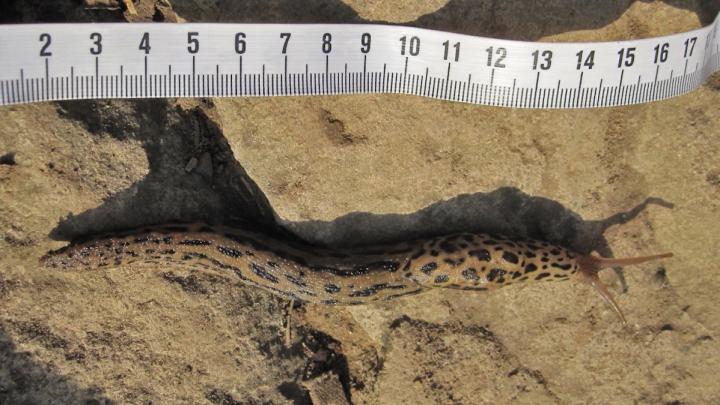
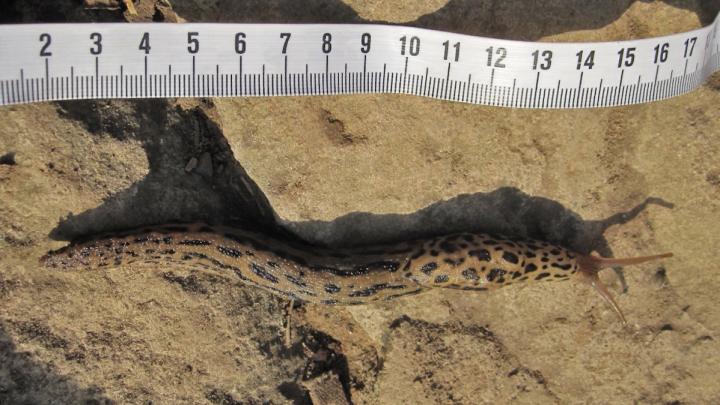
IMAGE

Credit: Photo taken by Sanae Watanabe

With the help of citizen science, researchers have unraveled the close correlation between weather conditions and the appearances of a giant slug species, enabling them to predict the slug's activity on the following day.

The giant slug Limax maximus, an invasive species which made its way from northern Europe to Japan and other regions worldwide, is notorious for the harm it can cause to horticultural and agricultural crops. A research team led by Yuta Morii of Hokkaido University previously reported the spread of the species and its potential native predator in Japan.

In the current study published in Science of the Total Environment, Morii and his collaborators found that a certain set of weather conditions could be a reliable short-term indicator of how often giant slugs would appear on a set mountain path. The findings showed that the slugs were more likely to appear on days with higher humidity and lower windspeed and precipitation than the 20-year average. Furthermore, following days which recorded higher than average humidity and precipitation and lower than average windspeed and atmospheric pressure, the number of slug appearances tended to increase. They used the findings to make predications regarding future slug sightings.

This study was made possible by citizen science. In order to survey the number of slugs present on the path, volunteer naturalist Sanae Watanabe hiked the Mt. Maruyama route, in Sapporo, Japan, at 5:00 AM nearly every day for two years. At the same time, researchers were feeding weather data obtained from a Sapporo City meteorological station located 2 kilometers from Mt. Maruyama into a computer. They then conducted statistical analyses using a recently developed method known as Bayesian regularization, which elucidated the correlation between slug appearances and complex weather conditions.

"Citizen science is a powerful tool to combat the challenges created by invasive species. Our study emphasizes the importance of collaborations between researchers, government administration, and citizen volunteers. We hope that our prediction method can be used in the future to develop targeted eradication policies against slugs." said Yuta Morii.

###

Media Contact

Naoki Namba
81-117-062-185
@hokkaido_uni

https://www.global.hokudai.ac.jp/

Original Source

https://www.global.hokudai.ac.jp/blog/citizen-science-a-powerful-tool-to-combat-invasive-giant-slugs/ http://dx.doi.org/10.1016/j.scitotenv.2018.04.403


Share12Tweet8Share2ShareShareShare2

Related Posts

Florida Cane Toad: Complex Spread and Selective Evolution

Florida Cane Toad: Complex Spread and Selective Evolution

February 7, 2026
New Study Uncovers Mechanism Behind Burn Pit Particulate Matter–Induced Lung Inflammation

New Study Uncovers Mechanism Behind Burn Pit Particulate Matter–Induced Lung Inflammation

February 6, 2026

DeepBlastoid: Advancing Automated and Efficient Evaluation of Human Blastoids with Deep Learning

February 6, 2026

Navigating the Gut: The Role of Formic Acid in the Microbiome

February 6, 2026
Please login to join discussion

POPULAR NEWS

  • Robotic Ureteral Reconstruction: A Novel Approach

    Robotic Ureteral Reconstruction: A Novel Approach

    82 shares
    Share 33 Tweet 21
  • Digital Privacy: Health Data Control in Incarceration

    63 shares
    Share 25 Tweet 16
  • Study Reveals Lipid Accumulation in ME/CFS Cells

    57 shares
    Share 23 Tweet 14
  • Breakthrough in RNA Research Accelerates Medical Innovations Timeline

    53 shares
    Share 21 Tweet 13

About

We bring you the latest biotechnology news from best research centers and universities around the world. Check our website.

Follow us

Recent News

Evaluating Pediatric Emergency Care Quality in Ethiopia

TPMT Expression Predictions Linked to Azathioprine Side Effects

Improving Dementia Care with Enhanced Activity Kits

Subscribe to Blog via Email

Success! An email was just sent to confirm your subscription. Please find the email now and click 'Confirm' to start subscribing.

Join 73 other subscribers
  • Contact Us

Bioengineer.org © Copyright 2023 All Rights Reserved.

Welcome Back!

Login to your account below

Forgotten Password?

Retrieve your password

Please enter your username or email address to reset your password.

Log In
No Result
View All Result
  • Homepages
    • Home Page 1
    • Home Page 2
  • News
  • National
  • Business
  • Health
  • Lifestyle
  • Science

Bioengineer.org © Copyright 2023 All Rights Reserved.