Credit: The Walter and Eliza Hall Institute
The findings revealed that a special group of genes that function within the body's normal DNA repair process were vital to the effectiveness of p53. This new information could help doctors to better identify patients with an increased risk of developing certain cancers. It could also help to develop safer, more effective treatments for patients.
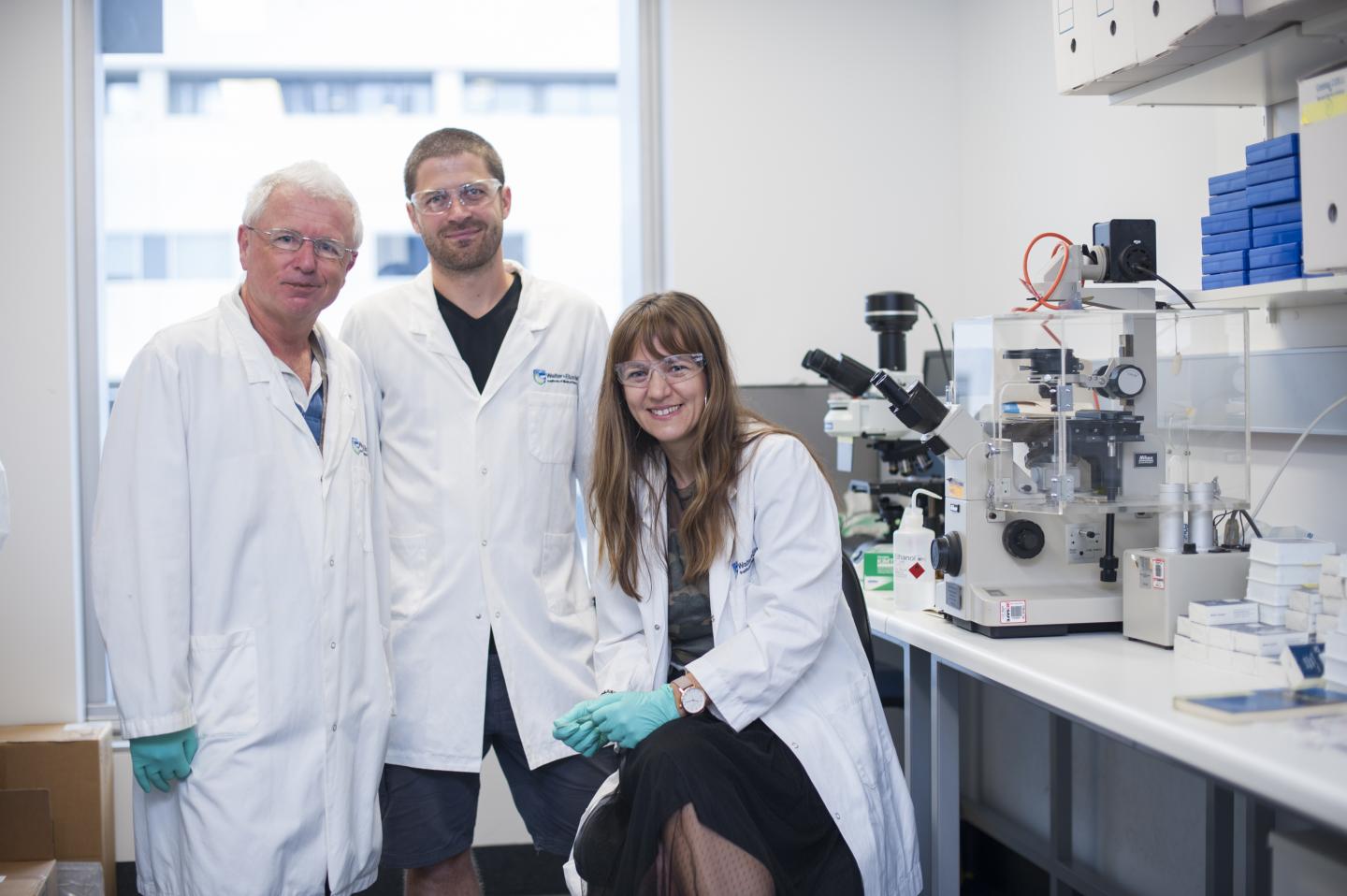
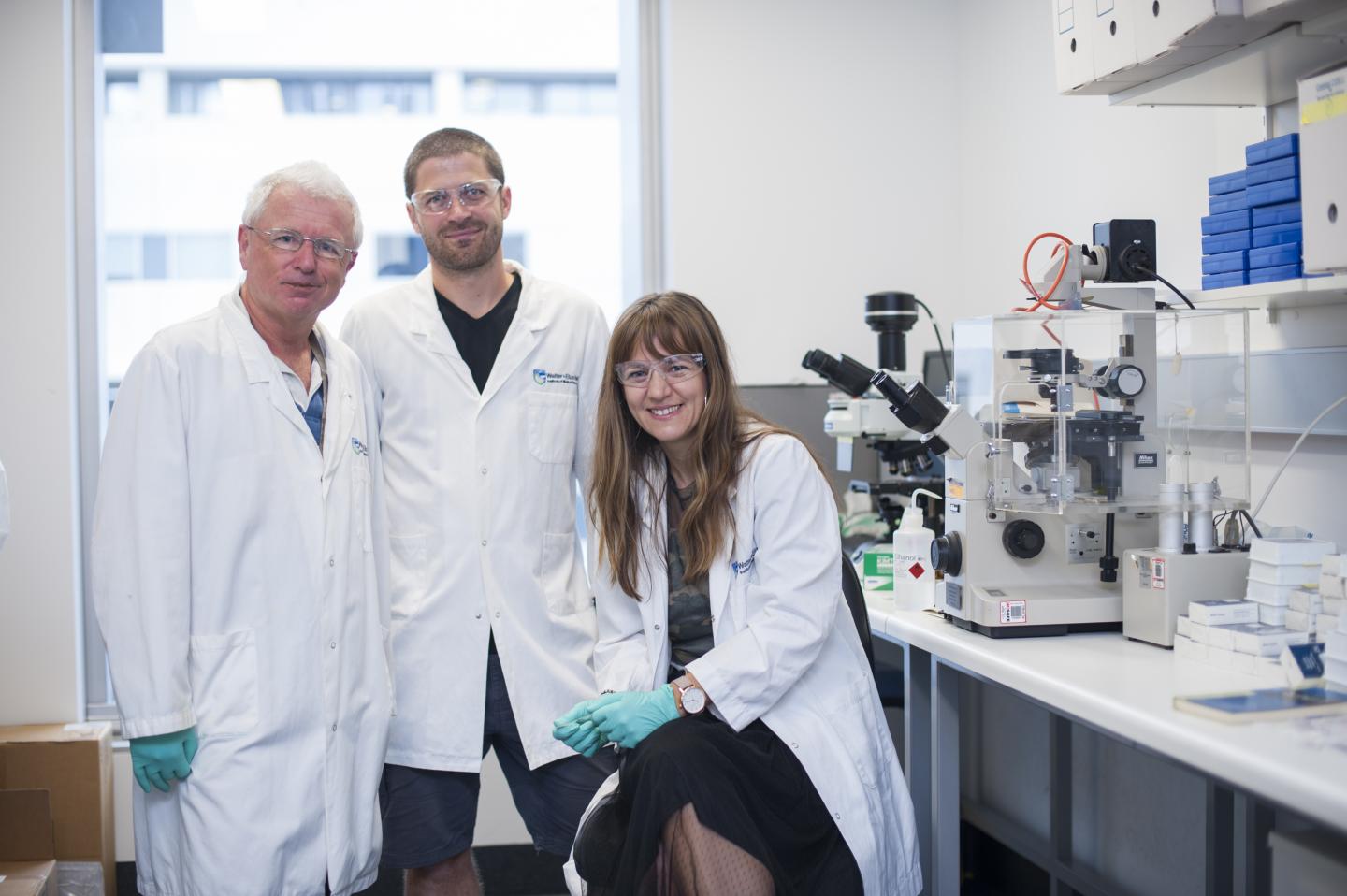
Dr Ana Janic, Associate Professor Marco Herold and Professor Andreas Strasser from the Walter and Eliza Hall Institute led the study, published today in Nature Medicine.
Dr Janic said it was the first time a study had explained how p53 was able to prevent cancer growth.
"In an exciting and unprecedented finding, we discovered that the DNA repair gene MLH1and additional DNA repair genes, are critical to p53's ability to prevent the development of B-cell lymphomas," Dr Janic said.
Dr Janic said revealing MLH1 as a powerful weapon for p53 in the fight against cancer could help doctors diagnose patients earlier and prescribe safer, more targeted treatments for their cancer.
"For instance, if a patient has lymphoma with a mutation that disables the DNA repair mechanism, doctors will now know to avoid certain DNA-damaging treatments, such as chemotherapy, that may only make the cancer more aggressive.
"Now that we understand the significance of MLH1 and other DNA repair factors, we can begin to find ways of identifying the vulnerabilities that their loss may impose on cancer cells with the aim of exploiting these for therapeutic benefit," Dr Janic said.
Dr Herold said the findings demonstrated the importance of conducting detailed functional analyses. "We screened more than 300 downstream targets of p53 in order to identify which genes were important to p53's tumour-suppressing function.
"It was amazing to find that the loss of the DNA repair gene MLH1 prevented p53 from functioning properly, causing the development of lymphoma. And when MLH1 was put back into the equation, tumour development was significantly stalled.
"This led us to explore other DNA repair genes and it has become clear just how important the whole DNA repair mechanism is to p53's ability to prevent cancer development," Dr Herold said.
Professor Strasser said understanding how p53 worked was a 'holy grail' for cancer researchers.
"Half of all cancers in the world occur as a result of p53 not functioning as it should. Researchers have long been aware of the significance of p53, but despite many studies, no one has been able to explain how the protein is able to block cancer development until now.
"We are planning to continue our studies into the genes that are regulated by p53, digging deeper into understanding other potential processes that might impact its function," Professor Strasser said.
Dr Janic said the next steps were to see if the DNA repair process had the same cancer-blocking impact on cancers other than lymphoma, such as pancreatic and colon cancers.
"p53 is mutated in close to 70 percent of colon and pancreatic cancers, so this discovery could have a significant impact on understanding these diseases. We are therefore keen to test whether genes involved in the DNA repair process might also play a role in helping p53 prevent the development of these cancers," she said.
###
This work was supported by the Australian National Health and Medical Research Council, Cancer Council Victoria, Australian Phenomics Network, Cancer Australia, the Leukemia & Lymphoma Society of America, Marie Curie Actions and Beatriu de Pinos, and the Lady Tata Memorial Trust.
Media Contact
Media team
[email protected]
047-575-1811
@WEHI_research