Credit: Author: Pavel Seredin
A team of researchers form Russia discovered that an increase in the concentration of several substances in oral fluid can serve as the indication of caries development. Using this data they found a way to prevent the disease in its early stages. The study was supported by a grant from the Russian Science Foundation (RSF). The results of the study were published in the EPMA Journal.
Caries is the destruction of hard tooth tissues due to the activity of several bacteria species. These bacteria feed on various carbohydrates and as a result of their vital activity release an acid that corrodes tooth tissues. Caries can form over several months or years, depending on the nutrition and hygiene of the teeth. This is the most common disease: it occurs in 95% of population. Caries often leads to the development of more serious complications, such as periodontitis and pulpitis.
Scientists from Voronezh State University (VSU) studied the changes in the molecular composition of saliva in people with multiple caries and developed a technique for restoring tooth enamel with artificially created biomimetic materials. Biomimetic materials are created to mimic certain natural materials or their properties. For example, the fruit of burdock became a natural prototype for velcro, a material commonly used now to fasten clothes.
Initially, the researchers found that the saliva of people with caries has lower content of mineral substances and inorganic compounds, while the proportion of the organic components, such as esters, fats and carbohydrates, increases. In addition, the researchers showed that the saliva of people suffering from multiple caries contains twice as much thiocyanates than normal. These substances are released by the human body in response to the emergence of a carious process.
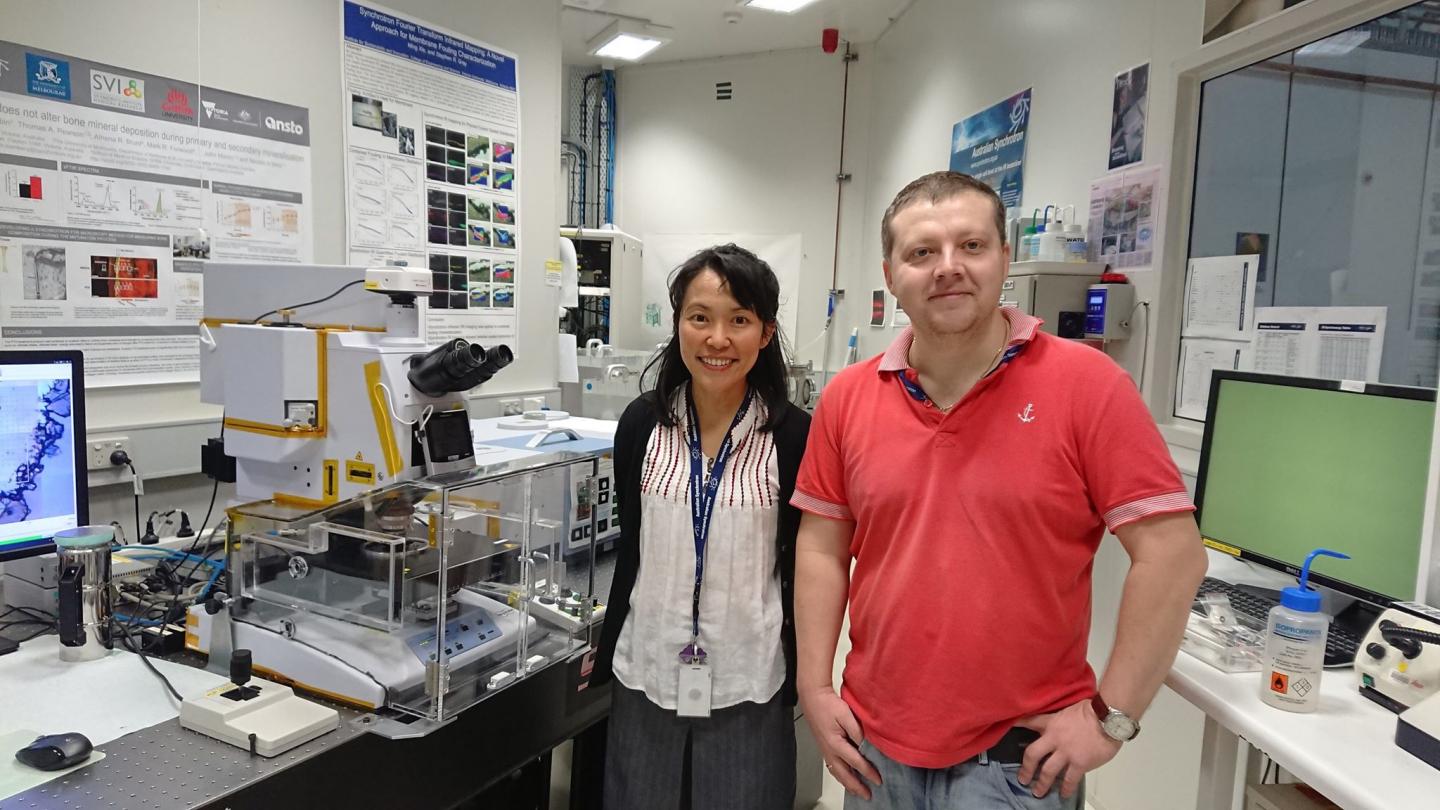
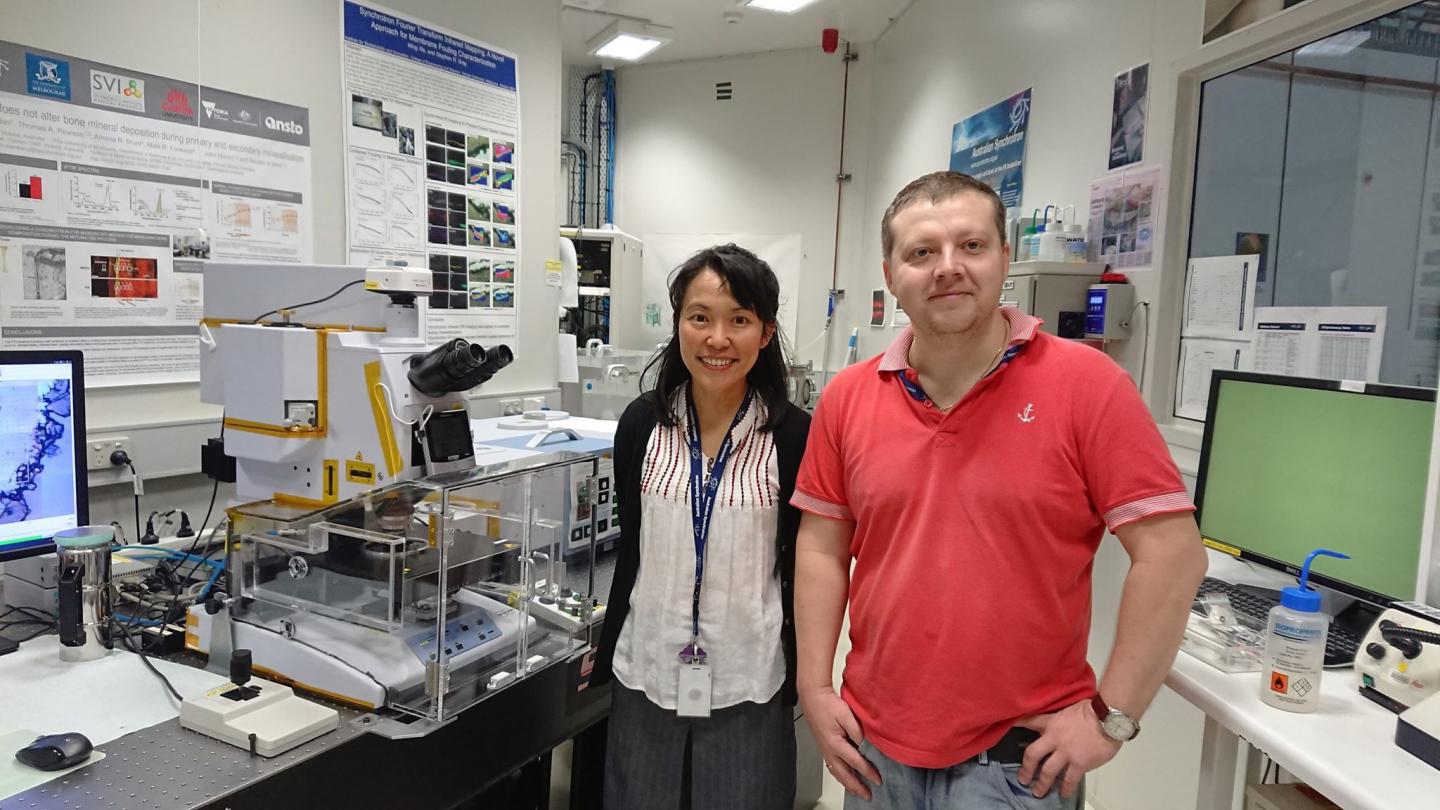
For the saliva analysis scientists used the method of infrared spectromicroscopy with the source of synchrotron radiation. This method may be used to accurately determine qualitative and quantitative composition of a sample. Another advantage of infrared spectromicroscopy is its relative simplicity and the opportunity to analyze mixtures of substances.
After conducting initial analysis, the scientists studied the formation of inorganic solids in the tooth tissues. The obtained data became the basis for development of therapeutic and prophylactic agents that could normalize metabolic processes and prevent caries development. Also, the researchers analyzed the human tooth enamel composition in all stages of the carious process. They found out that in the early stages, the enamel of the tooth is destroyed under the action of the acid secreted by bacteria. This leads to the formation of an acidic calcium salt and orthophosphoric acid. Using this data scientists created a biomaterial identical to healthy tooth enamel.
"Owing to the support of the Russian Science Foundation can use our results to formulate a series of practical recommendations and algorithms for practicing dentists. They will be able to use these recommendations for treatment and prevention of caries in the early stages avoiding such procedures as tooth drilling," says Pavel Seredin, senior researcher at the Department of Solid State Physics and Nanostructures of Voronezh State University.
This method of diagnostics created by the scientists will be used to reveal caries in the early stages. The carious process is now reversible and the damaged tooth can be restored with the help of the treatment-prophylactic methods and a new biomaterial developed by the researchers.
###
The study was carried out in collaboration with scientists from Voronezh State Medical University and Central Research Institute of Dentistry and Maxillofacial Surgery.
Media Contact
Julia Shuliak
[email protected]
http://www.akson.science
Related Journal Article
http://dx.doi.org/10.1007/s13167-018-0135-9