Credit: Steve Morton
Every cell in our bodies is shaped by its outer coating, or biomembrane. This incredible, naturally created nanostructure wraps the cell in a supportive and protective blanket, allowing the cell to carry out its normal function while also defending it against attack.
The inward and outward orchestration of cell life and death is made possible by the biomembrane's firm but malleable structure. However, this ability to ebb and flow with everything around it is what makes the nanostructure very difficult to observe.
Until recently, researchers have been unable to see the whole picture when trying to understand what is going wrong on the surface of a biomembrane affected by disease. Now, new technology has opened up a new area of research that makes it possible to study how the biomembrane functions, including how it responds when a disease molecule attacks.
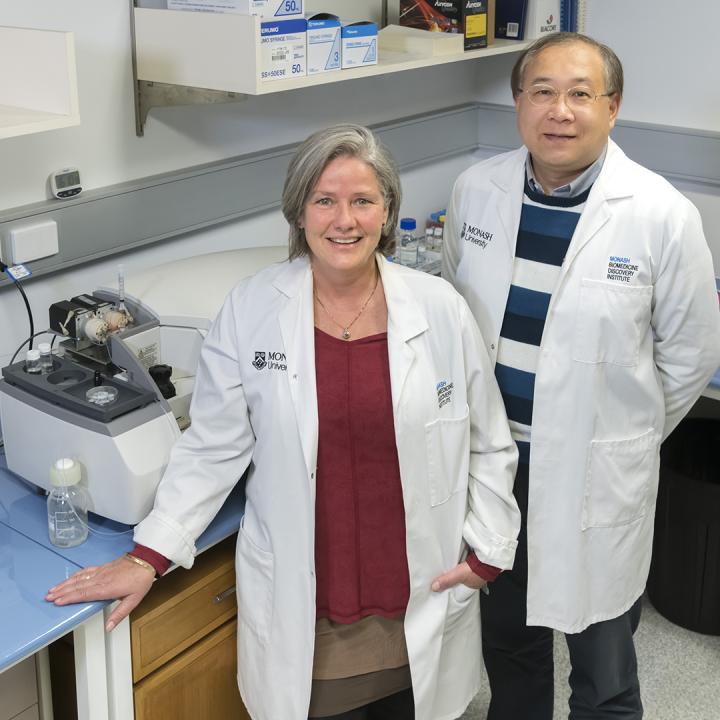
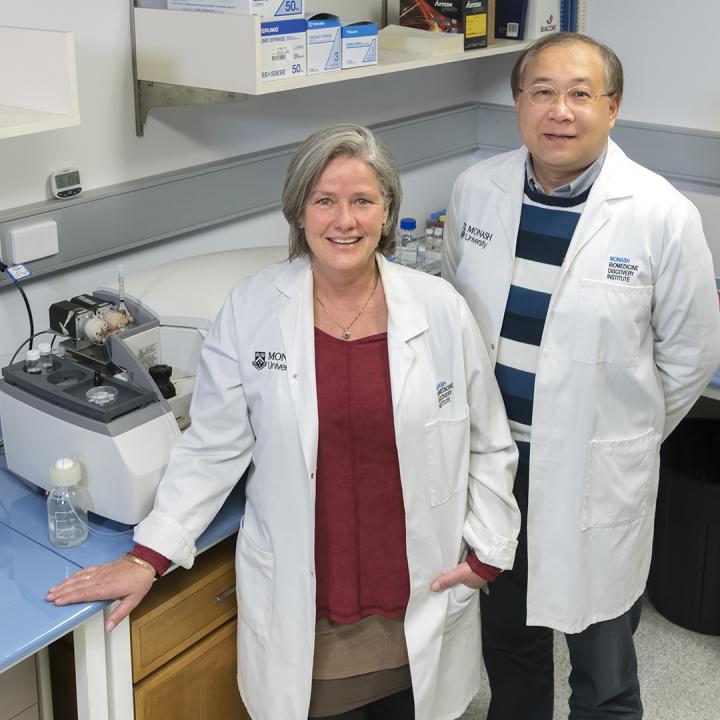
Monash Biomedicine Discovery Institute's Professor Mibel Aguilar leads a group that has pioneered the application of newly-developed biosensors, which can be used to study how the biomembrane responds to the binding of biomolecules. This technology makes it possible to study molecules whose effects are known to be linked to the interaction with a cell membrane, such as hormones and antibacterial agents.
"We can then design new molecules that help biomembranes resist disease molecule attacks or avoid unwanted side effects of a drug," Professor Aguilar said.
"We can also design other molecules that can enter and even destroy the biomembrane, such as agents that could preferentially kill invading organisms. This could be a useful way to design novel anti-infective drugs by selectively targeting unwanted invading cells," she said.
In a paper published today in Chemical Reviews, Professor Aguilar and her team provide the first authoritative review of the field of membrane-based optical biosensors and chart the development of biosensor technologies. The review also highlights the capabilities of these new biosensors, including the ability to measure how strongly and how rapidly something – like a disease – can bind to the biomembrane, and more importantly, the ability to allow researchers to observe how the biomembrane reacts when molecules bind to it and try to penetrate the cell.
"This review highlights the impressive capabilities of biosensor technology," Professor Aguilar said.
"This technology will have significant impact on our ability to design more effective approaches to the treatment of diseases associated with membranes interactions, including cancer, cardiovascular disease and bacterial resistance," she said.
###
Read the full review in Chemical Reviews titled Exploring Molecular-Biomembrane Interactions with Surface Plasmon Resonance and Dual Polarization Interferometry Technology: Expanding the Spotlight onto Biomembrane Structure.
DOI: 10.1021/asc.chemrev.7b00729
About the Monash Biomedicine Discovery Institute
Committed to making the discoveries that will relieve the future burden of disease, the newly established Monash Biomedicine Discovery Institute at Monash University brings together more than 120 internationally-renowned research teams. Our researchers are supported by world-class technology and infrastructure, and partner with industry, clinicians and researchers internationally to enhance lives through discovery.
Media enquiries:
Grace Williams
Monash Biomedicine Discovery Institute
(+613) 9905 9597
[email protected]
Media Contact
Grace Williams
[email protected]
61-399-059-597
@MonashUni
http://www.monash.edu.au
Related Journal Article
http://dx.doi.org/10.1021/asc.chemrev.7b00729