
• HOME
  • NEWS
  • EXPLORE
    • CAREER
      • Companies
      • Jobs
    • EVENTS
    • iGEM
      • News
      • Team
    • PHOTOS
    • VIDEO
    • WIKI
  • BLOG
  • COMMUNITY
    • FACEBOOK
    • INSTAGRAM
    • TWITTER
Wednesday, April 1, 2026
BIOENGINEER.ORG
No Result
View All Result
  • Login
  • HOME
  • NEWS
  • EXPLORE
    • CAREER
      • Companies
      • Jobs
        • Lecturer
        • PhD Studentship
        • Postdoc
        • Research Assistant
    • EVENTS
    • iGEM
      • News
      • Team
    • PHOTOS
    • VIDEO
    • WIKI
  • BLOG
  • COMMUNITY
    • FACEBOOK
    • INSTAGRAM
    • TWITTER
  • HOME
  • NEWS
  • EXPLORE
    • CAREER
      • Companies
      • Jobs
        • Lecturer
        • PhD Studentship
        • Postdoc
        • Research Assistant
    • EVENTS
    • iGEM
      • News
      • Team
    • PHOTOS
    • VIDEO
    • WIKI
  • BLOG
  • COMMUNITY
    • FACEBOOK
    • INSTAGRAM
    • TWITTER
No Result
View All Result
Bioengineer.org
No Result
View All Result
Home NEWS Science News Health

University of Guelph study uncovers cause of pesticide exposure, Parkinson’s link

Bioengineer by Bioengineer
May 23, 2018
in Health
Reading Time: 2 mins read
0
Share on FacebookShare on TwitterShare on LinkedinShare on RedditShare on Telegram
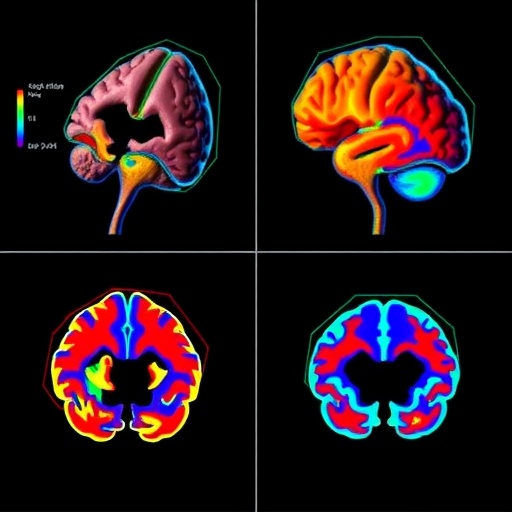
IMAGE

Credit: University of Guelph

A new University of Guelph study has discovered why exposure to pesticides increases some people's risk of developing Parkinson's disease.

Previous studies have found an association between two commonly used agrochemicals (paraquat and maneb) and Parkinson's disease.

Now U of G professor Scott Ryan has determined that low-level exposure to the pesticides disrupts cells in a way that mimics the effects of mutations known to cause Parkinson's disease.

Adding the effects of the chemicals to a predisposition for Parkinson's disease drastically increases the risk of disease onset, said Ryan.

"People exposed to these chemicals are at about a 250-percent higher risk of developing Parkinson's disease than the rest of the population," said Ryan, a professor in the Department of Molecular and Cellular Biology.

"We wanted to investigate what is happening in this susceptible population that results in some people developing the disease."

Used on a variety of Canadian crops, paraquat is used on crops as they grow and maneb prevents post-harvest spoiling.

Published in the journal Federation of American Societies for Experimental Biology, this study used stem cells from people with Parkinson's disease that had a mutation in a gene called synuclein that is highly associated with increased risk of Parkinson's Disease, as well as normal embryonic stem cells in which, the risk associated mutation was introduced by gene editing.

"Until now, the link between pesticides and Parkinson's disease was based primarily on animal studies as well as epidemiological research that demonstrated an increased risk among farmers and others exposed to agricultural chemicals," said Ryan. "We are one of the first to investigate what is happening inside human cells."

From the two types of stem cells, Ryan and his team made dopamine-producing neurons — the specific neurons affected in Parkinson's disease — and exposed them to the two agrochemicals.

In exposing cells to agrochemicals, energy-producing mitochondria were prevented from moving to where they were needed inside the cell, depleting the neurons of energy.

Neurons from the Parkinson's patients and those in which the genetic risk factor was introduced were impaired at doses below the EPA reported lowest observed effect level. Higher doses are needed to impair function in normal neurons.

"People with a predisposition for Parkinson's disease are more affected by these low level exposures to agrochemicals and therefore more likely to develop the disease," said Ryan. "This is one of the reasons why some people living near agricultural areas are at a higher risk."

He said the findings indicate that we need to reassess current acceptable levels for these two agrochemicals.

"This study shows that everyone is not equal, and these safety standards need to be updated in order to protect those who are more susceptible and may not even know it."

###

Contact:

Prof. Scott Ryan
[email protected]

Media Contact

Prof. Scott Ryan
[email protected]
@uofg

http://www.uoguelph.ca

Original Source

http://www.fasebj.org/doi/pdf/10.1096/fj.201700759RR

Share12Tweet8Share2ShareShareShare2

Related Posts

YY1/Asprosin/PFKP Axis Drives Cardiac Hypertrophy

April 1, 2026

Lehigh University College of Health Launches HEAL Service Center: A Cutting-Edge Shared High-Resolution Mass Spectrometry Facility

April 1, 2026

NYU Abu Dhabi and University of Denver Scientists Discover Promising Small Molecule Inhibitor for Parkinson’s and Other Brain Disorders

April 1, 2026

Phage Sequencing Uncovers Germ Cell Tumor Signature

April 1, 2026
Please login to join discussion

POPULAR NEWS

  • blank

    Revolutionary AI Model Enhances Precision in Detecting Food Contamination

    96 shares
    Share 38 Tweet 24
  • Imagine a Social Media Feed That Challenges Your Views Instead of Reinforcing Them

    1006 shares
    Share 398 Tweet 249
  • Promising Outcomes from First Clinical Trials of Gene Regulation in Epilepsy

    51 shares
    Share 20 Tweet 13
  • Popular Anti-Aging Compound Linked to Damage in Corpus Callosum, Study Finds

    43 shares
    Share 17 Tweet 11

About

We bring you the latest biotechnology news from best research centers and universities around the world. Check our website.

Follow us

Recent News

YY1/Asprosin/PFKP Axis Drives Cardiac Hypertrophy

Protein Language Model Accuracy Test Sheds Light on AI’s ‘Black Box’

Lehigh University College of Health Launches HEAL Service Center: A Cutting-Edge Shared High-Resolution Mass Spectrometry Facility

Subscribe to Blog via Email

Enter your email address to subscribe to this blog and receive notifications of new posts by email.

Join 78 other subscribers
  • Contact Us

Bioengineer.org © Copyright 2023 All Rights Reserved.

Welcome Back!

Login to your account below

Forgotten Password?

Retrieve your password

Please enter your username or email address to reset your password.

Log In
No Result
View All Result
  • Homepages
    • Home Page 1
    • Home Page 2
  • News
  • National
  • Business
  • Health
  • Lifestyle
  • Science

Bioengineer.org © Copyright 2023 All Rights Reserved.