Credit: Kessler Foundation
East Hanover, NJ. May 18, 2018. Stroke researchers have confirmed that the presence of frontal cortical lesions moderated response to prism adaptation treatment after right-brain stroke. Their findings are detailed in "Frontal lesions predict response to prism adaptation treatment in spatial neglect: A randomised controlled study" (doi: 10.1080/09602011.2018.1448287), which was published online ahead of print on March 20, 2018 by Neuropsychological Rehabilitation. The authors are Kelly M. Goedert, PhD, of Seton Hall University, Peii Chen, PhD, of Kessler Foundation, Anne L. Foundas, MD, of Tulane University, and A.M. Barrett, MD, director of Stroke Rehabilitation Research at Kessler Foundation.
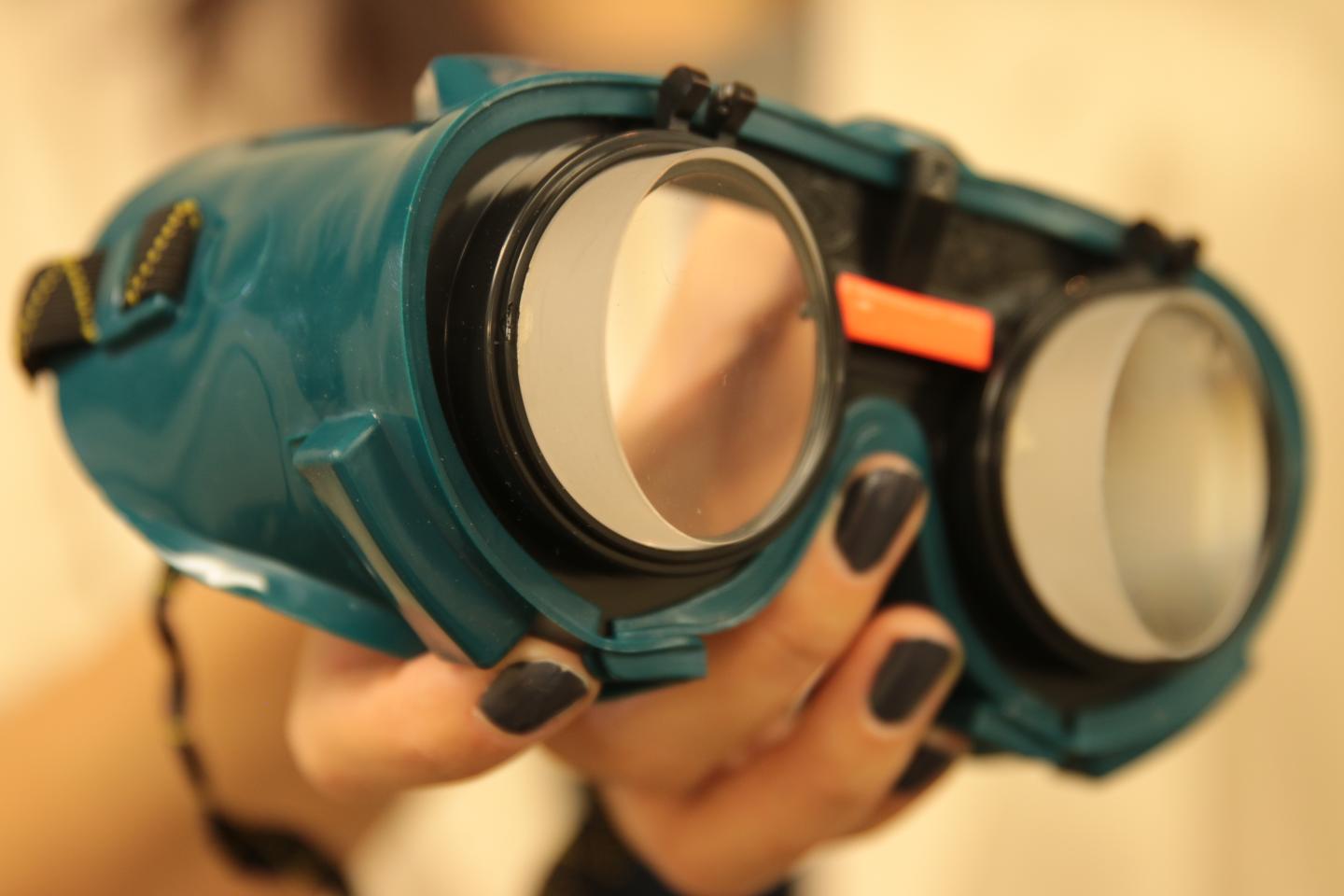
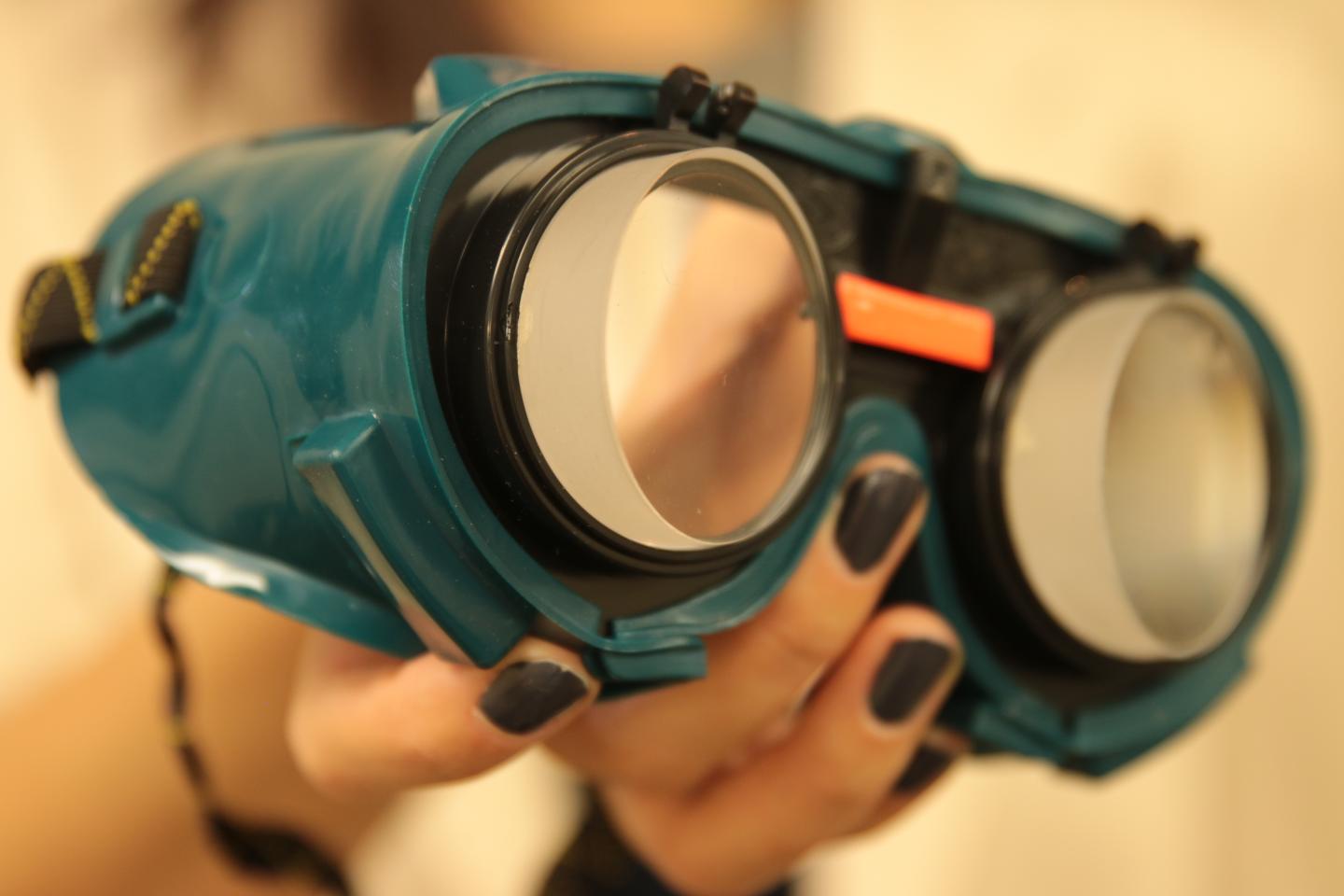
Spatial neglect is a common cause of functional disability after right hemisphere stroke. Prism adaptation treatment is a promising intervention to promote functional recovery from spatial neglect; however, some individuals fail to respond. The current study randomized individuals with spatial neglect to two groups, treatment and control. The treatment group received ten days of prism adaptation treatment; the control group received standard care.
The researchers confirmed their earlier findings that frontal lesions moderated response to prism treatment. In the treatment group, improvement in spatial neglect symptoms was seen only in individuals with frontal lesions. In the control group, the presence of frontal lesions did not modify response.
"Our research shows that patients with frontal cortical lesions may benefit from prism adaptation treatment for spatial neglect," affirmed Dr. Barrett. "Early identification of patients with hemiparesis and frontal lesions is critical to their optimal recovery," she emphasized, "and could reduce the substantial costs of stroke care and improve public health. Because spatial neglect goes undetected in as many as 80% of stroke survivors, this is a major challenge. Meeting that challenge requires educating stroke professionals about targeted prism treatment, and conducting further research on a larger scale in the stroke population."
###
Funded by the National Institute for Disability, Independent Living and Rehabilitation Research (NIDILRR, 901F0037 PI: Barrett), National Institutes of Health (R01 NS 055808 and K24 HD062647), the Wallerstein Foundation for Geriatric Improvement and Kessler Foundation.
About Stroke Rehabilitation Research at Kessler Foundation:
Research studies span all domains of post-stroke dysfunction, including cognitive deficits and mobility impairment. Under the direction of A.M. Barrett, MD, stroke scientists also mentor students, resident physicians, and post-doctoral trainees in translational neuroscience of rehabilitation. Cognitive research emphasizes hidden disabilities after stroke, including disabilities of functional vision (spatial bias and spatial neglect) and reading deficits. Mobility research, in partnership with Human Performance & Engineering Research, centers on the application of robotic exoskeletons for stroke rehabilitation. Stroke research receives funding from the National Institute on Disability Independent Living and Rehabilitation Research, Department of Defense; the National Institutes of Health/NICHD/NCMRR; New Jersey Commission on Brain Injury Research, Kessler Foundation; the Healthcare Foundation of New Jersey; and the Wallerstein Foundation for Geriatric Improvement. Scientists have faculty appointments at Rutgers New Jersey Medical School.
About Kessler Foundation:
Kessler Foundation, a major nonprofit organization in the field of disability, is a global leader in rehabilitation research that seeks to improve cognition, mobility, and long-term outcomes–including employment — for people with neurological disabilities caused by diseases and injuries of the brain and spinal cord. Kessler Foundation leads the nation in funding innovative programs that expand employment opportunities for people with disabilities.
For more information on Kessler Foundation's research, visit KesslerFoundation.org.
Facebook |http://www.facebook.com/KesslerFoundation
Twitter | http://twitter.com/KesslerFdn
Instagram | https://www.instagram.com/kesslerfdn
YouTube | http://www.youtube.com/user/KesslerFoundation
iTunes & SoundCloud | http://www.soundcloud.com/kesslerfoundation
Media Contact
Carolann Murphy
[email protected]
973-324-8382
@KesslerFdn
http://www.KesslerFoundation.org
Related Journal Article
http://dx.doi.org/10.1080/09602011.2018.1448287