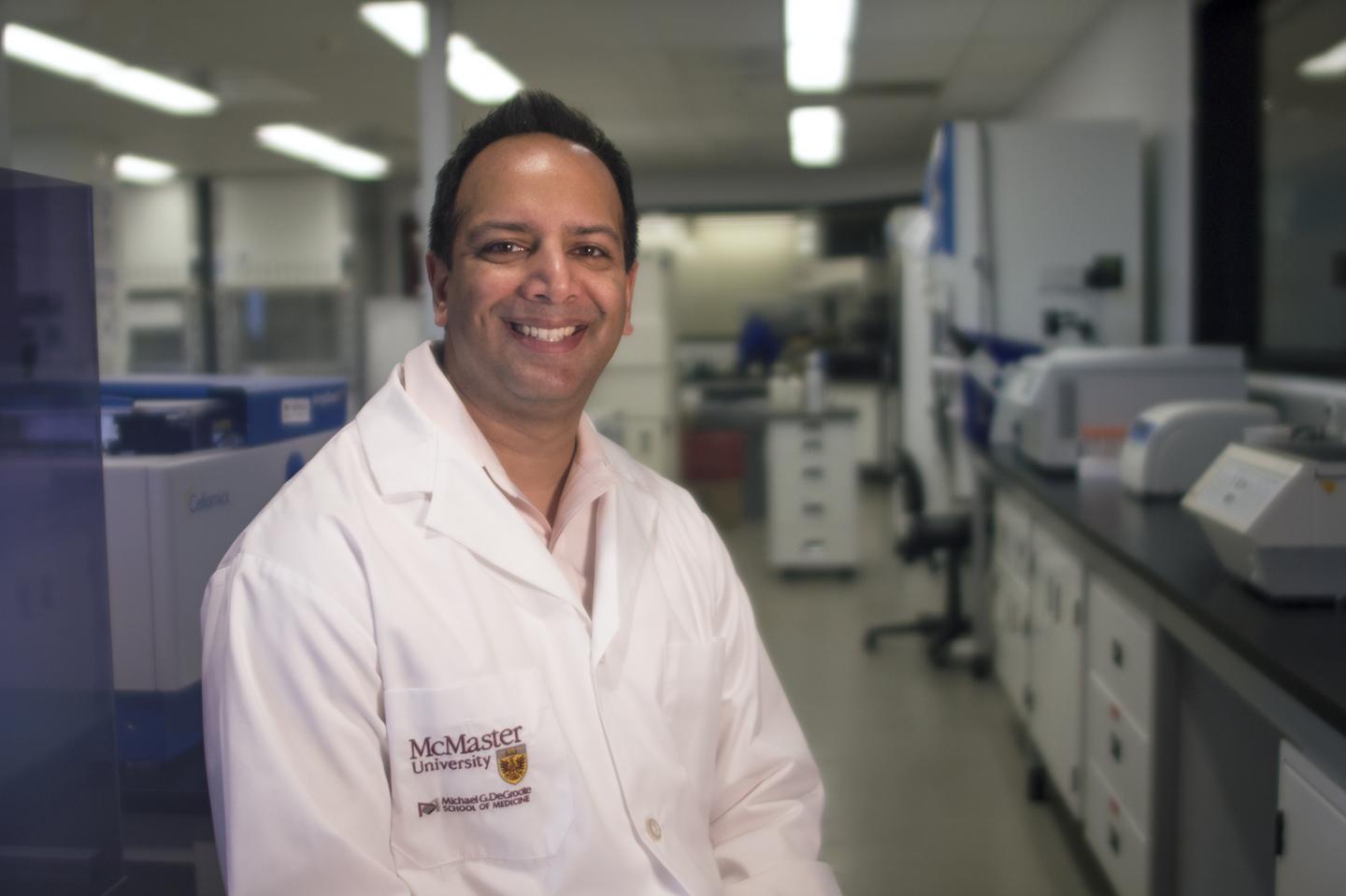
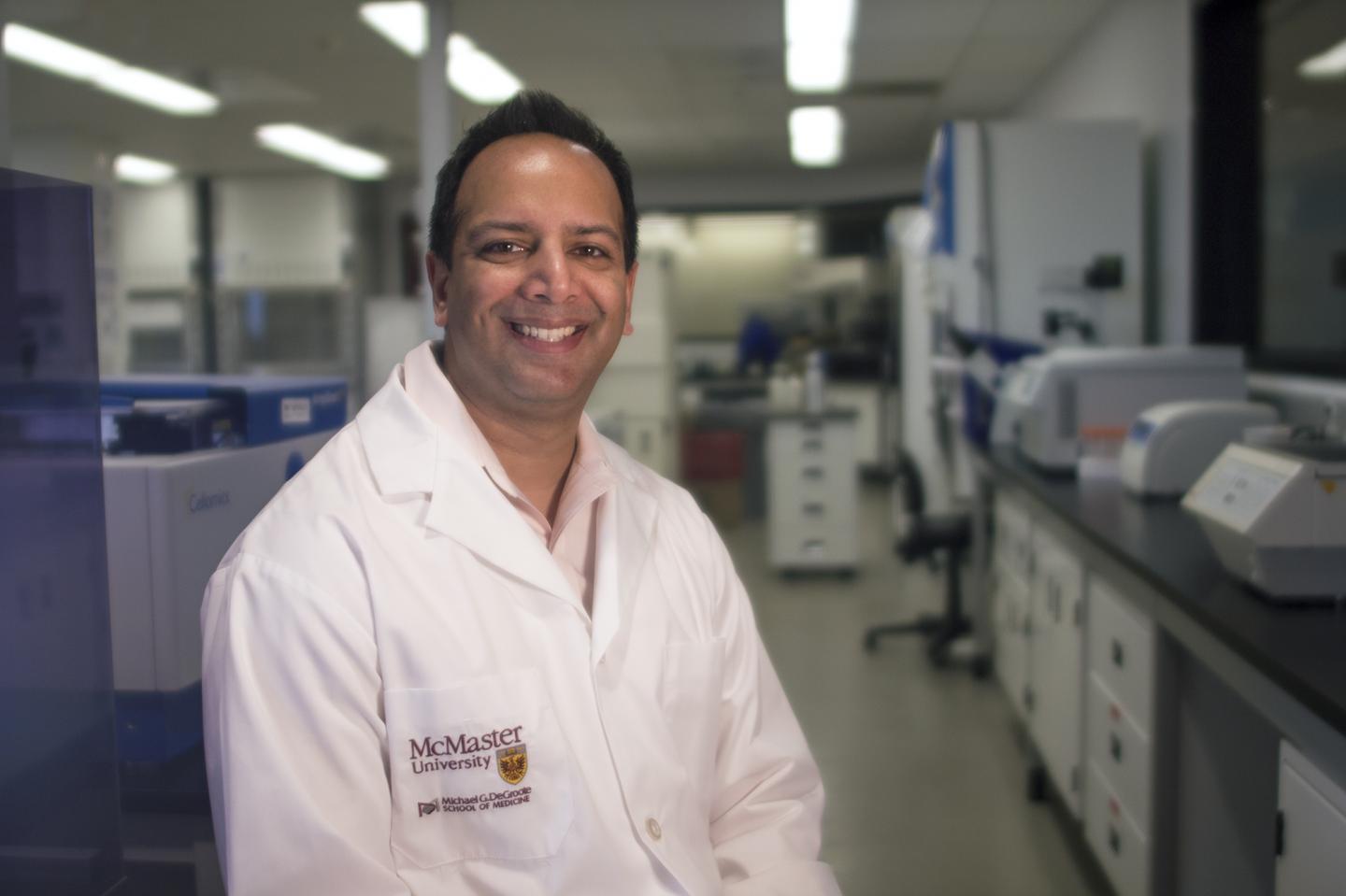
Credit: McMaster University
The Canadian Association for Neuroscience (CAN) is proud to announce that Karun K Singh, from McMaster University, will receive the 2018 CAN Young Investigator Award at the upcoming 12th Annual Canadian Neuroscience Meeting in Vancouver, on May 15th 2018.
Karun Singh: A leader in stem cell research, human genetics and brain development
"The quality of Dr. Singh's research is excellent, providing novel insights to molecular mechanisms of neuronal development with important implications for human health. The quality of his research arises from the application of a combination of cutting edge technologies and rigorous, thorough experiments proving each scientific finding. Dr. Singh has a dedication to link fundamental findings to disease processes" says Kurt Haas, Ph.D., Full Professor at the University of British Columbia and Researcher at the Djavad Mowafaghian Centre for Brain Health.
Dr. Karun Singh's research has made significant impact on our knowledge of signaling mechanisms that regulate brain development, and of the genetic risk factors underlying neurodevelopmental disorders. Neurological disorders of the developing brain such as autism impacts 1 in 66 individuals in Canada while schizophrenia affects 1% of the population. Affected individuals and families are burdened by life-long health, social and economic issues. Unfortunately, there are no specific therapies for individuals because these disorders remain poorly understood. However, since neurodevelopmental disorders have a strong genetic basis, this provides a starting point to identify underlying disease pathogenesis mechanisms.
Dr. Singh's work combines powerful human genetic studies and animal models. Using this approach, he has made novel insights into how autism and schizophrenia risk genes disrupt neural development. For example, in complex brain disorders where there is a loss of multiple genes (named microdeletions), Dr. Singh's team recently identified that in each disorder, a single gene plays a strong role in the development of the disease. In addition, his work has uncovered that patient-derived mutations in multiple genes disrupt synaptic communication between neurons in the brain. These discoveries have pinpointed precise signaling pathways that are disrupted by mutations in high risk genes, providing a path forward for screening and identifying therapeutics that will reverse the neural impairments.
Building on these discoveries, Dr. Singh has established clinical and genetic sequencing collaborators to create a resource of human induced pluripotent stem cell (iPS cell) models to study brain development disorders. He is combining this approach with CRISPR gene editing to better dissect the precise mechanisms by which genetic mutations cause defects in neural development. His platform has established a mechanism to identify drugs that will be streamlined for future clinical trials.
In earlier work, Dr. Singh identified new signaling mechanisms regulating how the peripheral nervous system is established. These fundamental studies have uncovered how peripheral nerve cells form appropriate connections with target organs, while incorrect connections are eliminated. These studies provide new insights into pathology and treatment peripheral nerve diseases and injury.
His work has been published in several top neuroscience and genetics journals (both first and/or corresponding author) including Neuron, Nature Neuroscience, Molecular Psychiatry, American Journal of Human Genetics, and Cell Reports. In addition, his recent published papers have received a significant amount of attention in several media outlets. He currently holds a prestigious David Braley Chair in Human Stem Cell Research, and his success has allowed him to become the Neural Program Lead at the Stem Cell and Cancer Research Institute at McMaster University. His program is funded by multiple National and International sources including CIHR, NSERC, Ontario Brain Institute, Brain Canada, and the European Research Area Networks.
Dr. Singh has quickly become a leader in the brain development and neurodevelopmental disorders fields. His work is uncovering new disease mechanisms for autism spectrum disorder and schizophrenia, which is paving the way forward to identify new therapeutics. The Canadian Association for Neuroscience is very proud to present Karun Singh with the 2018 Young Investigator Award.
###
Learn more about Karun Singh
https://sccri.mcmaster.ca/people/karun-singh
https://fhs.mcmaster.ca/biochem/KarunSingh.html
Media Contact
Julie Poupart
[email protected]
514-912-2405
@CAN_ACN
http://www.can-acn.org
Original Source
http://can-acn.org/karun-singh-is-the-2018-can-young-investigator-awardee