


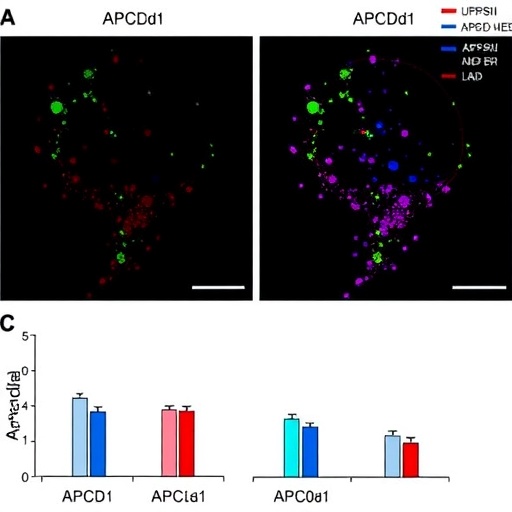
A new viral science news update highlights a precision marker in the hunt for therapies aimed at restoring dopamine circuitry. In a benchmarking study, researchers report that APCDD1 stands out as a highly specific cell-surface label for ventral midbrain dopaminergic progenitors, the developmental precursors of the dopamine neurons that are lost in Parkinson’s disease.
The study addresses a key challenge in regenerative medicine: identifying surface markers that reliably distinguish dopaminergic progenitors from closely related neural populations. Marker “specificity” is not a trivial metric—it determines whether sorting strategies can enrich the right cell type without importing confounding cells that could undermine downstream differentiation or safety.
To evaluate this, the authors compared cell surface candidates across experimental contexts, focusing on how APCDD1 performs at the boundary between ventral midbrain lineages and neighboring neuronal progenitors. The results indicate that APCDD1 labeling aligns strongly with dopaminergic progenitor identity, improving the signal-to-noise ratio for prospective isolation.
From a technical standpoint, APCDD1’s usefulness stems from its surface accessibility, which enables enrichment workflows based on staining and selection rather than relying solely on intracellular markers. This can accelerate manufacturing pipelines for cell models and support more scalable approaches for experimental preclinical work.
Importantly, the paper frames specificity as a performance benchmark, implying that APCDD1 does not merely “correlate” with dopaminergic fate, but helps define a clearer boundary for progenitor populations in heterogeneous cultures. Such boundaries are crucial when building consistent experimental batches for assays and translational studies.
The study appears in npj Parkinson’s Disease, where the authors position APCDD1 as a practical handle for future differentiation and cell replacement research. By improving the ability to select ventral midbrain dopaminergic progenitors, the work may reduce variation across experiments and strengthen the interpretability of functional readouts.
While marker discovery does not substitute for functional validation, a high-specificity surface target can streamline subsequent steps. These include assessing differentiation trajectories, electrophysiological maturity, and survival after transplantation or in organoid-based systems.
If validated across broader systems, APCDD1 could become a reference marker for ventral midbrain dopamine precursor workflows. For the Parkinson’s research community, that prospect is timely, as multiple efforts converge on cell-based strategies that require reproducible cell identity from the earliest stages.
Beyond cell sorting, the findings also suggest new directions for mapping developmental gene programs to observable surface phenotypes. Such mappings can refine computational and experimental atlases of brain development, linking transcriptomic states to actionable surface features.
Overall, this report elevates APCDD1 as a sharp tool for isolating ventral midbrain dopaminergic progenitors, advancing the precision toolkit needed for next-generation disease models and regenerative interventions.
Subject of Research: Parkinson’s disease; ventral midbrain dopaminergic progenitors; cell surface marker benchmarking.
Article Title: APCDD1 shows high specificity for ventral midbrain dopaminergic progenitors in a cell surface marker benchmarking study.
Article References: Schörling, A.L., Salvador, A., Rifes, P. et al. APCDD1 shows high specificity for ventral midbrain dopaminergic progenitors in a cell surface marker benchmarking study. npj Parkinsons Dis. (2026). https://doi.org/10.1038/s41531-026-01467-9
Image Credits: AI Generated
DOI: 10.1038/s41531-026-01467-9
Keywords: APCDD1, ventral midbrain, dopaminergic progenitors, cell surface marker, benchmarking, Parkinson’s disease
Tags: APCDD1 surface markercell surface marker specificitydopamine neuron regenerationdopaminergic neuron differentiationneural lineage isolationneural progenitor cell sortingneural progenitor identificationParkinson’s disease cell therapypreclinical dopamine neuron modelsregenerative medicine biomarkersscalable stem cell manufacturingventral midbrain dopaminergic progenitors


