• HOME
  • NEWS
  • EXPLORE
    • CAREER
      • Companies
      • Jobs
    • EVENTS
    • iGEM
      • News
      • Team
    • PHOTOS
    • VIDEO
    • WIKI
  • BLOG
  • COMMUNITY
    • FACEBOOK
    • INSTAGRAM
    • TWITTER
Thursday, May 21, 2026
BIOENGINEER.ORG
No Result
View All Result
  • Login
  • HOME
  • NEWS
  • EXPLORE
    • CAREER
      • Companies
      • Jobs
        • Lecturer
        • PhD Studentship
        • Postdoc
        • Research Assistant
    • EVENTS
    • iGEM
      • News
      • Team
    • PHOTOS
    • VIDEO
    • WIKI
  • BLOG
  • COMMUNITY
    • FACEBOOK
    • INSTAGRAM
    • TWITTER
  • HOME
  • NEWS
  • EXPLORE
    • CAREER
      • Companies
      • Jobs
        • Lecturer
        • PhD Studentship
        • Postdoc
        • Research Assistant
    • EVENTS
    • iGEM
      • News
      • Team
    • PHOTOS
    • VIDEO
    • WIKI
  • BLOG
  • COMMUNITY
    • FACEBOOK
    • INSTAGRAM
    • TWITTER
No Result
View All Result
Bioengineer.org
No Result
View All Result
Home NEWS Science News Health

Major enhancement to in vitro testing of human liver-stage malaria

Bioengineer by Bioengineer
May 9, 2018
in Health
Reading Time: 2 mins read
0
Share on FacebookShare on TwitterShare on LinkedinShare on RedditShare on Telegram
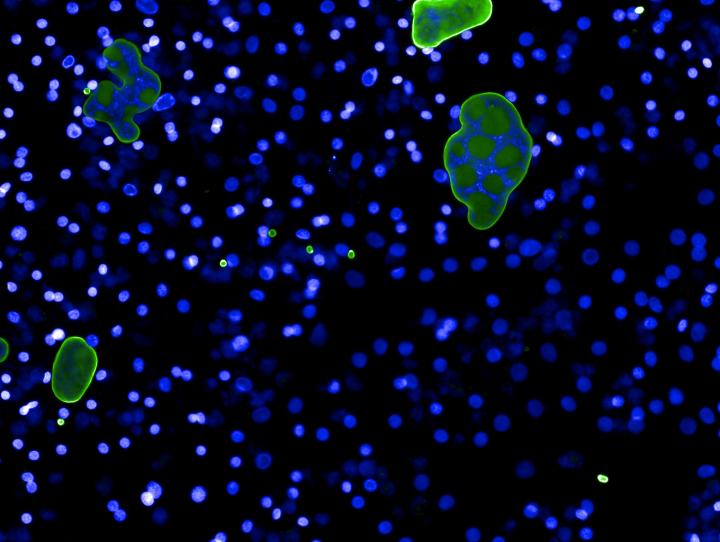
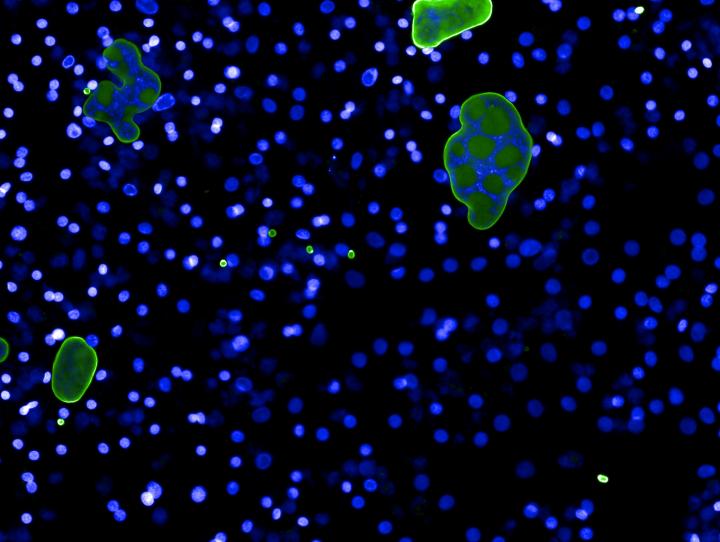
IMAGE

Credit: John Adams, PhD, University of South Florida

TAMPA, Fla. (May 9, 2018) A newly developed technique allows researchers to more easily study malaria outside the human body during the earliest point of infection, the liver. The liver stage is significant as it precedes the parasite's ability to infect human blood, the point of which symptoms of malaria first appear.

"Almost all of the current strategies are focused the blood-stage of malaria – after the person has already become infected," said lead author John Adams, PhD, distinguished professor at the University of South Florida College of Public Health. "But, in order to eradicate this disease, you need to block the cycle of reinfection and the most efficient way to do that is by blocking the parasite from coming into the person. This has not been possible previously because the methods of studying the liver stage have just not been there. Our technique makes that work possible."

In the study published in Nature Communications, researchers used 384-well plates, the standard tool used for analytical lab research, to cultivate primary human liver cells, greatly enhancing parasite development rates. This updated in vitro method allows scientists to more quickly screen preclinical drugs and vaccines than current techniques.

"Some of the other methods for researching liver stage malaria are very expensive with large biomaterial requirements," said co-lead author Alison Roth, PhD, University of South Florida College of Public Health. "Our method reduces the cost and biomaterials which makes it much more accessible," Roth said. "It's exciting to know that the model we've developed can be easily adapted to other labs and even used in endemic countries."

Dr. Roth says they're now working on a vaccine to prevent the parasite from infecting liver cells and eventually drugs to kill the parasite once it's entered the human body.

###

Media Contact

Tina Meketa
[email protected]
813-955-2593

http://www.hsc.usf.edu

Share12Tweet8Share2ShareShareShare2

Related Posts

Nonlinear Atomic Tunneling Enhanced by Bright Squeezed Vacuum

May 21, 2026

Genetic Insights from 619,372 Metabolic Profiles

May 21, 2026

Bacterial STIs Hit Record Levels in Europe as Congenital Syphilis Cases Nearly Double

May 21, 2026

Oral Semaglutide Lowers Cardiometabolic Risks in Obesity

May 21, 2026
Please login to join discussion

POPULAR NEWS

  • blank

    New Study Reveals Plants Can Detect the Sound of Rain

    733 shares
    Share 292 Tweet 183
  • ESMO 2025: mRNA COVID Vaccines Enhance Efficacy of Cancer Immunotherapy

    304 shares
    Share 122 Tweet 76
  • Research Indicates Potential Connection Between Prenatal Medication Exposure and Elevated Autism Risk

    846 shares
    Share 338 Tweet 212
  • Breastmilk Balances E. coli and Beneficial Bacteria in Infant Gut Microbiomes

    58 shares
    Share 23 Tweet 15

About

We bring you the latest biotechnology news from best research centers and universities around the world. Check our website.

Follow us

Recent News

Innovative Reusable Brick Walls Revolutionize Construction Industry

Nonlinear Atomic Tunneling Enhanced by Bright Squeezed Vacuum

Label-Free Super-Resolution Imaging of Live Cells

Subscribe to Blog via Email

Enter your email address to subscribe to this blog and receive notifications of new posts by email.

Join 82 other subscribers
  • Contact Us

Bioengineer.org © Copyright 2023 All Rights Reserved.

Welcome Back!

Login to your account below

Forgotten Password?

Retrieve your password

Please enter your username or email address to reset your password.

Log In
No Result
View All Result
  • Homepages
    • Home Page 1
    • Home Page 2
  • News
  • National
  • Business
  • Health
  • Lifestyle
  • Science

Bioengineer.org © Copyright 2023 All Rights Reserved.