• HOME
  • NEWS
  • EXPLORE
    • CAREER
      • Companies
      • Jobs
    • EVENTS
    • iGEM
      • News
      • Team
    • PHOTOS
    • VIDEO
    • WIKI
  • BLOG
  • COMMUNITY
    • FACEBOOK
    • INSTAGRAM
    • TWITTER
Saturday, February 7, 2026
BIOENGINEER.ORG
No Result
View All Result
  • Login
  • HOME
  • NEWS
  • EXPLORE
    • CAREER
      • Companies
      • Jobs
        • Lecturer
        • PhD Studentship
        • Postdoc
        • Research Assistant
    • EVENTS
    • iGEM
      • News
      • Team
    • PHOTOS
    • VIDEO
    • WIKI
  • BLOG
  • COMMUNITY
    • FACEBOOK
    • INSTAGRAM
    • TWITTER
  • HOME
  • NEWS
  • EXPLORE
    • CAREER
      • Companies
      • Jobs
        • Lecturer
        • PhD Studentship
        • Postdoc
        • Research Assistant
    • EVENTS
    • iGEM
      • News
      • Team
    • PHOTOS
    • VIDEO
    • WIKI
  • BLOG
  • COMMUNITY
    • FACEBOOK
    • INSTAGRAM
    • TWITTER
No Result
View All Result
Bioengineer.org
No Result
View All Result
Home NEWS Science News Health

Protecting kidneys from obesity

Bioengineer by Bioengineer
May 7, 2018
in Health
Reading Time: 2 mins read
0
Share on FacebookShare on TwitterShare on LinkedinShare on RedditShare on Telegram
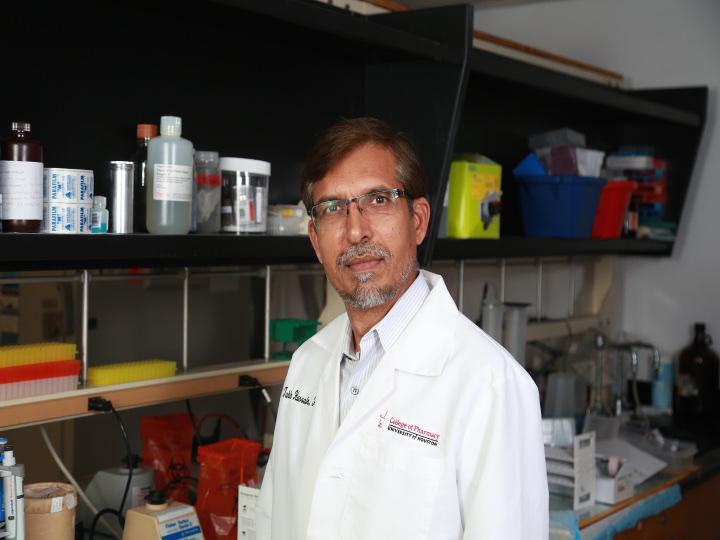
IMAGE

Credit: Kris Kehe/UH College of Pharmacy

UH professor of pharmacology Tahir Hussain has received $1.6M from the National Institutes of Health to examine a kidney cell that could prevent damage from inflammation caused by obesity. The targeted cells express a protein called the angiotensin type 2 receptor (AT2R), which recently has been indicated to have anti-inflammatory and reno protective actions. Hussain says, if activated, the AT2R will protect against chronic and acute kidney injury.

He will study the impact of inflammation in kidneys with the active the AT2R as well as kidneys with no AT2R.

"What I'm proposing in this grant is that certain cells in the kidney can protect the kidney itself," said Hussain.

Inherently in the body the expression of AT2R is low. "It's weak," said Hussain, "but because we know it has anti-inflammatory activity, we want to pump it up." To strengthen it, Hussain will use a drug that binds to it and activates it.

Obesity brings on inflammation

One-third of the US population is obese, and the annual cost to manage/treat obesity-associated disorders is estimated by NIH to be as high as $125 billion. These disorders include chronic as well as acute kidney injury (AKI). Chronic kidney injury is the result of progressive loss of kidney function leading to irreversible damage, while AKI occurs as an abrupt loss of kidney function and usually is reversible. In both processes, inflammation plays a significant role in the initiation and maintenance of the injury.

"Obesity is associated with low grade chronic inflammation in the body," said Hussain. "Up to half of the body's inflammation comes from fat cells." While everyone has fat cells, in obese people the cells can expand to the point of bursting. When that happens, immune cells are disbursed to clean up the mess, guarding against infection and illness. That process, said Hussain, is the cause of much inflammation. The larger fat cells also release inflammatory chemicals.

In the meantime, the kidney filters 45 gallons of blood every day and some of that blood contains the inflammatory molecules. That exposure can injure the kidneys.

"Once kidney injury starts, it does not stop. You can slow it down but you cannot stop it," said Hussain. Hussain is hopeful that his research will one day work to stop kidney disease caused by inflammation. "Once we study and better understand the AT2R as a target, making new prevention drugs would be easy," he said.

Hussain earlier has shown that AT2R activation with drugs promotes sodium excretion into urine, helping to lower blood pressure. This is the first time the receptor's role will be investigated to protect kidney structure and function against injury in obese subjects.

###

Media Contact

Laurie Fickman
[email protected]
713-743-8454
@UH_News

http://www.uh.edu/news-events

Original Source

http://www.uh.edu/news-events/stories/2018/may2018/572018.php
Share12Tweet7Share2ShareShareShare1

Related Posts

Decoding Prostate Cancer Origins via snFLARE-seq, mxFRIZNGRND

February 7, 2026

Digital Health Perspectives from Baltic Sea Experts

February 7, 2026

Exploring Decision-Making in Dementia Caregivers’ Mobility

February 7, 2026

Succinate Receptor 1 Limits Blood Cell Formation, Leukemia

February 7, 2026
Please login to join discussion

POPULAR NEWS

  • Robotic Ureteral Reconstruction: A Novel Approach

    Robotic Ureteral Reconstruction: A Novel Approach

    82 shares
    Share 33 Tweet 21
  • Digital Privacy: Health Data Control in Incarceration

    63 shares
    Share 25 Tweet 16
  • Study Reveals Lipid Accumulation in ME/CFS Cells

    57 shares
    Share 23 Tweet 14
  • Breakthrough in RNA Research Accelerates Medical Innovations Timeline

    53 shares
    Share 21 Tweet 13

About

We bring you the latest biotechnology news from best research centers and universities around the world. Check our website.

Follow us

Recent News

Decoding Prostate Cancer Origins via snFLARE-seq, mxFRIZNGRND

Digital Health Perspectives from Baltic Sea Experts

Florida Cane Toad: Complex Spread and Selective Evolution

Subscribe to Blog via Email

Enter your email address to subscribe to this blog and receive notifications of new posts by email.

Join 73 other subscribers
  • Contact Us

Bioengineer.org © Copyright 2023 All Rights Reserved.

Welcome Back!

Login to your account below

Forgotten Password?

Retrieve your password

Please enter your username or email address to reset your password.

Log In
No Result
View All Result
  • Homepages
    • Home Page 1
    • Home Page 2
  • News
  • National
  • Business
  • Health
  • Lifestyle
  • Science

Bioengineer.org © Copyright 2023 All Rights Reserved.