• HOME
  • NEWS
  • EXPLORE
    • CAREER
      • Companies
      • Jobs
    • EVENTS
    • iGEM
      • News
      • Team
    • PHOTOS
    • VIDEO
    • WIKI
  • BLOG
  • COMMUNITY
    • FACEBOOK
    • INSTAGRAM
    • TWITTER
Saturday, February 7, 2026
BIOENGINEER.ORG
No Result
View All Result
  • Login
  • HOME
  • NEWS
  • EXPLORE
    • CAREER
      • Companies
      • Jobs
        • Lecturer
        • PhD Studentship
        • Postdoc
        • Research Assistant
    • EVENTS
    • iGEM
      • News
      • Team
    • PHOTOS
    • VIDEO
    • WIKI
  • BLOG
  • COMMUNITY
    • FACEBOOK
    • INSTAGRAM
    • TWITTER
  • HOME
  • NEWS
  • EXPLORE
    • CAREER
      • Companies
      • Jobs
        • Lecturer
        • PhD Studentship
        • Postdoc
        • Research Assistant
    • EVENTS
    • iGEM
      • News
      • Team
    • PHOTOS
    • VIDEO
    • WIKI
  • BLOG
  • COMMUNITY
    • FACEBOOK
    • INSTAGRAM
    • TWITTER
No Result
View All Result
Bioengineer.org
No Result
View All Result
Home NEWS Science News Health

Daily photography improves wellbeing

Bioengineer by Bioengineer
April 30, 2018
in Health
Reading Time: 2 mins read
0
Share on FacebookShare on TwitterShare on LinkedinShare on RedditShare on Telegram

Credit: Lancaster University

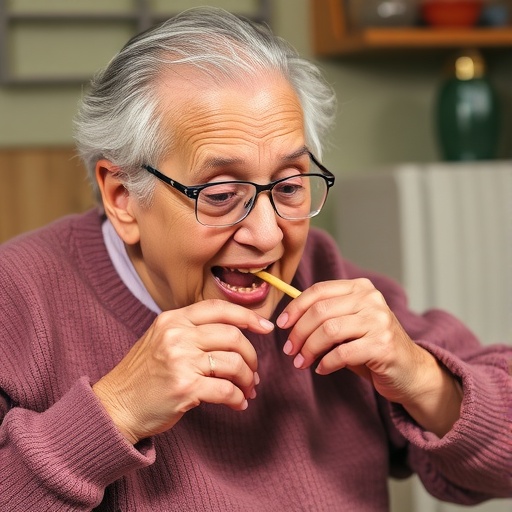
Taking a photo each day and posting it online has complex benefits say researchers who say it supports improved wellbeing.

This is a popular social phenomenon, with Instagram having over 1.5million photos tagged #365 for each day of the year while there are thousands of members of Blipfoto, a key photo-a-day site.

A study co-authored by Dr Liz Brewster of Lancaster University and Dr Andrew Cox of the University of Sheffield recorded what photos people took, what text they added and how they interacted with others on the photo-a-day site for two months.

They found that taking a daily photo improved wellbeing through:

  • Self-care
  • Community interaction
  • The potential for reminiscence

Taking a moment to be mindful, and looking for something different or unusual in the day were seen as positive well-being benefits of the practice.

One participant said: "My job was a very highly stressful role… There were some days when I'd almost not stopped to breathe, you know what I mean… And just the thought: oh wait a moment, no, I'll stop and take a photograph of this insect sitting on my computer or something. Just taking a moment is very salutary I think."

It also led to more exercise and gave a sense of purpose, competence and achievement.

Another participant said: "It encourages me out of the house sometimes when I could just sit on my backside with a cup of tea. I'll think maybe I'll take a walk down on to the seafront and before I know it I'm two miles along the coast. "

The online contact helped people to manage loneliness and grief as well as meeting new people with shared interests. Several participants had taken early retirement and found that the contact established via photo-a-day replaced some of the daily office chatter that they missed.

"There's the banter in the workshop or the office or the place where you work. And perhaps [photo-a-day] offers that… Because I'm having conversations with people that I would perhaps have had in the workplace.

The online interactions created a community based on the photos and accompanying text.

"It could be a rubbish photograph but if somebody commented on it, it made it worthwhile."

The online text was used to provide personal narratives, reminiscences, and explanations of repeated images.

"I'm ever feeling down or something it's nice to be able to scroll back and see good memories. You know, the photos I've taken will have a positive memory attached to it even if it's something as simple as I had a really lovely half an hour for lunch sitting outside and was feeling really relaxed."

The researchers said the practice is "an active process of meaning making, in which a new conceptualisation of wellbeing emerges."

###

Media Contact

Gillian Whitworth
[email protected]
01-524-592-612

http://www.lancs.ac.uk

Related Journal Article

http://dx.doi.org/10.1177/1363459318769465
Share12Tweet7Share2ShareShareShare1

Related Posts

Evaluating Pediatric Emergency Care Quality in Ethiopia

February 7, 2026

TPMT Expression Predictions Linked to Azathioprine Side Effects

February 7, 2026

Improving Dementia Care with Enhanced Activity Kits

February 7, 2026

Decoding Prostate Cancer Origins via snFLARE-seq, mxFRIZNGRND

February 7, 2026
Please login to join discussion

POPULAR NEWS

  • Robotic Ureteral Reconstruction: A Novel Approach

    Robotic Ureteral Reconstruction: A Novel Approach

    82 shares
    Share 33 Tweet 21
  • Digital Privacy: Health Data Control in Incarceration

    63 shares
    Share 25 Tweet 16
  • Study Reveals Lipid Accumulation in ME/CFS Cells

    57 shares
    Share 23 Tweet 14
  • Breakthrough in RNA Research Accelerates Medical Innovations Timeline

    53 shares
    Share 21 Tweet 13

About

We bring you the latest biotechnology news from best research centers and universities around the world. Check our website.

Follow us

Recent News

Evaluating Pediatric Emergency Care Quality in Ethiopia

TPMT Expression Predictions Linked to Azathioprine Side Effects

Improving Dementia Care with Enhanced Activity Kits

Subscribe to Blog via Email

Success! An email was just sent to confirm your subscription. Please find the email now and click 'Confirm' to start subscribing.

Join 73 other subscribers
  • Contact Us

Bioengineer.org © Copyright 2023 All Rights Reserved.

Welcome Back!

Login to your account below

Forgotten Password?

Retrieve your password

Please enter your username or email address to reset your password.

Log In
No Result
View All Result
  • Homepages
    • Home Page 1
    • Home Page 2
  • News
  • National
  • Business
  • Health
  • Lifestyle
  • Science

Bioengineer.org © Copyright 2023 All Rights Reserved.