

• HOME
  • NEWS
  • EXPLORE
    • CAREER
      • Companies
      • Jobs
    • EVENTS
    • iGEM
      • News
      • Team
    • PHOTOS
    • VIDEO
    • WIKI
  • BLOG
  • COMMUNITY
    • FACEBOOK
    • INSTAGRAM
    • TWITTER
Saturday, February 7, 2026
BIOENGINEER.ORG
No Result
View All Result
  • Login
  • HOME
  • NEWS
  • EXPLORE
    • CAREER
      • Companies
      • Jobs
        • Lecturer
        • PhD Studentship
        • Postdoc
        • Research Assistant
    • EVENTS
    • iGEM
      • News
      • Team
    • PHOTOS
    • VIDEO
    • WIKI
  • BLOG
  • COMMUNITY
    • FACEBOOK
    • INSTAGRAM
    • TWITTER
  • HOME
  • NEWS
  • EXPLORE
    • CAREER
      • Companies
      • Jobs
        • Lecturer
        • PhD Studentship
        • Postdoc
        • Research Assistant
    • EVENTS
    • iGEM
      • News
      • Team
    • PHOTOS
    • VIDEO
    • WIKI
  • BLOG
  • COMMUNITY
    • FACEBOOK
    • INSTAGRAM
    • TWITTER
No Result
View All Result
Bioengineer.org
No Result
View All Result
Home NEWS Science News Cancer

Gamma-retroviruses preferentially integrate near cancer-associated genes

Bioengineer by Bioengineer
May 10, 2016
in Cancer
Reading Time: 2 mins read
0
Share on FacebookShare on TwitterShare on LinkedinShare on RedditShare on Telegram
IMAGE

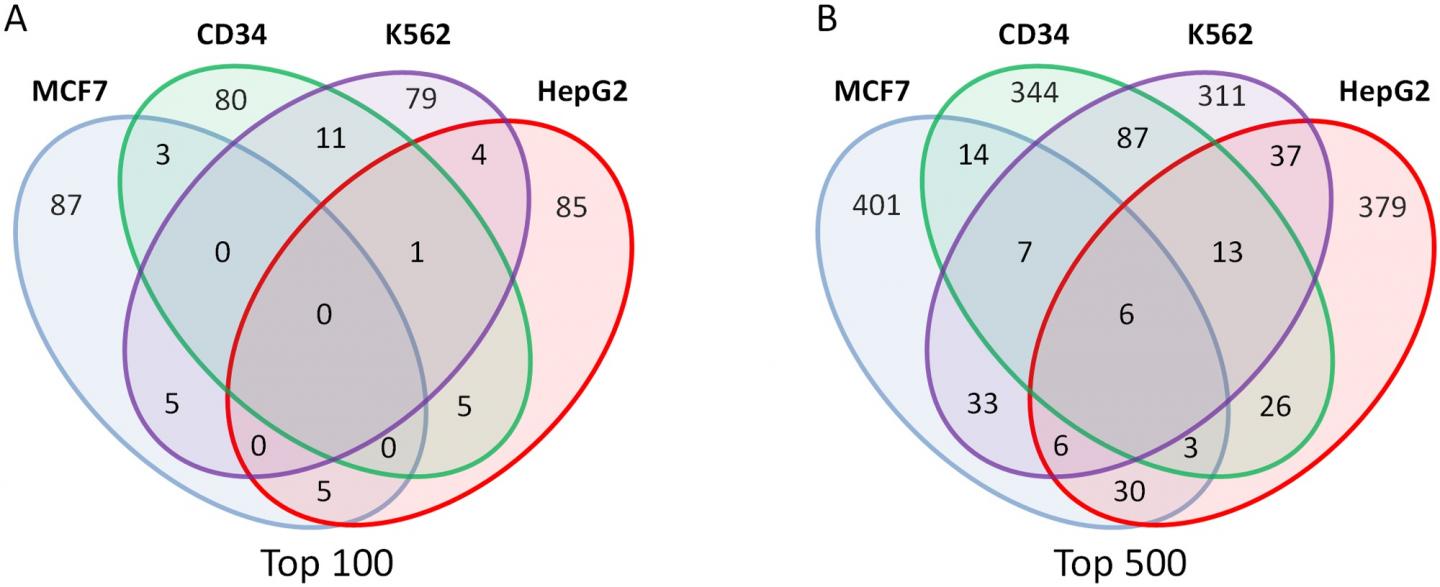
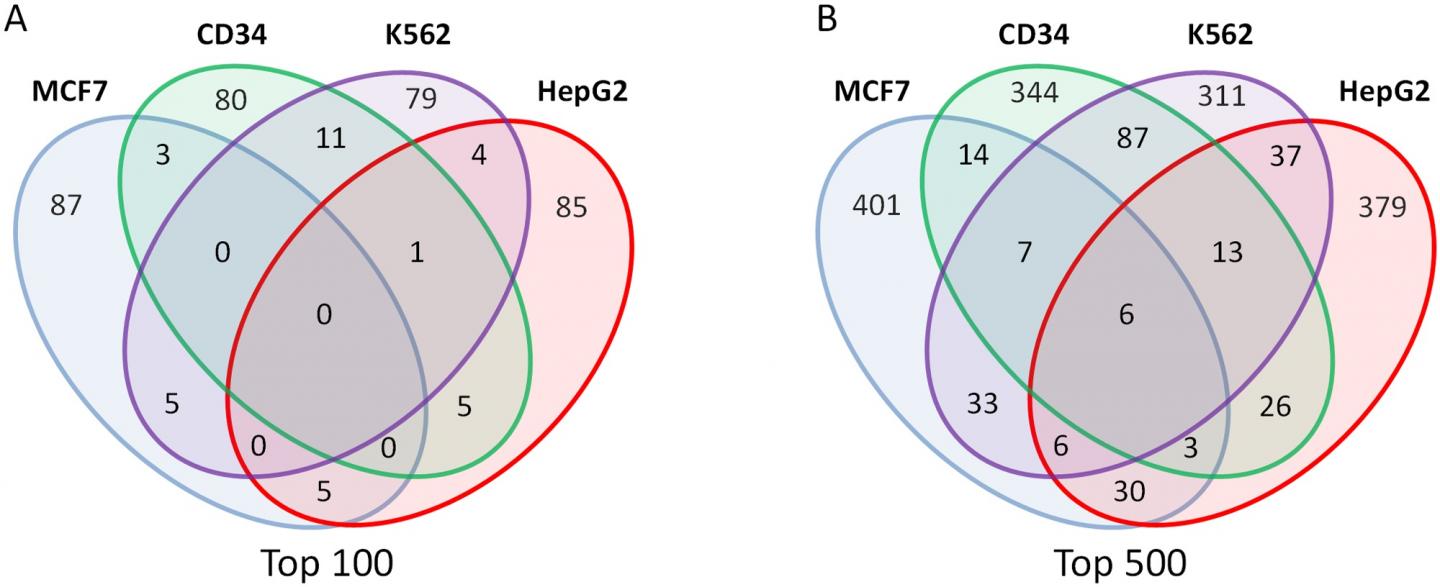
Identifying the sites where gamma-retroviruses commonly insert into the genome may help to identify genes associated with specific cancer types, according to a study published April 20, 2016 in the open-access journal PLOS ONE by Kathryn Gilroy at the University of Glasgow, UK, and colleagues.

Gamma-retroviruses, such as feline leukaemia virus, tend to cause mutations when they insert into a host’s genome, and have been used as a tool to discover genes associated with cancer. However, this discovery process can be time consuming, requiring the collection of multiple tumors from animals and comparative genomic analyses. The authors of the present study sought to investigate the pattern of gamma-retrovirus insertion using deep sequencing to analyse common insertion sites for feline leukaemia virus in cell culture. The study was also expanded to analyze published genome insertion profiles of other gamma-retroviruses.

The authors found that the gamma-retroviruses preferentially inserted into cancer-driving genes, regardless of transcription levels, in a cell type-specific manner. This authors suggest that gamma-retrovirus integration profiling in vitro may be a tool to identify potential therapeutic target genes in different human cancer types.

###

In your coverage please use this URL to provide access to the freely available paper: http://dx.plos.org/10.1371/journal.pone.0154070

Citation: Gilroy KL, Terry A, Naseer A, de Ridder J, Allahyar A, Wang W, et al. (2016) Gamma-Retrovirus Integration Marks Cell Type-Specific Cancer Genes: A Novel Profiling Tool in Cancer Genomics. PLoS ONE 11(4): e0154070. doi:10.1371/journal.pone.0154070

Funding: KLG, AT, AN, AK, ERC and JCN were supported by a joint programme from Cancer Research UK and Bloodwise (grant numbers A11951 (CRUK) and 13046 (Bloodwise); URLs are http://www.cancerresearchuk.org/ and https://bloodwise.org.uk/). JdR was funded by a VENI grant (639.021.233) from NWO (Netherlands Organisation for Scientific Research, http://www.nwo.nl/). AM was funded by Canadian Institutes for Health Research (MOP 97798, http://www.cihr-irsc.gc.ca/). GK-SW was funded by Alberta Innovates Technology Futures (AITF, http://www.albertatechfutures.ca/) and Innovates Centre of Research Excellence (iCORE). The funders had no role in study design, data collection and analysis, decision to publish, or preparation of the manuscript.

Competing Interests: The authors have declared that no competing interests exist.

Media Contact

Beth Jones
[email protected]

Home

The post Gamma-retroviruses preferentially integrate near cancer-associated genes appeared first on Scienmag.


Share12Tweet8Share2ShareShareShare2

Related Posts

Deep Learning Uncovers Tetrahydrocarbazoles as Potent Broad-Spectrum Antitumor Agents with Click-Activated Targeted Cancer Therapy Approach

February 7, 2026

Newly Discovered Limonoid DHL-11 from Munronia henryi Targets IMPDH2 to Combat Triple-Negative Breast Cancer

February 7, 2026

New Discovery Reveals Why Ovarian Cancer Spreads Rapidly in the Abdomen

February 6, 2026

New Study Finds Americans Favor In-Clinic Screening Over At-Home Tests for Cervical Cancer

February 6, 2026
Please login to join discussion

POPULAR NEWS

  • Robotic Ureteral Reconstruction: A Novel Approach

    Robotic Ureteral Reconstruction: A Novel Approach

    82 shares
    Share 33 Tweet 21
  • Digital Privacy: Health Data Control in Incarceration

    63 shares
    Share 25 Tweet 16
  • Study Reveals Lipid Accumulation in ME/CFS Cells

    57 shares
    Share 23 Tweet 14
  • Breakthrough in RNA Research Accelerates Medical Innovations Timeline

    53 shares
    Share 21 Tweet 13

About

We bring you the latest biotechnology news from best research centers and universities around the world. Check our website.

Follow us

Recent News

Digital Health Perspectives from Baltic Sea Experts

Florida Cane Toad: Complex Spread and Selective Evolution

Exploring Decision-Making in Dementia Caregivers’ Mobility

Subscribe to Blog via Email

Enter your email address to subscribe to this blog and receive notifications of new posts by email.

Join 73 other subscribers
  • Contact Us

Bioengineer.org © Copyright 2023 All Rights Reserved.

Welcome Back!

Login to your account below

Forgotten Password?

Retrieve your password

Please enter your username or email address to reset your password.

Log In
No Result
View All Result
  • Homepages
    • Home Page 1
    • Home Page 2
  • News
  • National
  • Business
  • Health
  • Lifestyle
  • Science

Bioengineer.org © Copyright 2023 All Rights Reserved.
