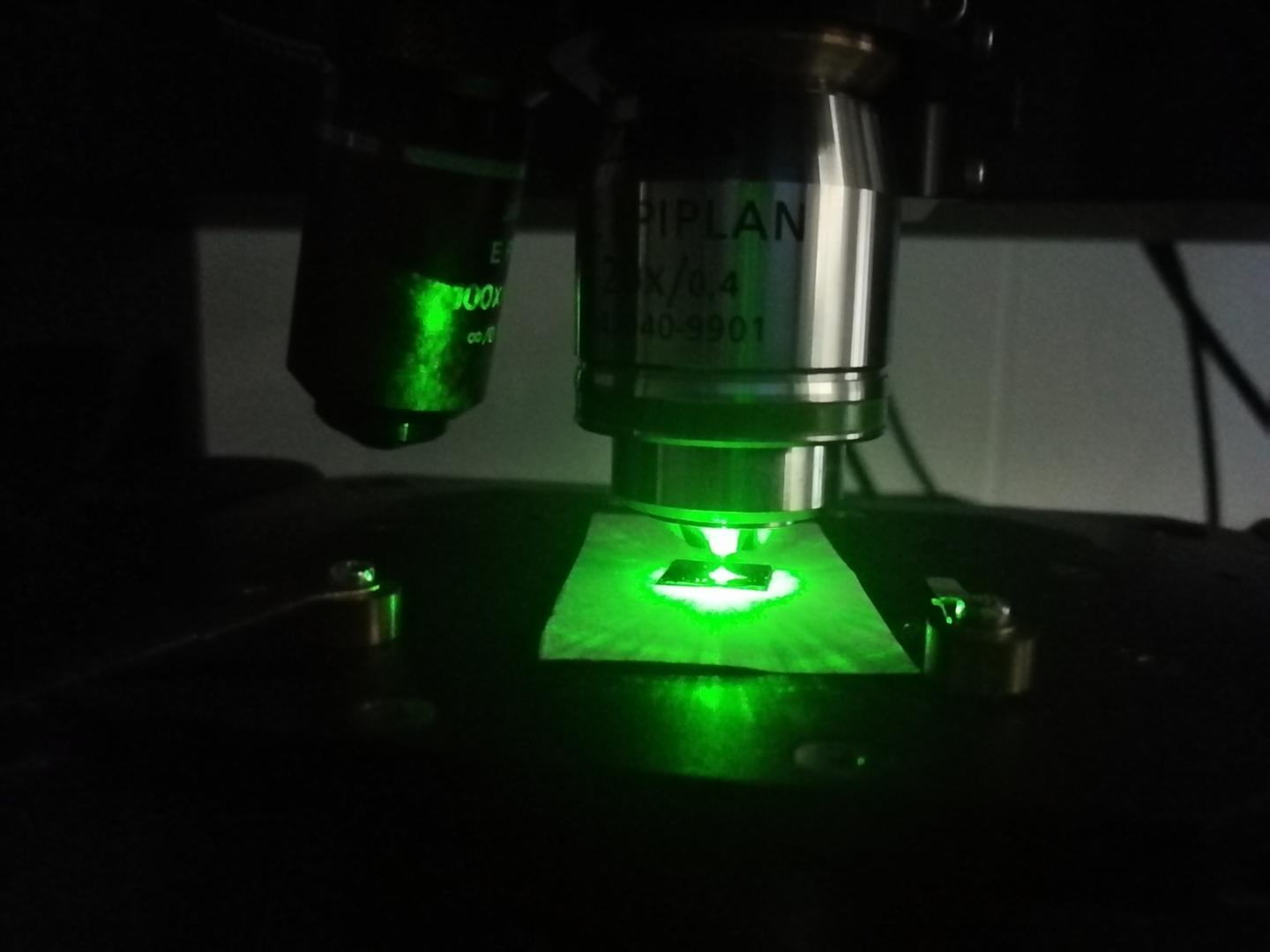
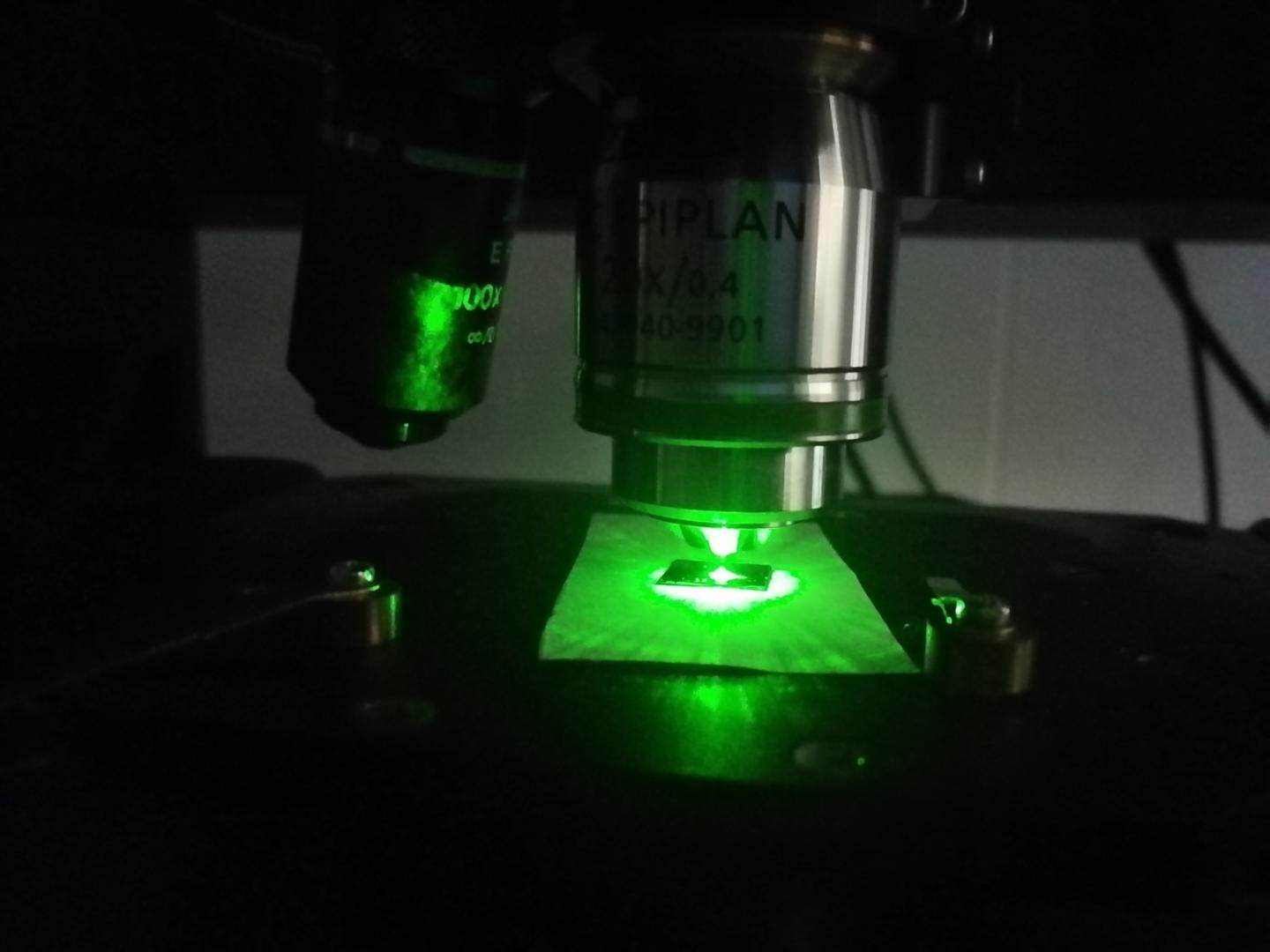
Credit: University of Cordoba
A University of Cordoba research group has designed a tool that enables detection of antidepressants in urine samples in low concentrations. This new method is based on the developmentof a new material, based on carbon nanotubes, on the inside of pipette tips, the kinds that are normally used in analysis laboratories.
By incorporating carbon nanoparticles, the polymer properties are enhanced and the ability to adsorb increases, making it fast and easy to extract antidepressants from urine. Beatriz Fresco Cala headed the research, coordinated by Analytical Chemistry Professor Marisol Cárdenas, who is also in charge of theFQM-215 research group.Cárdenas points out the pipette tips that were modified with this hybrid nanomaterialprovide a very stable and easytouse system to carry out these kinds of analyses. As she explains, when the sample goes through the pipette tip, the antidepressants remain on the surface of the synthesized hybrid nanomaterial. Next,they elute with an organic solvent, increasing their concentration and efficiently eliminating any possible interferences, which enables us to find the amount of antidepressants even when ingested in small amounts. Cárdenas specifies that this method has considerably improvedthe analytical properties of the measuring process used to date. Itissimpler, cheaper and thus more competitive.
This kind of analysis is done for the most part in hospitals, though it could also be done in any laboratory. As the leader of the study explains, the tests can be used to track dosages, though they are more useful for cases of intoxication by means of overdose or at a forensic level.
The more sensitive the measurement process is, the lower the quantity of the component needed (toxic, contaminant or protein). AccordingtoProfessorMarisol Cárdenas, this has twoadvantages. The first is being able to determine the presence of the drug even when it has been in the sample for a long time. Forinstance, excretionof a drug can takebetween 24 and 48 hours, orevenlonger. So, the greater thetime period since ingestion, the lower the concentration. This test makes it possible to detect the drug after a long interval of time.Higher sensitivity means that it can be detected during a longer period of time than using conventional techniques.
Thesecondadvantageconcernsthefieldof diagnosis and earlydetectionofdisease.Generally speaking, these processes have markers whose concentration increases as a disease progresses. The lower the concentration a marker can be detected with, the earlier a disease can be diagnosed.
Instrumental nanotechnology
The specialization of researcher Marisol Cárdenas'steamin the development of nanotools to improve analyses led another member of the group, Ángela López Lorente, to develop a new improvementin the equipment used in vibrational spectroscopy techniques.This study aims to obtain information on the vibration of the bonds between molecules, by identifying the composition of the material.
Silver and titanium dioxide were the metals used, and these permitted the signal of the sample to intensify and therefore more information was obtained about its components.To do so, nanoparticles of both metals are placedon a silicon surface where the sample is also placed. Once the sample interacts with the metal nanoparticles, the analytic signal is 10,000 times higher than it would be if not done this way. So, this makes it easier to detect lower amounts and characterize the components. This analysis method, according to López Lorente, can be appliedin medicine, protein analysis and contaminant detection to name but a few.
Both research projects, carried out in partnership with the University of Valencia and the Universities of Ulm (Germany) and Bari (Italy), enable detection of compounds at a low concentration which improves analysis results.
References:
###
Fresco-Cala, B; Mompo-Rosello,O; Simo-Alfonso, EF; Cardenas, S; Herrero-Martínez, JM. Carbon nanotube-modified monolithic polymethacrylate pipette tips for (micro) solid -phase extraction of antidepressants from urine samples. MICROCHIMICA ACTA
-Lopez Lorente, Al; Piccca, RA; Izquierdo, J; Kranz, C; Mizaikoff, B; Di Franco, C; Cardenas, S; Cioffi, N; Palazzo, G; Valentini, A. Ion beam sputtering deposition of silver nanoparticles and TiOx/ZnO nanocomposites for use in surface enhanced vibrational spectroscopy (SERS and SEIRAS). MICROCHIMICA ACTA.
Media Contact
Elena Lazaro Real
[email protected]
34-957-212-245
@univcordoba
http://www.uco.es
Related Journal Article
http://dx.doi.org/10.1007/s00604-017-2659-4