

• HOME
  • NEWS
  • EXPLORE
    • CAREER
      • Companies
      • Jobs
    • EVENTS
    • iGEM
      • News
      • Team
    • PHOTOS
    • VIDEO
    • WIKI
  • BLOG
  • COMMUNITY
    • FACEBOOK
    • INSTAGRAM
    • TWITTER
Saturday, February 7, 2026
BIOENGINEER.ORG
No Result
View All Result
  • Login
  • HOME
  • NEWS
  • EXPLORE
    • CAREER
      • Companies
      • Jobs
        • Lecturer
        • PhD Studentship
        • Postdoc
        • Research Assistant
    • EVENTS
    • iGEM
      • News
      • Team
    • PHOTOS
    • VIDEO
    • WIKI
  • BLOG
  • COMMUNITY
    • FACEBOOK
    • INSTAGRAM
    • TWITTER
  • HOME
  • NEWS
  • EXPLORE
    • CAREER
      • Companies
      • Jobs
        • Lecturer
        • PhD Studentship
        • Postdoc
        • Research Assistant
    • EVENTS
    • iGEM
      • News
      • Team
    • PHOTOS
    • VIDEO
    • WIKI
  • BLOG
  • COMMUNITY
    • FACEBOOK
    • INSTAGRAM
    • TWITTER
No Result
View All Result
Bioengineer.org
No Result
View All Result
Home NEWS Science News Biology

Pesticides give bees a hard time

Bioengineer by Bioengineer
April 5, 2018
in Biology
Reading Time: 2 mins read
0
Share on FacebookShare on TwitterShare on LinkedinShare on RedditShare on Telegram
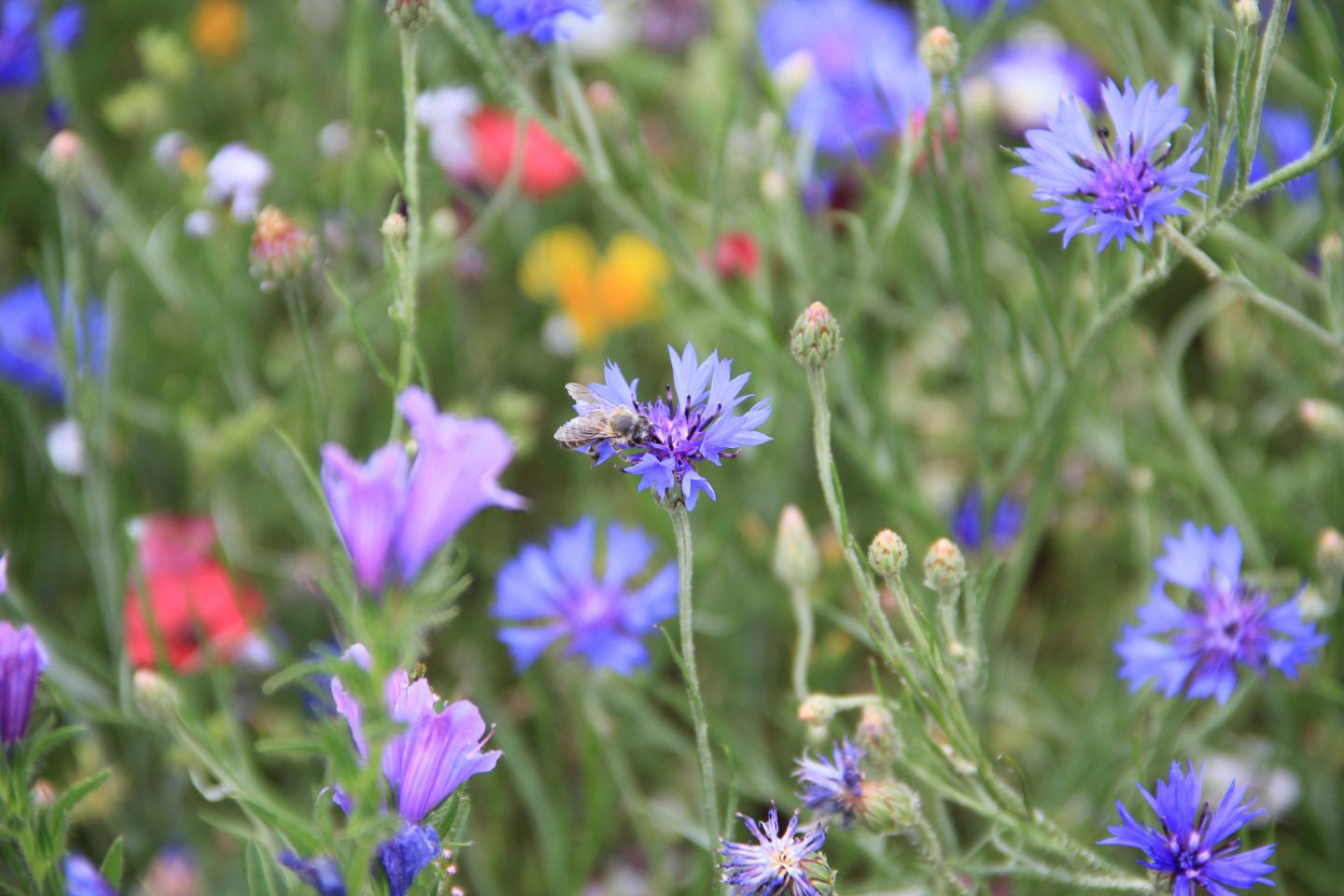
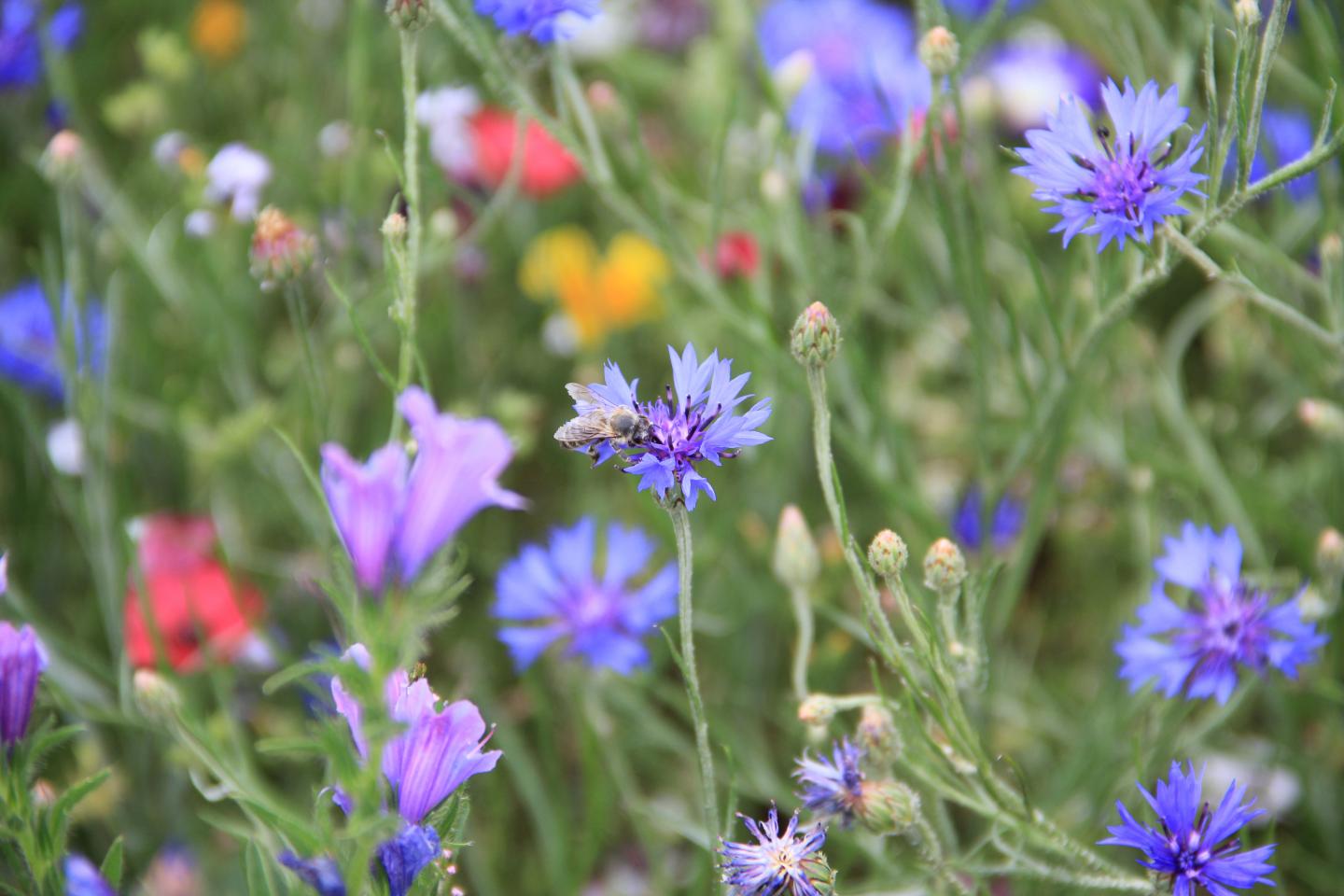
IMAGE

Credit: Photo: Ricarda Scheiner

In February 2018, the European Food Safety Authority (EFSA) confirmed that the pesticide group of neonicotinoids is harmful to bees. A novel pesticide manufactured by Bayer AG is therefore being discussed as an alternative; it contains flupyradifurone from the class of butenolides. The product goes by the brand name of Sivanto.

Sivanto is assumed to be effective against various sucking insects such as aphids and whiteflies and can be used on a number of fruit and vegetable crops but also on cocoa and coffee plants. Advertised as bee-friendly, the pesticide can even be applied on flowering fields. It has been available in the US market since 2015. In the EU, it is approved but not yet available.

Measurable impact on honeybees

Scientists from the University of Würzburg have now investigated the effect of flupyradifurone on honeybee behaviour. The study is led by Ricarda Scheiner, Professor for Neuroethology of Arthropods at the Department of Behavioural Physiology and Sociobiology (Zoology II) and Hannah Hesselbach, her PhD student. The scientists have published their findings in the current issue of the journal Nature Scientific Reports.

"Our data show that non-lethal doses of flupyradifurone after a single application to collecting honeybees have a negative impact on the bees' taste, learning and memory capability," Ricarda Scheiner sums up the study result.

No impact when used properly

The two researchers first tested the bees' gustatory response to sugar using a standard procedure. Subsequently, the bees were subjected to olfactory conditioning, and on the next day the scientists tested what the bees had retained of what they had learned previously. The experiments prove the following: "Whereas the two smaller doses did not exhibit any adverse effect, a flupyradifurone amount of 1.2 microgrammes per bee results in significantly reduced perception and learning performance," Hannah Hesselbach says.

The good news, however, is that the collecting honeybees will probably not come into contact with such high doses when the pesticide is applied properly. But the scientists believe that further research is necessary to determine the pesticide's influence on motor function, waggle dance or orientation.

"Also, we cannot say which influence flupyradifurone will have on bees in combination with other pesticides which are frequently found in honey and pollen in residual amounts," Hannah Hesselbach adds. The impact on wild bees and other pollinators should also be examined according to the researchers.

Behavioural biology of the honeybee

The team of Ricarda Scheiner at the Department of Zoology II at the University of Würzburg studies the behavioural biology of the honeybee. For this purpose, they use a wide range of methods including behavioural analyses, behavioural physiology, behavioural pharmacology and molecular biology.

###

Media Contact

Ricarda Scheiner
[email protected]
49-931-318-4745
@Uni_WUE

https://www.uni-wuerzburg.de/

Original Source

https://www.uni-wuerzburg.de/en/sonstiges/news/detail/news/pesticides-give-bees-a-hard-time/ http://dx.doi.org/10.1038/s41598-018-23200-0


Share16Tweet8Share2ShareShareShare2

Related Posts

Florida Cane Toad: Complex Spread and Selective Evolution

Florida Cane Toad: Complex Spread and Selective Evolution

February 7, 2026
New Study Uncovers Mechanism Behind Burn Pit Particulate Matter–Induced Lung Inflammation

New Study Uncovers Mechanism Behind Burn Pit Particulate Matter–Induced Lung Inflammation

February 6, 2026

DeepBlastoid: Advancing Automated and Efficient Evaluation of Human Blastoids with Deep Learning

February 6, 2026

Navigating the Gut: The Role of Formic Acid in the Microbiome

February 6, 2026
Please login to join discussion

POPULAR NEWS

  • Robotic Ureteral Reconstruction: A Novel Approach

    Robotic Ureteral Reconstruction: A Novel Approach

    82 shares
    Share 33 Tweet 21
  • Digital Privacy: Health Data Control in Incarceration

    63 shares
    Share 25 Tweet 16
  • Study Reveals Lipid Accumulation in ME/CFS Cells

    57 shares
    Share 23 Tweet 14
  • Breakthrough in RNA Research Accelerates Medical Innovations Timeline

    53 shares
    Share 21 Tweet 13

About

We bring you the latest biotechnology news from best research centers and universities around the world. Check our website.

Follow us

Recent News

Evaluating Pediatric Emergency Care Quality in Ethiopia

TPMT Expression Predictions Linked to Azathioprine Side Effects

Improving Dementia Care with Enhanced Activity Kits

Subscribe to Blog via Email

Success! An email was just sent to confirm your subscription. Please find the email now and click 'Confirm' to start subscribing.

Join 73 other subscribers
  • Contact Us

Bioengineer.org © Copyright 2023 All Rights Reserved.

Welcome Back!

Login to your account below

Forgotten Password?

Retrieve your password

Please enter your username or email address to reset your password.

Log In
No Result
View All Result
  • Homepages
    • Home Page 1
    • Home Page 2
  • News
  • National
  • Business
  • Health
  • Lifestyle
  • Science

Bioengineer.org © Copyright 2023 All Rights Reserved.