Credit: Ali A. Mehrabi
A new genetic directory launched today will enable researchers and breeders to scan the genomes of wild relatives of modern wheat to find disease-fighting properties lost to domestication.
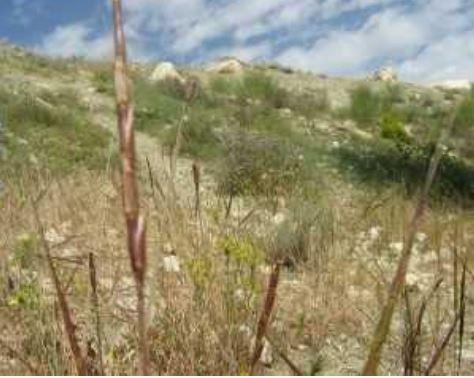
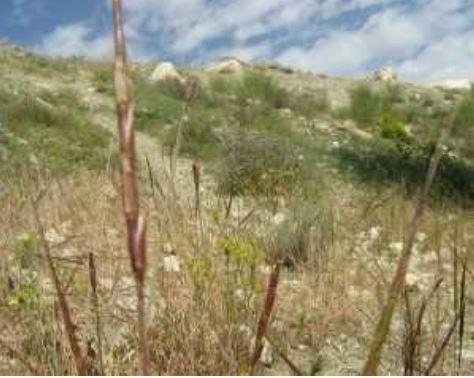
The time-travelling trawl is possible following the launch of the Open Wild Wheat, a directory which includes the genetic sequences of 150 wild wheats belonging to a goat grass species called Aegilops tauschii ssp. strangulata. This wild relative, found in the fertile crescent round the Caspian sea, has contributed the D genome pillar, one of the three genomes found in bread wheat.
The directory is the crowd-funded outcome of an international consortium led by wheat researchers at the John Innes Centre, Norwich, UK, and Kansas State University. Contributors from academic institutions and industry spanning 15 countries raised $150,000 to fund the sequencing.
Dr Brande Wulff, from the John Innes Centre, explained the motivation behind the project: "If you sequence a single individual you just get a snapshot. So, to understand the whole genetic diversity that comes with a species we decided to sequence not one but 150."
Wild wheats come with plenty of feral characteristics including seed-shatter, long generation times and off-putting spikes which can lead to choking in dogs and other animals.
"At a time when our hunter-gatherer forefathers were transitioning to farming, they would have come across a field of plants and wild wheats. Our ancestors would have starved to death if they'd relied upon these for their daily bread," says Dr Wulff.
Ten thousand years of domestication and intensive breeding has turned wheat into the highly nutritious, high-yielding, iconic crop that feeds much of the world population today.
But this has come at a cost. The hardy relatives have something their elite wheat cultivar cousins do not have: genetic diversity within which lies protective traits such as disease resistance as well as variation in flowering time and micronutrients.
Dr Jesse Poland of Kansas State University, who co-leads the project, explained: "Over the last 100 years, breeders and farmers have been trying to recruit some of that genetic diversity back into the elites, but it's an uphill struggle. It takes many years of breeding to produce a wheat strain which combines high-yielding, bread-making properties with just one resistance gene from the wild relative."
The Open Wild Wheat directory offers a "diversity" panel which allows researchers and breeders to search for candidate disease resistance genes and other useful variation.
The resource has emerged alongside two complementary technologies: speed cloning, a resource which allows breeders to clone candidate genes recovered from the directory; and speed breeding, the intensive wheat growing platform developed by Dr Wulff alongside colleagues from the University of Queensland. Speed breeding allows traits from wild relatives to be moved rapidly into elite varieties, prior to field trials.
Dr Carolina Paola Sansaloni one of the collaborators from CIMMYT said: "We are going back to the wild relatives of wheat to identify and incorporate into modern cultivars the hardy genes lost during evolution and domestication of wheat."
The directory assembled by the consortium contains enough data, if printed on A4 paper, to stretch almost to the moon.
Searching for the needle in this statistical haystack involves scanning genetic variation for small sequence signatures – candidate genes – associated with resistance or susceptibility to diseases such as wheat stem rust or powdery mildew.
And the technology works, says Dr Wulff: "We have cloned four resistance genes using this technology, so we know it's effective. We can really speed up the discovery of resistance genes. We can recover the very best from the past to make a great crop even greater. "
To find out more about the Open Wild Wheat directory go to: http://www.openwildwheat.org/
###
Link to photographs:
https://drive.google.com/open?id=138FeWtYWLmgSknWQ6WPYZmsF11R9GTfW
Notes for Editors
Contacts
Press Contact: Adrian Galvin – [email protected]
Tel: 01603 450238 Out of Hours Tel: 07881 255193
About the John Innes Centre
The John Innes Centre is an independent, international centre of excellence in plant science and microbiology.
Our mission is to generate knowledge of plants and microbes through innovative research, to train scientists for the future, to apply our knowledge of nature's diversity to benefit agriculture, the environment, human health, and wellbeing, and engage with policy makers and the public.
To achieve these goals we establish pioneering long-term research objectives in plant and microbial science, with a focus on genetics. These objectives include promoting the translation of research through partnerships to develop improved crops and to make new products from microbes and plants for human health and other applications. We also create new approaches, technologies and resources that enable research advances and help industry to make new products. The knowledge, resources and trained researchers we generate help global societies address important challenges including providing sufficient and affordable food, making new products for human health and industrial applications, and developing sustainable bio-based manufacturing.
This provides a fertile environment for training the next generation of plant and microbial scientists, many of whom go on to careers in industry and academia, around the world.
The John Innes Centre is strategically funded by the Biotechnology and Biological Sciences Research Council (BBSRC). In 2015-2016 the John Innes Centre received a total of £30.1 million from the BBSRC.
The John Innes Centre is also supported by the John Innes Foundation through provision of research accommodation and long-term support of the Rotation PhD programme.
The John Innes Centre is the winner of the BBSRC's 2013 – 2016 Excellence with Impact award. For more information about the John Innes Centre visit our website http://www.jic.ac.uk
About BBSRC
The Biotechnology and Biological Sciences Research Council (BBSRC) is part of UK Research and Innovation, a non-departmental public body funded by a grant-in-aid from the UK government.
BBSRC invests in world-class bioscience research and training on behalf of the UK public. Our aim is to further scientific knowledge, to promote economic growth, wealth and job creation and to improve quality of life in the UK and beyond.
Funded by government, BBSRC invested £469 million in world-class bioscience in 2016-17. We support research and training in universities and strategically funded institutes. BBSRC research and the people we fund are helping society to meet major challenges, including food security, green energy and healthier, longer lives. Our investments underpin important UK economic sectors, such as farming, food, industrial biotechnology and pharmaceuticals
For more information about BBSRC, our science and our impact see: http://www.bbsrc.ac.uk
For more information about BBSRC strategically funded institutes see: http://www.bbsrc.ac.uk/institutes
Media Contact
Adrian Galvin
[email protected]
01-603-450-238
@johninnescentre
http://www.jic.ac.uk