• HOME
  • NEWS
  • EXPLORE
    • CAREER
      • Companies
      • Jobs
    • EVENTS
    • iGEM
      • News
      • Team
    • PHOTOS
    • VIDEO
    • WIKI
  • BLOG
  • COMMUNITY
    • FACEBOOK
    • INSTAGRAM
    • TWITTER
Saturday, February 7, 2026
BIOENGINEER.ORG
No Result
View All Result
  • Login
  • HOME
  • NEWS
  • EXPLORE
    • CAREER
      • Companies
      • Jobs
        • Lecturer
        • PhD Studentship
        • Postdoc
        • Research Assistant
    • EVENTS
    • iGEM
      • News
      • Team
    • PHOTOS
    • VIDEO
    • WIKI
  • BLOG
  • COMMUNITY
    • FACEBOOK
    • INSTAGRAM
    • TWITTER
  • HOME
  • NEWS
  • EXPLORE
    • CAREER
      • Companies
      • Jobs
        • Lecturer
        • PhD Studentship
        • Postdoc
        • Research Assistant
    • EVENTS
    • iGEM
      • News
      • Team
    • PHOTOS
    • VIDEO
    • WIKI
  • BLOG
  • COMMUNITY
    • FACEBOOK
    • INSTAGRAM
    • TWITTER
No Result
View All Result
Bioengineer.org
No Result
View All Result
Home NEWS Science News Health

Patients to skip the lab, get immediate results with new blood test technology

Bioengineer by Bioengineer
March 26, 2018
in Health
Reading Time: 2 mins read
0
Share on FacebookShare on TwitterShare on LinkedinShare on RedditShare on Telegram
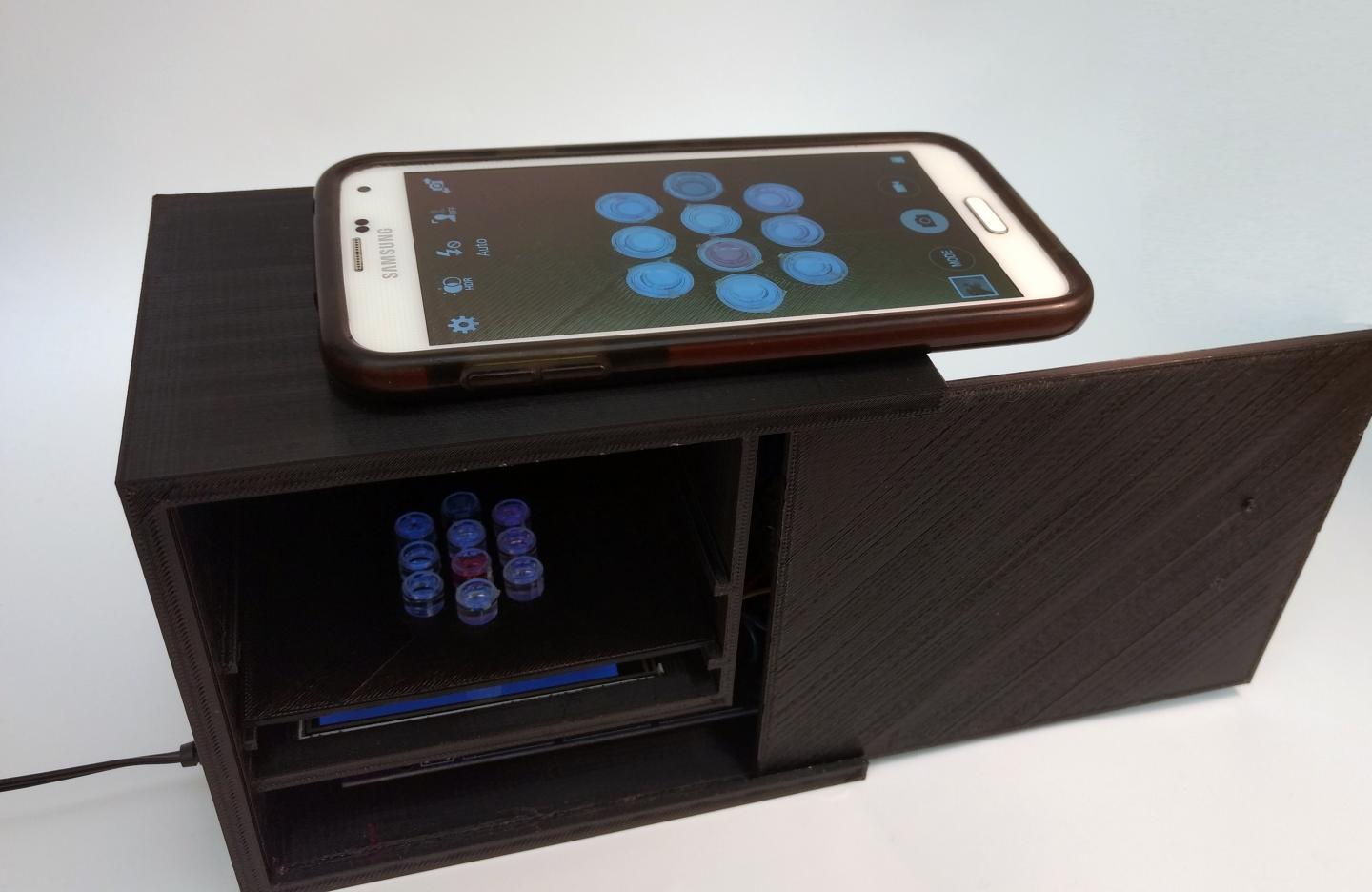
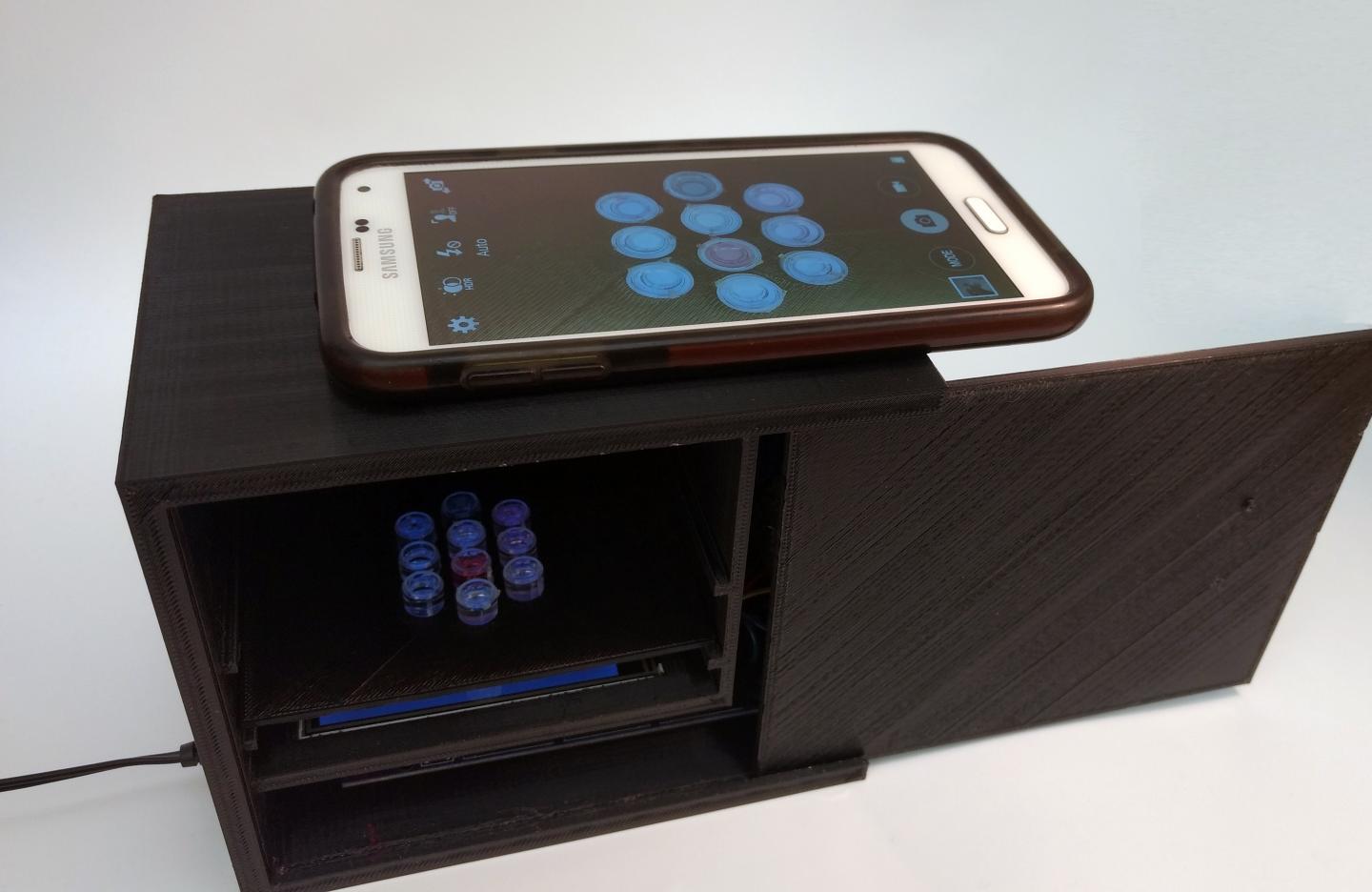
IMAGE

Credit: Arsenii Zhdanov

TAMPA, Fla. (March 26, 2018)- The often costly, time consuming process of obtaining bloodwork and urinalysis could soon get a major overhaul. Researchers at the University of South Florida in Tampa have created a mobile version of the "Enzyme Linked Immunosorbent Assay" (ELISA), the gold standard technique used to detect the presence of an antibody or antigen. Instead of sending patients to a laboratory, new cellphone-based technology allows for the very same test to be conducted in the doctor's office, clinic or even in a remote area.

"ELISA is an important technology for biochemical analysis of proteins and hormones and is critical for the diagnosis of many diseases, such as HIV and Lyme Disease," said corresponding author Anna Pyayt, PhD, assistant professor at the University of South Florida College of Engineering. "But the machines required for the incubation and reading are expensive and bulky. The MELISA allows patients to undergo testing and obtain results at point-of-care."

The Mobile Enzyme Linked Immunosorbent Assay (MELISA) is detailed in an article just published in Biosensors and Bioelectronics. The device accurately measures progesterone levels, a key hormone that impacts female fertility and is indicative of some cancers. MELISA consists of a water bath heater that incubates samples at a target temperature and analyzes them via images taken by mobile phone. It uses color analysis to determine the RGB (red, green, blue) color components of each sample. The blue color component is used for further analysis due to its sensitivity to the changes in progesterone concentration.

"It is designed to make biomedical testing simple and affordable. When low cost testing can be integrated with routine clinic visits, this would greatly improve the quality of healthcare and detect worrisome signs earlier, Dr. Pyayt said.

The portable MELISA weighs just one pound, dramatically helping older patients suffering chronic conditions and those across the world. Dr. Pyayt and her team at USF are now calibrating MELISA for a variety of tests including testosterone. With those results, they'll apply for FDA approval so clinics can start using the device.

###

Media Contact

Tina Meketa
[email protected]
813-955-2593

http://www.hsc.usf.edu

Share12Tweet7Share2ShareShareShare1

Related Posts

Exploring Decision-Making in Dementia Caregivers’ Mobility

February 7, 2026

Succinate Receptor 1 Limits Blood Cell Formation, Leukemia

February 7, 2026

Palmitoylation of Tfr1 Drives Platelet Ferroptosis and Exacerbates Liver Damage in Heat Stroke

February 7, 2026

Oxygen-Enhanced Dual-Section Microneedle Patch Improves Drug Delivery and Boosts Photodynamic and Anti-Inflammatory Treatment for Psoriasis

February 7, 2026
Please login to join discussion

POPULAR NEWS

  • Robotic Ureteral Reconstruction: A Novel Approach

    Robotic Ureteral Reconstruction: A Novel Approach

    82 shares
    Share 33 Tweet 21
  • Digital Privacy: Health Data Control in Incarceration

    63 shares
    Share 25 Tweet 16
  • Study Reveals Lipid Accumulation in ME/CFS Cells

    57 shares
    Share 23 Tweet 14
  • Breakthrough in RNA Research Accelerates Medical Innovations Timeline

    53 shares
    Share 21 Tweet 13

About

We bring you the latest biotechnology news from best research centers and universities around the world. Check our website.

Follow us

Recent News

Florida Cane Toad: Complex Spread and Selective Evolution

Exploring Decision-Making in Dementia Caregivers’ Mobility

Succinate Receptor 1 Limits Blood Cell Formation, Leukemia

Subscribe to Blog via Email

Enter your email address to subscribe to this blog and receive notifications of new posts by email.

Join 73 other subscribers
  • Contact Us

Bioengineer.org © Copyright 2023 All Rights Reserved.

Welcome Back!

Login to your account below

Forgotten Password?

Retrieve your password

Please enter your username or email address to reset your password.

Log In
No Result
View All Result
  • Homepages
    • Home Page 1
    • Home Page 2
  • News
  • National
  • Business
  • Health
  • Lifestyle
  • Science

Bioengineer.org © Copyright 2023 All Rights Reserved.