• HOME
  • NEWS
  • EXPLORE
    • CAREER
      • Companies
      • Jobs
    • EVENTS
    • iGEM
      • News
      • Team
    • PHOTOS
    • VIDEO
    • WIKI
  • BLOG
  • COMMUNITY
    • FACEBOOK
    • INSTAGRAM
    • TWITTER
Saturday, February 7, 2026
BIOENGINEER.ORG
No Result
View All Result
  • Login
  • HOME
  • NEWS
  • EXPLORE
    • CAREER
      • Companies
      • Jobs
        • Lecturer
        • PhD Studentship
        • Postdoc
        • Research Assistant
    • EVENTS
    • iGEM
      • News
      • Team
    • PHOTOS
    • VIDEO
    • WIKI
  • BLOG
  • COMMUNITY
    • FACEBOOK
    • INSTAGRAM
    • TWITTER
  • HOME
  • NEWS
  • EXPLORE
    • CAREER
      • Companies
      • Jobs
        • Lecturer
        • PhD Studentship
        • Postdoc
        • Research Assistant
    • EVENTS
    • iGEM
      • News
      • Team
    • PHOTOS
    • VIDEO
    • WIKI
  • BLOG
  • COMMUNITY
    • FACEBOOK
    • INSTAGRAM
    • TWITTER
No Result
View All Result
Bioengineer.org
No Result
View All Result
Home NEWS Science News Biology

Plants overcome hunger with the aid of autophagy

Bioengineer by Bioengineer
March 12, 2018
in Biology
Reading Time: 2 mins read
0
Share on FacebookShare on TwitterShare on LinkedinShare on RedditShare on Telegram
IMAGE

Credit: Masanori Izumi

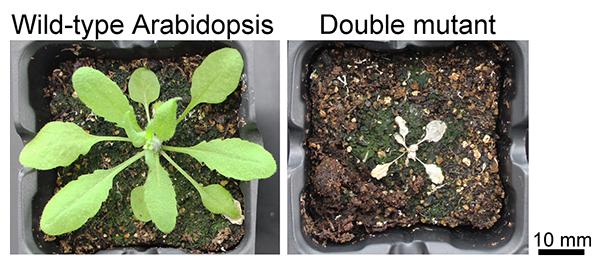
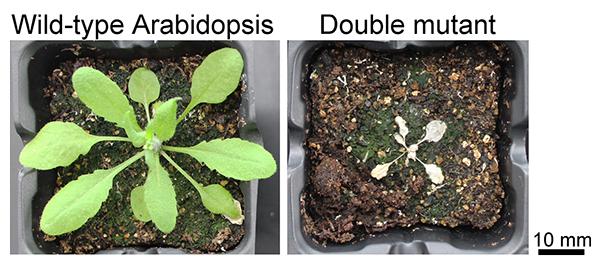
Researchers at Tohoku University have found that plants activate autophagy in their leaf cells to derive amino acids that are used for survival under energy-starved "hunger" conditions. The findings show that amino acid utilization in plants can be controlled by the manipulation of autophagy.

Plants use solar energy for growth through a process known as photosynthesis. Photosynthesis reactions occur in chloroplasts, which are the intracellular compartments in green organs, mainly in leaves. In nature, plants cannot get enough solar energy when neighboring plants shade them from the sun. Under agricultural fields, insufficient sunshine due to unusual weather, or natural disasters such as flooding, strongly inhibits energy acquisition in crop plants. Therefore, many researchers are interested in how plants cope with their "hunger" due to the shortage of solar energy.

Drs. Masanori Izumi and Hiroyuki Ishida from Tohoku University had previously demonstrated that plant chloroplasts are actively digested via a process of autophagy during energy starvation. Autophagy is the "self-eating" process of consuming the portion of intracellular proteins in the cells of eukaryotes such as yeast, humans and plants. The research group focused on the precise role of chloroplast-targeted autophagy in the plant survival strategy under low-energy stress. "We hypothesized that chloroplast-associated autophagy is closely linked to the amino acid metabolism in energy-starved plants", said Izumi.

According to the study, when a cress plant known as Arabidopsis thaliana is exposed to hunger stress as plants are transferred into complete darkness they can continue to grow for several days; autophagic digestion of chloroplast proteins are rapidly activated and amino acid levels increase. This response during the early stage of hunger stress is suppressed in the mutant plants lacking autophagy machinery.

The group also found that the levels of branched chain amino acids (BCAAs: valine, leucine, isoleucine) especially increase in wild-type Arabidopsis; conversely, the increase in BCAAs are strongly compromised in the mutants of autophagy. "The mutants lacking enzymes required for the reuse of BCAAs as an energy source also showed the reduced tolerance to hunger stress – we expect that autophagy and BCAA reuse pathways cooperate in plants to overcome such stress," explained Izumi.

The amino acid recycling is important in crop productivity, as amino acids derived from protein breakdown are mobilized and stored in seeds in cereal crops before harvest. The current findings show the possibility that the manipulation of autophagy allows plants to modify their amino acid use. The researchers believe that further elucidation of regulation mechanisms of chloroplast autophagy could provide new avenues to improve the quality or productivity in cereal cultivation.

###

Media Contact

Masanori Izumi
[email protected]
@TohokuUniPR

http://www.tohoku.ac.jp/en/

Original Source

https://www.tohoku.ac.jp/en/press/plants_overcome_hunger.html http://dx.doi.org/10.1093/pcp/pcy005

Share12Tweet8Share2ShareShareShare2

Related Posts

Florida Cane Toad: Complex Spread and Selective Evolution

Florida Cane Toad: Complex Spread and Selective Evolution

February 7, 2026
New Study Uncovers Mechanism Behind Burn Pit Particulate Matter–Induced Lung Inflammation

New Study Uncovers Mechanism Behind Burn Pit Particulate Matter–Induced Lung Inflammation

February 6, 2026

DeepBlastoid: Advancing Automated and Efficient Evaluation of Human Blastoids with Deep Learning

February 6, 2026

Navigating the Gut: The Role of Formic Acid in the Microbiome

February 6, 2026
Please login to join discussion

POPULAR NEWS

  • Robotic Ureteral Reconstruction: A Novel Approach

    Robotic Ureteral Reconstruction: A Novel Approach

    82 shares
    Share 33 Tweet 21
  • Digital Privacy: Health Data Control in Incarceration

    63 shares
    Share 25 Tweet 16
  • Study Reveals Lipid Accumulation in ME/CFS Cells

    57 shares
    Share 23 Tweet 14
  • Breakthrough in RNA Research Accelerates Medical Innovations Timeline

    53 shares
    Share 21 Tweet 13

About

We bring you the latest biotechnology news from best research centers and universities around the world. Check our website.

Follow us

Recent News

Digital Health Perspectives from Baltic Sea Experts

Florida Cane Toad: Complex Spread and Selective Evolution

Exploring Decision-Making in Dementia Caregivers’ Mobility

Subscribe to Blog via Email

Enter your email address to subscribe to this blog and receive notifications of new posts by email.

Join 73 other subscribers
  • Contact Us

Bioengineer.org © Copyright 2023 All Rights Reserved.

Welcome Back!

Login to your account below

Forgotten Password?

Retrieve your password

Please enter your username or email address to reset your password.

Log In
No Result
View All Result
  • Homepages
    • Home Page 1
    • Home Page 2
  • News
  • National
  • Business
  • Health
  • Lifestyle
  • Science

Bioengineer.org © Copyright 2023 All Rights Reserved.