

• HOME
  • NEWS
  • EXPLORE
    • CAREER
      • Companies
      • Jobs
    • EVENTS
    • iGEM
      • News
      • Team
    • PHOTOS
    • VIDEO
    • WIKI
  • BLOG
  • COMMUNITY
    • FACEBOOK
    • INSTAGRAM
    • TWITTER
Saturday, February 7, 2026
BIOENGINEER.ORG
No Result
View All Result
  • Login
  • HOME
  • NEWS
  • EXPLORE
    • CAREER
      • Companies
      • Jobs
        • Lecturer
        • PhD Studentship
        • Postdoc
        • Research Assistant
    • EVENTS
    • iGEM
      • News
      • Team
    • PHOTOS
    • VIDEO
    • WIKI
  • BLOG
  • COMMUNITY
    • FACEBOOK
    • INSTAGRAM
    • TWITTER
  • HOME
  • NEWS
  • EXPLORE
    • CAREER
      • Companies
      • Jobs
        • Lecturer
        • PhD Studentship
        • Postdoc
        • Research Assistant
    • EVENTS
    • iGEM
      • News
      • Team
    • PHOTOS
    • VIDEO
    • WIKI
  • BLOG
  • COMMUNITY
    • FACEBOOK
    • INSTAGRAM
    • TWITTER
No Result
View All Result
Bioengineer.org
No Result
View All Result
Home NEWS Science News Biology

Inherited mutation leads to overproduction of EPO

Bioengineer by Bioengineer
March 8, 2018
in Biology
Reading Time: 2 mins read
0
Share on FacebookShare on TwitterShare on LinkedinShare on RedditShare on Telegram
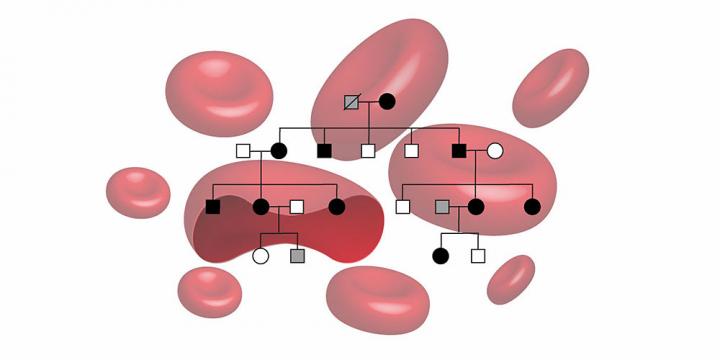
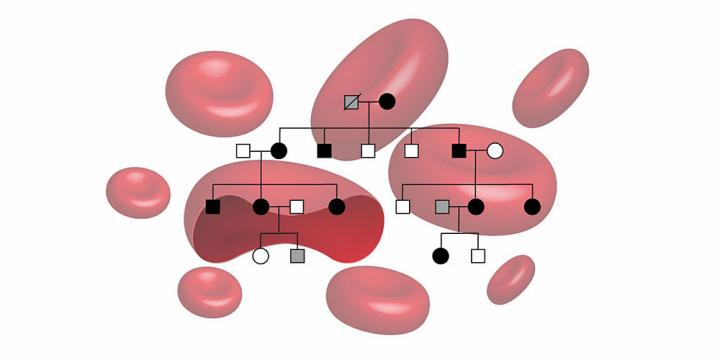
IMAGE

Credit: (Image: University of Basel, Department of Biomedicine)

A newly-discovered hereditary mutation is responsible for an increased production of erythropoietin (EPO) in the blood. This mutation causes a messenger RNA (mRNA) that is not normally involved in the formation of proteins to be reprogrammed so that it produces EPO, thus abnormally increasing the number of red blood cells. Researchers from the Department of Biomedicine at the University of Basel and University Hospital Basel reported these findings in The New England Journal of Medicine.

In patients suffering from erythrocytosis, the red blood cell mass (erythrocytes) is exceptionally high. The disease is usually triggered by a genetic disorder in the bone marrow, which leads to increased production of red blood cells.

Researchers from the University of Basel and University Hospital Basel have now identified the first mutation in the EPO gene in a family with hereditary erythrocytosis. Ten affected family members from four generations took part in the study.

Using a genome-wide linkage analysis and gene sequencing, the researchers discovered that all of the affected family members lacked a single base in the EPO gene. As the EPO hormone increases the production of red blood cells, it was likely that this mutation caused the disease.

Overproduction instead of failure

However, the researchers were initially puzzled. This mutation would actually lead to a loss of function of the EPO gene, because the absence of the base shifts the reading frame of the genetic code, meaning that no more EPO protein can be formed. Despite this, the concentration of EPO hormone in the patients' blood measurably increased rather than decreased.

The explanation was found using the CRISPR method, which allowed the researchers to engineer cells carrying the EPO mutation. There is a second, hidden mRNA in the EPO gene that is not normally involved in the production of a protein. As the researchers show, the mutation also leads to a shift in the reading frame of this second mRNA, this time with the result that more biologically active EPO hormone is produced.

"The mechanism is intriguing," says study leader Professor Radek Skoda from the University of Basel's Department of Biomedicine. "The mutation reprograms the gene product so that it gains a new function and is misused to overproduce EPO." With consequences for the patients, who suffer from headaches and dizziness thanks to the increased red blood mass.

Mutations in the EPO gene should be taken into account in future searches for the causes of hereditary erythrocytosis, write the researchers in The New England Journal of Medicine.

###

Media Contact

Cornelia Niggli
[email protected]
@UniBasel_en

http://www.unibas.ch/

Original Source

https://www.unibas.ch/en/News-Events/News/Uni-Research/Inherited-mutation-leads-to-overproduction-of-EPO.html http://dx.doi.org/10.1056/NEJMoa1709064

Share12Tweet8Share2ShareShareShare2

Related Posts

Florida Cane Toad: Complex Spread and Selective Evolution

Florida Cane Toad: Complex Spread and Selective Evolution

February 7, 2026
New Study Uncovers Mechanism Behind Burn Pit Particulate Matter–Induced Lung Inflammation

New Study Uncovers Mechanism Behind Burn Pit Particulate Matter–Induced Lung Inflammation

February 6, 2026

DeepBlastoid: Advancing Automated and Efficient Evaluation of Human Blastoids with Deep Learning

February 6, 2026

Navigating the Gut: The Role of Formic Acid in the Microbiome

February 6, 2026
Please login to join discussion

POPULAR NEWS

  • Robotic Ureteral Reconstruction: A Novel Approach

    Robotic Ureteral Reconstruction: A Novel Approach

    82 shares
    Share 33 Tweet 21
  • Digital Privacy: Health Data Control in Incarceration

    63 shares
    Share 25 Tweet 16
  • Study Reveals Lipid Accumulation in ME/CFS Cells

    57 shares
    Share 23 Tweet 14
  • Breakthrough in RNA Research Accelerates Medical Innovations Timeline

    53 shares
    Share 21 Tweet 13

About

We bring you the latest biotechnology news from best research centers and universities around the world. Check our website.

Follow us

Recent News

Evaluating Pediatric Emergency Care Quality in Ethiopia

TPMT Expression Predictions Linked to Azathioprine Side Effects

Improving Dementia Care with Enhanced Activity Kits

Subscribe to Blog via Email

Success! An email was just sent to confirm your subscription. Please find the email now and click 'Confirm' to start subscribing.

Join 73 other subscribers
  • Contact Us

Bioengineer.org © Copyright 2023 All Rights Reserved.

Welcome Back!

Login to your account below

Forgotten Password?

Retrieve your password

Please enter your username or email address to reset your password.

Log In
No Result
View All Result
  • Homepages
    • Home Page 1
    • Home Page 2
  • News
  • National
  • Business
  • Health
  • Lifestyle
  • Science

Bioengineer.org © Copyright 2023 All Rights Reserved.