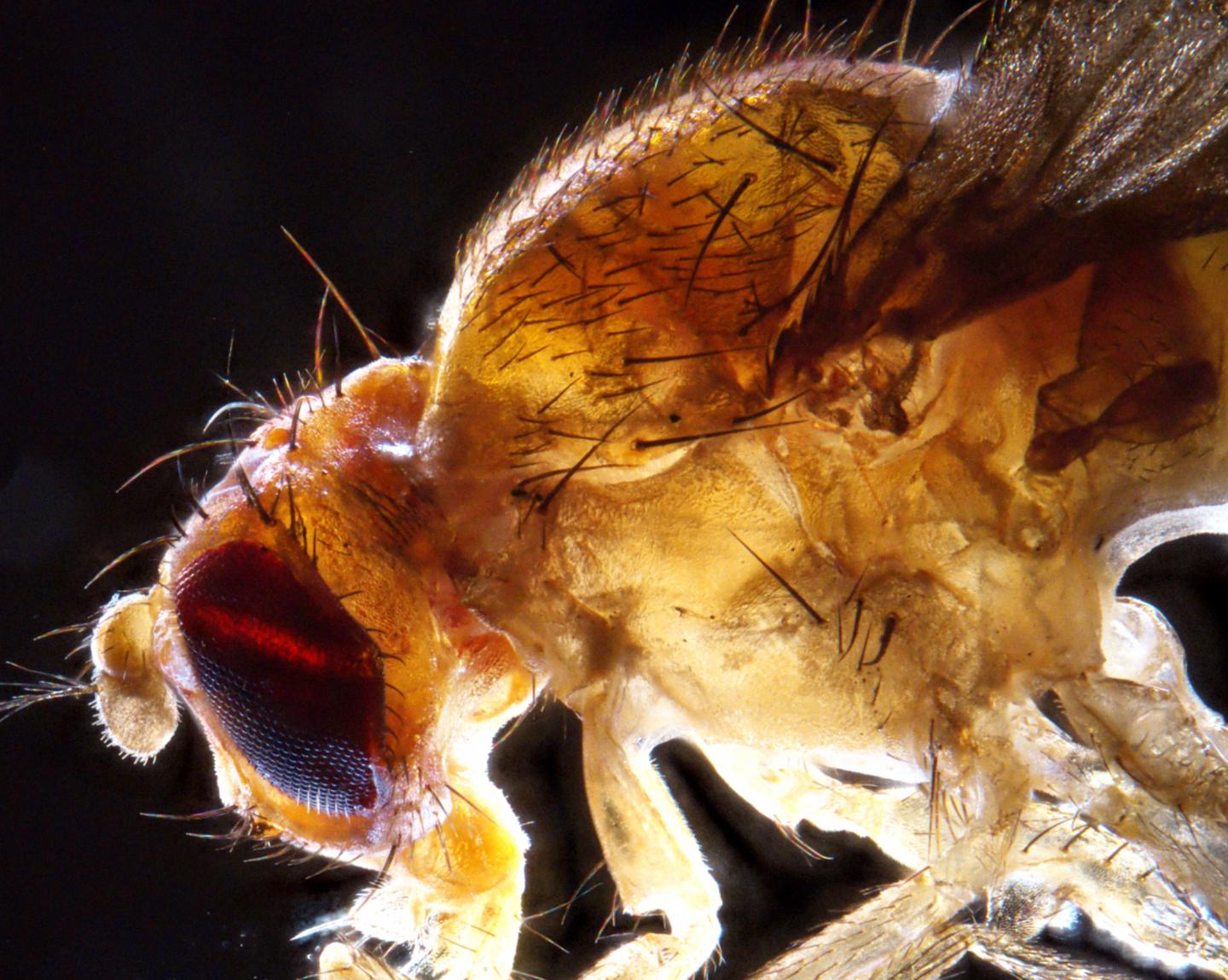
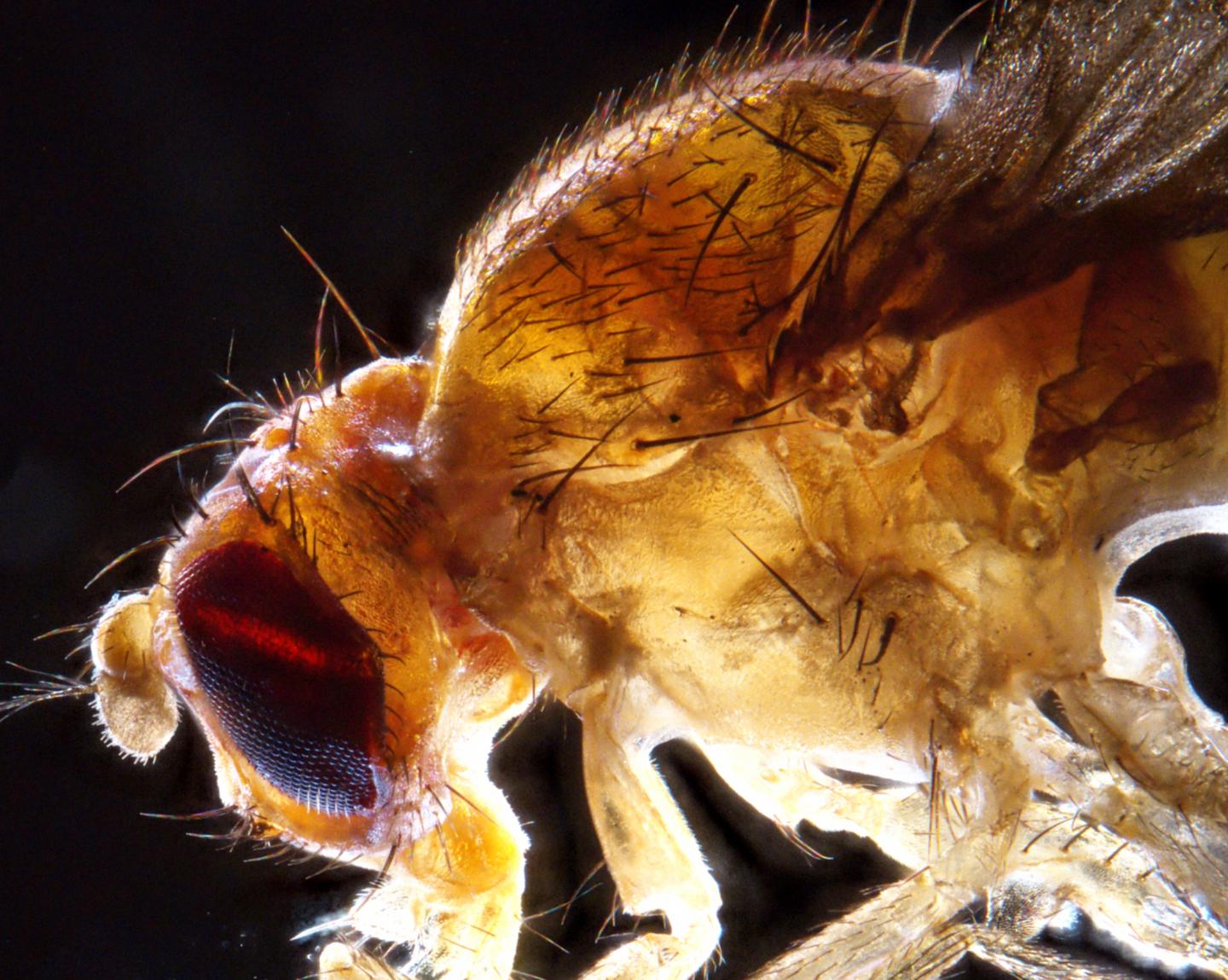
Credit: Cincinnati Children's Confocal Imaging Core
CINCINNATI – In findings that one day may help people sleep better, scientists have uncovered the first molecular evidence that two anciently conserved proteins in the brains of insects and mammals share a common biological ancestry as regulators of body temperature rhythms crucial to metabolism and sleep.
Researchers at Cincinnati Children's Hospital Medical Center and Kyoto University in Japan published their data in the journal Genes & Development. The scientists study fruit flies (Drosophila) and mice to solve mysteries about body temperature rhythms in insects and mammals.
"We're looking for a mechanistic understanding of how body temperature rhythms are regulated. This would have positive impacts on the treatment of circadian clock diseases, sleep problems and human health," explains Fumika Hamada, PhD, Division of Pediatric Ophthalmology at Cincinnati Children's, one of the study's lead investigators.
Sound regulation of the circadian clock and body temperature are essential to sleep and health, according to researchers. A growing body of health research indicates sleep problems affect a wide range of people–contributing to poor concentration, daytime drowsiness, depression, gastrointestinal disorders and other health conditions.
Co-leading the research with Hamada was Hitoshi Okamura, MD, PhD, Department of Systems Biology, Kyoto University.
Cold Blooded vs. Warm Blooded
The current study finds that a receptor protein in the clock cells of a fruit fly's brain called DH31R (diuretic hormone 31 receptor) regulates body temperature rhythms while the diurnal insects are active during the day. But researchers were surprised to also learn that a receptor protein (calcitonin receptor–Calcr) is expressed in the master clock cells of a mouse's brain. They show Calcr mediates body temperature fluctuations when the nocturnal animals are active at night.
The DH31R and Calcr proteins have a common biological ancestry and similar amino acid sequences. This evolutionary conservation–or the sharing of life's basic building blocks among evolving species–makes the proteins, their related genetics and resulting biology critical for studies comparing circadian regulation in insects and mammals.
Fruit flies are ectotherms and rely on external sources for body heat so their body temperature is close to surrounding temperatures. Previous studies indicate fruit flies seek colder temperature in the morning and warmer temperature in the evening, which sets their overall body temperature rhythms throughout the day and night.
Mammals, on the other hand, control body temperature rhythm through internal heat generation. Body temperature in humans is typically lowest in the morning and highest in the evening when most people are active. It cools down at night as people become sleepy.
Study authors say their study should have a significant impact for researchers who study circadian rhythms, sleep metabolism, physiology, animal behavior and evolution. They are following up their current findings by probing more deeply into the upstream and downtown genetic and molecular processes that regulate body temperature rhythms and sleep.
###
Funding support for the research came in part from: internal grants from Cincinnati Children's; from the Japan Science and Technology Agency (PRESTO) and its programs for Precursory Research for Embryonic Science and Technology and Core Research for Evolutional Science and Technology (JPMJCR14W3); the March of Dimes; the National Institutes of Health (R01-GM107582); the Project for Elucidating and Controlling Mechanisms of Aging and Longevity from Japan Agency for Medical Research and Development (AMED), and the Ministry of Education, Culture, Sports, Science and Technology of Japan (15H01843, 15H05933, 17H01524).
Media Contact
Nick Miller
[email protected]
513-803-6035
@CincyChildrens
http://www.cincinnatichildrens.org
Related Journal Article
http://dx.doi.org/10.1101/gad.307884.117