• HOME
  • NEWS
  • EXPLORE
    • CAREER
      • Companies
      • Jobs
    • EVENTS
    • iGEM
      • News
      • Team
    • PHOTOS
    • VIDEO
    • WIKI
  • BLOG
  • COMMUNITY
    • FACEBOOK
    • INSTAGRAM
    • TWITTER
Thursday, April 2, 2026
BIOENGINEER.ORG
No Result
View All Result
  • Login
  • HOME
  • NEWS
  • EXPLORE
    • CAREER
      • Companies
      • Jobs
        • Lecturer
        • PhD Studentship
        • Postdoc
        • Research Assistant
    • EVENTS
    • iGEM
      • News
      • Team
    • PHOTOS
    • VIDEO
    • WIKI
  • BLOG
  • COMMUNITY
    • FACEBOOK
    • INSTAGRAM
    • TWITTER
  • HOME
  • NEWS
  • EXPLORE
    • CAREER
      • Companies
      • Jobs
        • Lecturer
        • PhD Studentship
        • Postdoc
        • Research Assistant
    • EVENTS
    • iGEM
      • News
      • Team
    • PHOTOS
    • VIDEO
    • WIKI
  • BLOG
  • COMMUNITY
    • FACEBOOK
    • INSTAGRAM
    • TWITTER
No Result
View All Result
Bioengineer.org
No Result
View All Result
Home NEWS Science News Biology

Scientists uncover how part of a protein helps primates fight HIV

Bioengineer by Bioengineer
February 13, 2018
in Biology
Reading Time: 2 mins read
0
Share on FacebookShare on TwitterShare on LinkedinShare on RedditShare on Telegram

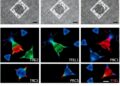
London, January 14, 2016 – Scientists have uncovered part of a protein found in humans and other primates that can help us fight off HIV. In a new study published in the journal Heliyon, researchers discover how this structure can stop HIV from working and switch on our immune system at the same time. The findings, say the authors of the study, could potentially be used in developing anti-HIV gene therapy in the future.

All primates – including humans – have a protein called TRIM5alpha. This protein can intercept HIV and related viruses and stop them from replicating and infecting more cells. It can also switch on the immune system, helping us fight HIV infection. Scientists have previously identified different parts of the TRIM5alpha protein that are responsible for the protein's ability to fight HIV.

The researchers behind the new study believe the protein switches on the immune system by attaching to another protein called "SUMO." However, two of the structures that could potentially attach to SUMO proteins are hidden inside TRIM5alpha, making it impossible for them to attach.

In the new study, researchers from Université du Québec à Trois-Rivières in Canada, the University of Colorado Boulder, and Albert Einstein College of Medicine in the United States have identified a new part of the TRIM5alpha protein that could attach to SUMO and thereby activate an immune response. They call it SIM4, or "SUMO interacting motif 4".

"HIV-1 inhibition by restriction factors is fascinating as a natural antiviral system," said Dr. Berthoux, corresponding author of the study from Université du Québec à Trois-Rivières. "Our new findings contribute to mapping how our immune systems are activated against retroviruses like HIV."

Dr. Berthoux and the team analyzed SIM4 to see if it does indeed have an effect on how we fight HIV. They found that when SIM4 is mutated, the TRIM5alpha protein can no longer attach to HIV or stop it from working. This finding suggests that SIM4 is vital for arming TRIM5alpha against HIV.

TRIM5alpha can be used in gene therapy to treating HIV infection. With this approach, the immune system could be activated, causing unwanted side effects. According to the researchers, using genes with mutations that stop this activation could be one way to optimize gene therapy.

"Our cells can mount a surprisingly complex response to viral infections," added Dr. Berthoux. "Finding a way to tweak the activity of these antiviral factors so that they target HIV, or other viruses of interest, is a valuable avenue of research."

###

Article details:

"A putative SUMO interacting motif in the B30.2/SPRY domain of rhesus macaque TRIM5α important for NF-κB/AP-1 signaling and HIV-1 restriction" by Marie-Édith Nepveu-Traversy et al. (http://www.heliyon.com/article/e00056/ ). The article appears in Heliyon (January 2016), published by Elsevier.

Media Contact

Mary Beth O'Leary
[email protected]
44-020-742-44343
@elseviernews

http://www.elsevier.com
Share12Tweet8Share2ShareShareShare2

Related Posts

Newly Discovered Chronic Pain Circuit Unveils Potential Avenues for Innovative Treatments

Newly Discovered Chronic Pain Circuit Unveils Potential Avenues for Innovative Treatments

April 2, 2026
DNA Transforms from Blueprint to Active Field Agent

DNA Transforms from Blueprint to Active Field Agent

April 2, 2026

UBC Okanagan Study Reveals How Trees Visually Signal Their Spring Rehydration

April 1, 2026

Rising Temperatures from Climate Change Associated with Reduced Newborn Size

April 1, 2026
Please login to join discussion

POPULAR NEWS

  • blank

    Revolutionary AI Model Enhances Precision in Detecting Food Contamination

    96 shares
    Share 38 Tweet 24
  • Imagine a Social Media Feed That Challenges Your Views Instead of Reinforcing Them

    1007 shares
    Share 398 Tweet 249
  • Promising Outcomes from First Clinical Trials of Gene Regulation in Epilepsy

    51 shares
    Share 20 Tweet 13
  • Popular Anti-Aging Compound Linked to Damage in Corpus Callosum, Study Finds

    44 shares
    Share 18 Tweet 11

About

We bring you the latest biotechnology news from best research centers and universities around the world. Check our website.

Follow us

Recent News

Flu Vaccine May Shield Against Heart Attack and Stroke, Even in Those Who Contract the Virus

Breakthrough in Room-Temperature Drying Provides Affordable Method to Stabilize Functional Proteins

First-in-Class Dual HIF Inhibitors Eradicate Breast, Colorectal, Melanoma, and Prostate Tumors in Mice Combined with Immunotherapy

Subscribe to Blog via Email

Enter your email address to subscribe to this blog and receive notifications of new posts by email.

Join 78 other subscribers
  • Contact Us

Bioengineer.org © Copyright 2023 All Rights Reserved.

Welcome Back!

Login to your account below

Forgotten Password?

Retrieve your password

Please enter your username or email address to reset your password.

Log In
No Result
View All Result
  • Homepages
    • Home Page 1
    • Home Page 2
  • News
  • National
  • Business
  • Health
  • Lifestyle
  • Science

Bioengineer.org © Copyright 2023 All Rights Reserved.