• HOME
  • NEWS
  • EXPLORE
    • CAREER
      • Companies
      • Jobs
    • EVENTS
    • iGEM
      • News
      • Team
    • PHOTOS
    • VIDEO
    • WIKI
  • BLOG
  • COMMUNITY
    • FACEBOOK
    • INSTAGRAM
    • TWITTER
Saturday, February 7, 2026
BIOENGINEER.ORG
No Result
View All Result
  • Login
  • HOME
  • NEWS
  • EXPLORE
    • CAREER
      • Companies
      • Jobs
        • Lecturer
        • PhD Studentship
        • Postdoc
        • Research Assistant
    • EVENTS
    • iGEM
      • News
      • Team
    • PHOTOS
    • VIDEO
    • WIKI
  • BLOG
  • COMMUNITY
    • FACEBOOK
    • INSTAGRAM
    • TWITTER
  • HOME
  • NEWS
  • EXPLORE
    • CAREER
      • Companies
      • Jobs
        • Lecturer
        • PhD Studentship
        • Postdoc
        • Research Assistant
    • EVENTS
    • iGEM
      • News
      • Team
    • PHOTOS
    • VIDEO
    • WIKI
  • BLOG
  • COMMUNITY
    • FACEBOOK
    • INSTAGRAM
    • TWITTER
No Result
View All Result
Bioengineer.org
No Result
View All Result
Home NEWS Science News Biology

Efforts needed to stop the spread of carbapenem-resistant Acinetobacter baumannii

Bioengineer by Bioengineer
February 12, 2018
in Biology
Reading Time: 2 mins read
0
Share on FacebookShare on TwitterShare on LinkedinShare on RedditShare on Telegram
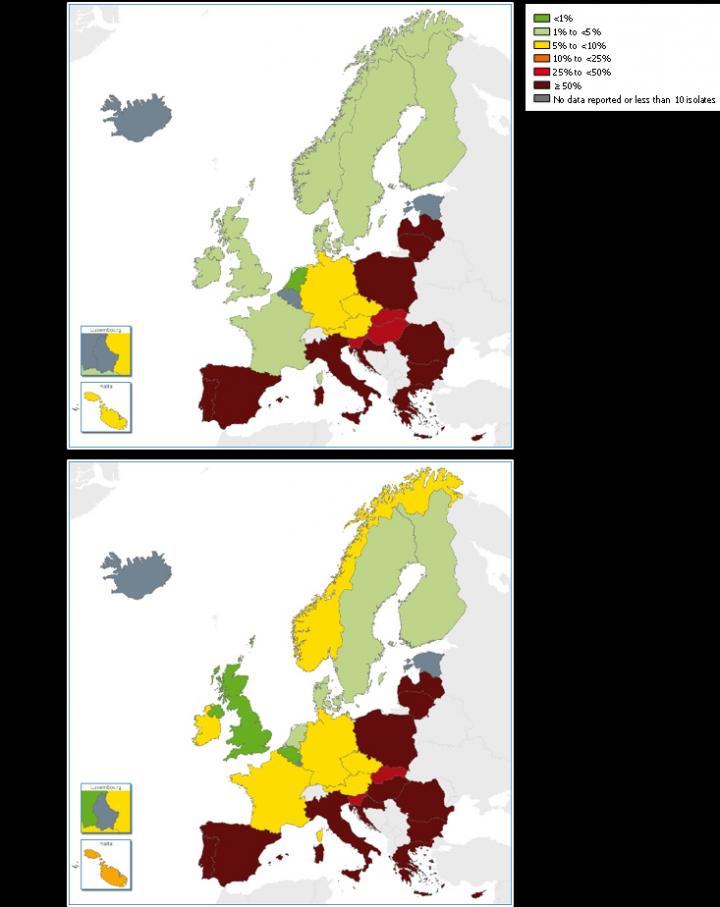
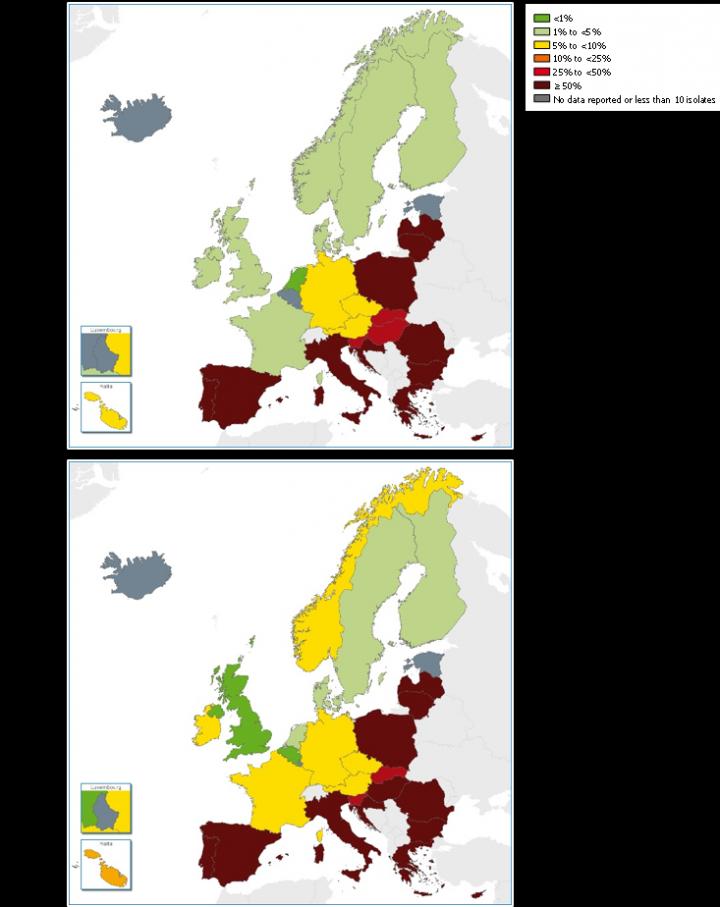
IMAGE

Credit: European Centre for Disease Prevention and Control

Acinetobacter baumannii is the cause of difficult-to-treat infections in healthcare settings in Europe due to its increasing resistance to antimicrobial agents, in particular the carbapenems. Outbreaks of carbapenem-resistant A. baumannii in healthcare facilities have been reported in Europe and worldwide.

Infections with carbapenem-resistant A. baumannii occur in patients with severe underlying diseases, mainly in intensive care units, and are often related to invasive procedures or indwelling devices. However, such infections are increasingly being reported in patients admitted to conventional medical and surgical wards. A. baumannii is difficult to eradicate once it has become endemic.

Recent ECDC data from the European survey on carbapenemase-producing Enterobacteriaceae (EuSCAPE) project and from the European Antimicrobial Resistance Surveillance Network (EARS-Net) confirmed that although there is already a high resistance baseline in some countries, there has been an overall increase of carbapenem-resistant A. baumannii in Europe.

These data confirm an already alarming situation that continues to worsen in many EU/EEA countries. While carbapenems traditionally were the antibiotics of choice for treatment of A. baumannii infections, resistance to these drugs has led to increased use of colistin as last-line treatment. Although still rare, resistance to colistin in A. baumannii is also increasingly being reported in Europe.

ECDC's risk assessment highlights the need of increased efforts to face this significant threat to patients and healthcare systems in all EU/EEA countries and outlines options to reduce risks through clinical management, prevention of transmission in hospitals and other healthcare settings, prevention of cross-border transmission, and improvement of preparedness of EU/EEA countries.

###

Rapid risk assessment: carbapenem-resistant Acinetobacter baumannii in healthcare settings

Summary of the latest data on antibiotic resistance in the European Union, EARS-Net surveillance data

ECDC Surveillance Atlas of Infectious Diseases

Carbapenemase-producing Enterobacteriaceae in Europe: assessment by national experts from 38 countries, May 2015

European Antimicrobial Resistance Surveillance Network (EARS-Net)

European Surveillance of Antimicrobial Consumption Network (ESAC-Net)

ECDC Antimicrobial Resistance and Healthcare-associated Infections Programme

Media Contact

ECDC press office
[email protected]
46-858-601-678
@ECDC_EU

http://ecdc.europa.eu

Share12Tweet7Share2ShareShareShare1

Related Posts

Florida Cane Toad: Complex Spread and Selective Evolution

Florida Cane Toad: Complex Spread and Selective Evolution

February 7, 2026
New Study Uncovers Mechanism Behind Burn Pit Particulate Matter–Induced Lung Inflammation

New Study Uncovers Mechanism Behind Burn Pit Particulate Matter–Induced Lung Inflammation

February 6, 2026

DeepBlastoid: Advancing Automated and Efficient Evaluation of Human Blastoids with Deep Learning

February 6, 2026

Navigating the Gut: The Role of Formic Acid in the Microbiome

February 6, 2026
Please login to join discussion

POPULAR NEWS

  • Robotic Ureteral Reconstruction: A Novel Approach

    Robotic Ureteral Reconstruction: A Novel Approach

    82 shares
    Share 33 Tweet 21
  • Digital Privacy: Health Data Control in Incarceration

    63 shares
    Share 25 Tweet 16
  • Study Reveals Lipid Accumulation in ME/CFS Cells

    57 shares
    Share 23 Tweet 14
  • Breakthrough in RNA Research Accelerates Medical Innovations Timeline

    53 shares
    Share 21 Tweet 13

About

We bring you the latest biotechnology news from best research centers and universities around the world. Check our website.

Follow us

Recent News

Evaluating Pediatric Emergency Care Quality in Ethiopia

TPMT Expression Predictions Linked to Azathioprine Side Effects

Improving Dementia Care with Enhanced Activity Kits

Subscribe to Blog via Email

Success! An email was just sent to confirm your subscription. Please find the email now and click 'Confirm' to start subscribing.

Join 73 other subscribers
  • Contact Us

Bioengineer.org © Copyright 2023 All Rights Reserved.

Welcome Back!

Login to your account below

Forgotten Password?

Retrieve your password

Please enter your username or email address to reset your password.

Log In
No Result
View All Result
  • Homepages
    • Home Page 1
    • Home Page 2
  • News
  • National
  • Business
  • Health
  • Lifestyle
  • Science

Bioengineer.org © Copyright 2023 All Rights Reserved.