• HOME
  • NEWS
  • EXPLORE
    • CAREER
      • Companies
      • Jobs
    • EVENTS
    • iGEM
      • News
      • Team
    • PHOTOS
    • VIDEO
    • WIKI
  • BLOG
  • COMMUNITY
    • FACEBOOK
    • INSTAGRAM
    • TWITTER
Friday, July 24, 2026
BIOENGINEER.ORG
No Result
View All Result
  • Login
  • HOME
  • NEWS
  • EXPLORE
    • CAREER
      • Companies
      • Jobs
        • Lecturer
        • PhD Studentship
        • Postdoc
        • Research Assistant
    • EVENTS
    • iGEM
      • News
      • Team
    • PHOTOS
    • VIDEO
    • WIKI
  • BLOG
  • COMMUNITY
    • FACEBOOK
    • INSTAGRAM
    • TWITTER
  • HOME
  • NEWS
  • EXPLORE
    • CAREER
      • Companies
      • Jobs
        • Lecturer
        • PhD Studentship
        • Postdoc
        • Research Assistant
    • EVENTS
    • iGEM
      • News
      • Team
    • PHOTOS
    • VIDEO
    • WIKI
  • BLOG
  • COMMUNITY
    • FACEBOOK
    • INSTAGRAM
    • TWITTER
No Result
View All Result
Bioengineer.org
No Result
View All Result
Home NEWS Science News Health

The fight against tooth decay gets help with a new smart material from U of T researchers

Bioengineer by Bioengineer
February 12, 2018
in Health
Reading Time: 2 mins read
0
Share on FacebookShare on TwitterShare on LinkedinShare on RedditShare on Telegram
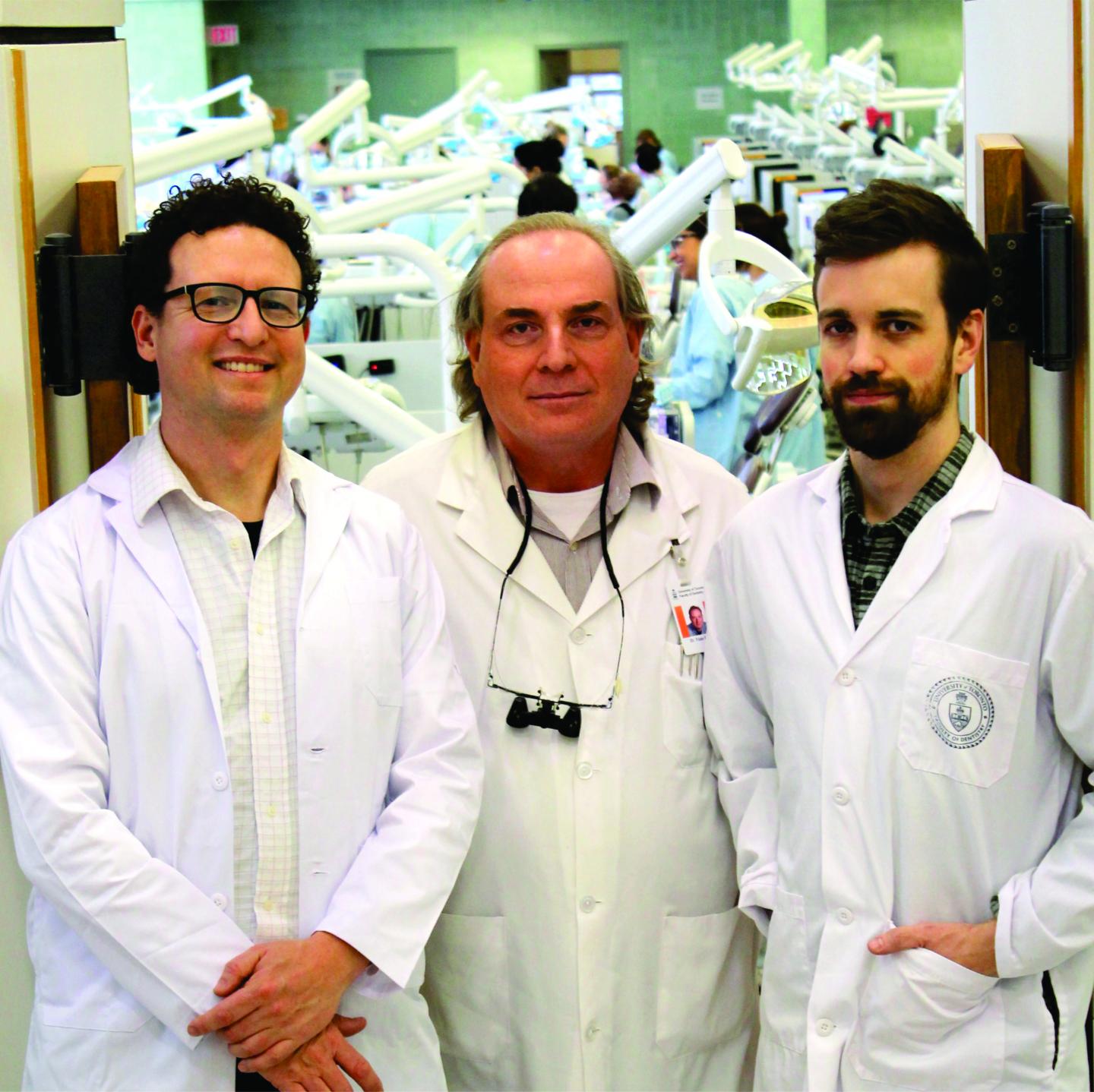
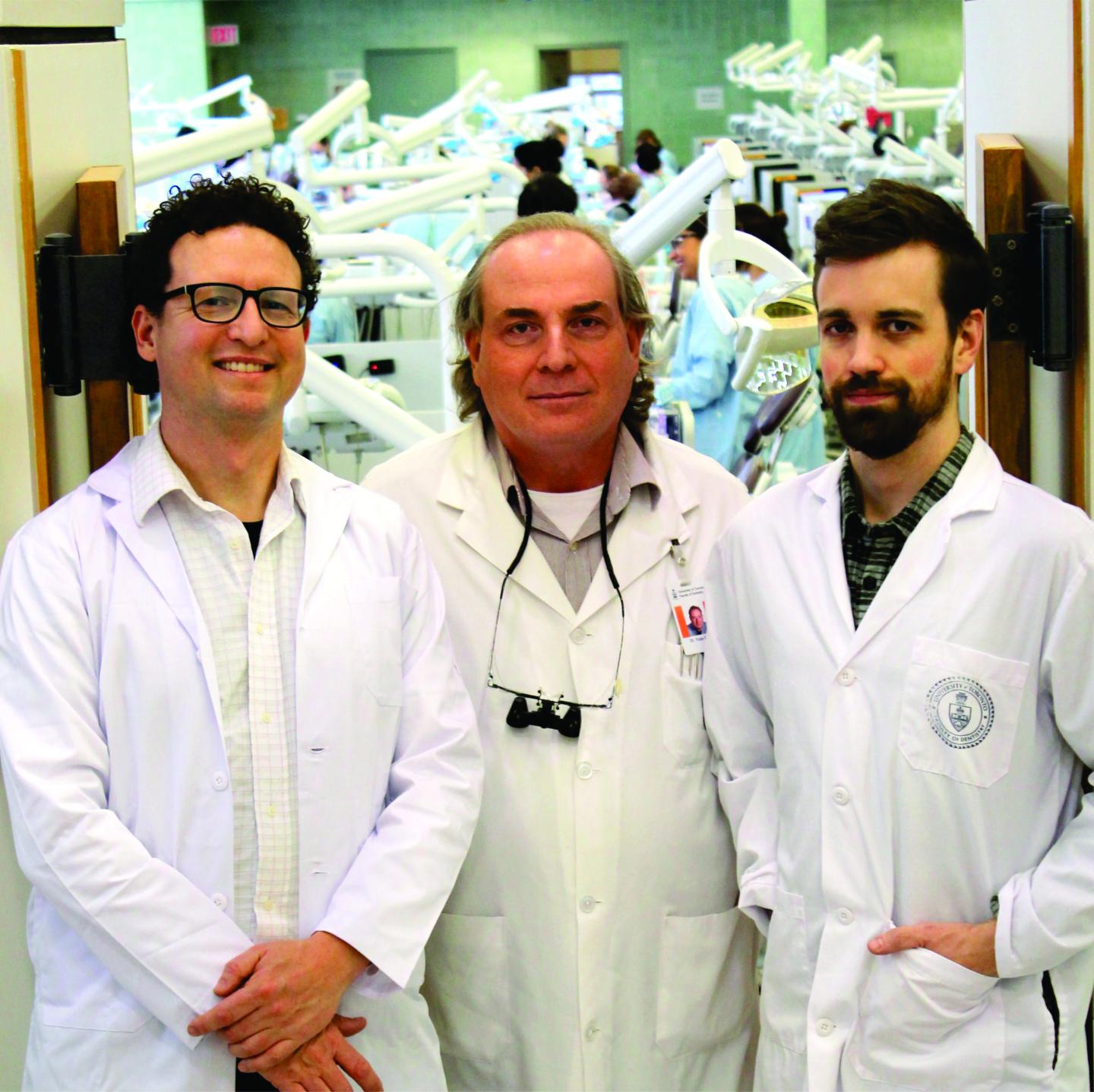
IMAGE

Credit: Yodit Tedla/Faculty of Dentistry.

When patients go to the dentist to fill a cavity, they're trying to solve a problem — not create a new one. But many dental patients get some bad news: bacteria can dig under their tooth-coloured fillings and cause new cavities, called recurrent caries. These recurrent caries affect 100 million patients every year and cost an additional US$34 billion to treat.

Now, a research collaboration between the Department of Materials Science & Engineering, Faculty of Dentistry, and the Institute of Biomaterials and Biomedical Engineering at the University of Toronto has resulted in a novel way to minimize recurrent caries.

In a recent paper published in the journal Scientific Reports, professors Ben Hatton, Yoav Finer and PhD student Cameron Stewart tackled the issue and proposed a novel solution: a filling material with tiny particles made by self-assembly of antimicrobial drugs, designed to stop bacteria in its tracks. These particles may solve one of the biggest problems with antibacterial filling materials: how do you store enough drug within the material to be effective for someone's entire life?

"Adding particles packed with antimicrobial drugs to a filling creates a line of defense against cavity-causing bacteria," says Hatton. "But traditionally there's only been enough drug to last a few weeks. Through this research we discovered a combination of drugs and silica glass that organize themselves on a molecule-by-molecule basis to maximize drug density, with enough supply to last years." This discovery of using antimicrobials which self-assemble means the team can pack 50 times as much of the bacteria-fighting drugs into the particles.

"We know very well that bacteria specifically attack the margins between fillings and the remaining tooth to create cavities," says Finer. "Giving these materials an antimicrobial supply that will last for years could greatly reduce this problem."

Looking ahead, the research team plans on testing these new drug-storing particles in dental fillings, monitoring their performance when attacked by bacteria and saliva in the complex environment in the mouth. With some fine-tuning, this new 'smart' material could create a stronger filling and fewer trips to the dentist.

###

Media Contact

Marit Mitchell
[email protected]
416-978-4498
@uoftengineering

http://www.engineering.utoronto.ca/home.htm

Original Source

The fight against tooth decay gets help with a new smart material from U of T researchers

Share12Tweet8Share2ShareShareShare2

Related Posts

Sleep Quality Links Synergistically with Frailty to Increase Cardiometabolic Multimorbidity in Elderly Chinese

July 19, 2026

Cognitive reserve helps older adults resist frailty and recover better

July 19, 2026

Physical Activity and Health Inequality in China’s Older Adults

July 19, 2026

Factors Influencing Elderly Preference for Dental Services

July 18, 2026
Please login to join discussion

POPULAR NEWS

  • Groundbreaking Discovery: New Shark Species Identified for the First Time — Technology and Engineering

    Groundbreaking Discovery: New Shark Species Identified for the First Time

    34 shares
    Share 14 Tweet 9
  • Controlled Study Defines Pediatric Long COVID Features

    32 shares
    Share 13 Tweet 8
  • Behavioral Nudge Boosts Medication Prescriptions for Alcohol Reduction

    35 shares
    Share 14 Tweet 9
  • Clean Cooking and Remittances Slash Somalia’s Ecological Footprints

    31 shares
    Share 12 Tweet 8

About

We bring you the latest biotechnology news from best research centers and universities around the world. Check our website.

Follow us

Recent News

Sleep Quality Links Synergistically with Frailty to Increase Cardiometabolic Multimorbidity in Elderly Chinese

Cognitive reserve helps older adults resist frailty and recover better

Physical Activity and Health Inequality in China’s Older Adults

Subscribe to Blog via Email

Success! An email was just sent to confirm your subscription. Please find the email now and click 'Confirm' to start subscribing.

Join 85 other subscribers
  • Contact Us

Bioengineer.org © Copyright 2023 All Rights Reserved.

Welcome Back!

Login to your account below

Forgotten Password?

Retrieve your password

Please enter your username or email address to reset your password.

Log In
No Result
View All Result
  • Homepages
    • Home Page 1
    • Home Page 2
  • News
  • National
  • Business
  • Health
  • Lifestyle
  • Science

Bioengineer.org © Copyright 2023 All Rights Reserved.