Polycyclic aromatic hydrocarbons are pollutants which come from burning fossil fuels, fires, oil spillages, and other anthropogenic and natural sources. They are transported from continental land masses to the open ocean via the atmosphere. Scientists from the Malaspina expedition, led by the Spanish National Research Institute, have highlighted the importance of knowing about the dynamics of these contaminants in order to understand their effects on both oceanic ecosystems and the global carbon cycle.
Scientists point out that, of all the carbon deposited in the oceans globally, aromatic compounds account for 15% of those which enter as CO2 deposits, which is considered "a higher than expected amount" The study, published in Nature Geoscience, reports that every month, around 90,000 tonnes of Polycyclic aromatic hydrocarbons contaminants enter the Atlantic, Pacific, and Indian Oceans from the atmosphere. That is four times greater than the spillage caused in 2010 by the sinking of the Deepwater Horizon oil platform in the Gulf of Mexico- considered to be the worst oil spillage in history.
"Polycyclic aromatic hydrocarbons, as well as other aromatic compounds are ubiquitous pollutants abundant in the environment. Furthermore, they are a component of organic carbon which to date has not been studied in depth in terms of atmosphere-ocean flows", explains Jordi Dachs, researcher at CSIC's Institute of Environmental and Water Studies in Barcelona.
Air and Water Samples
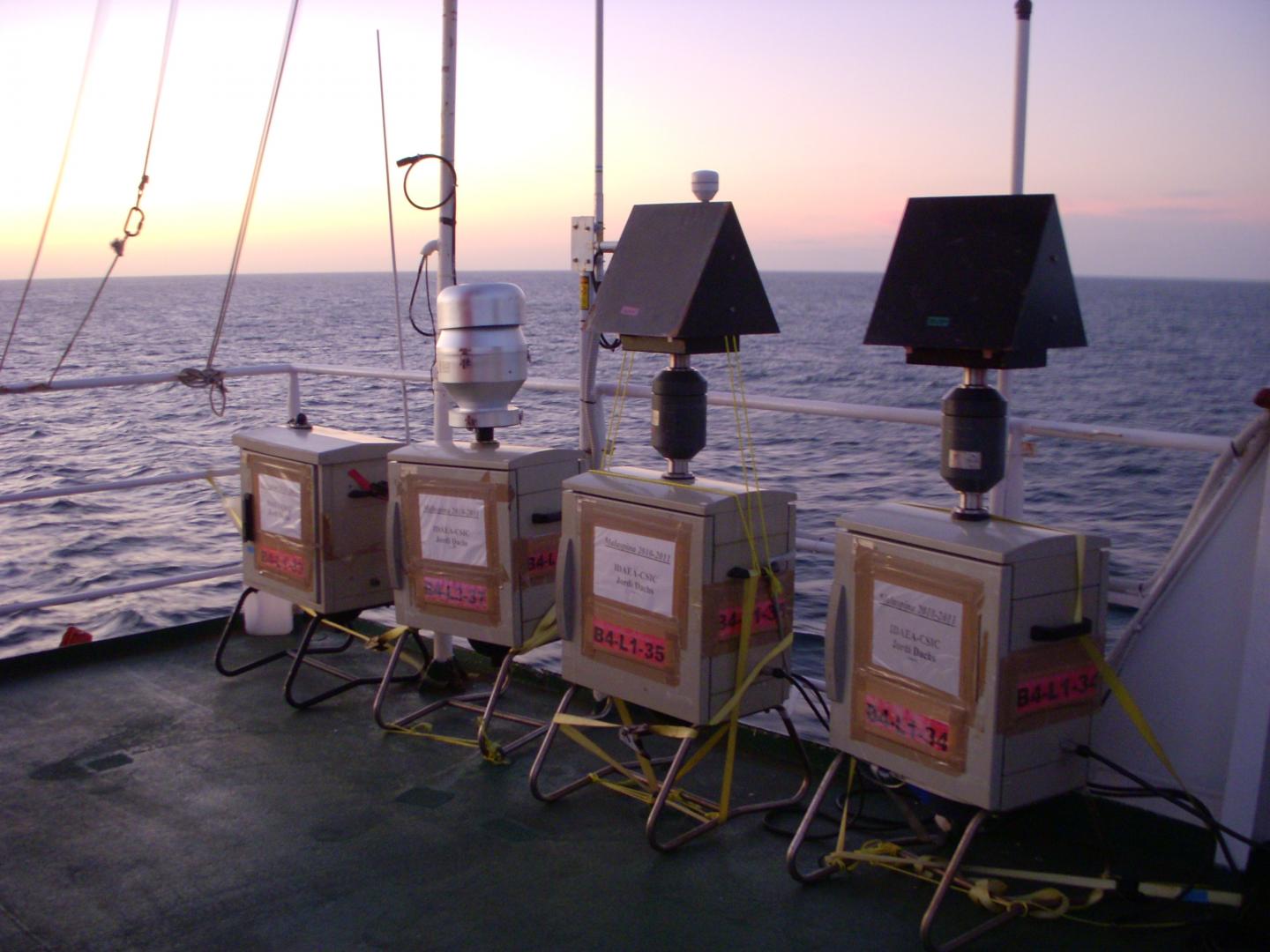
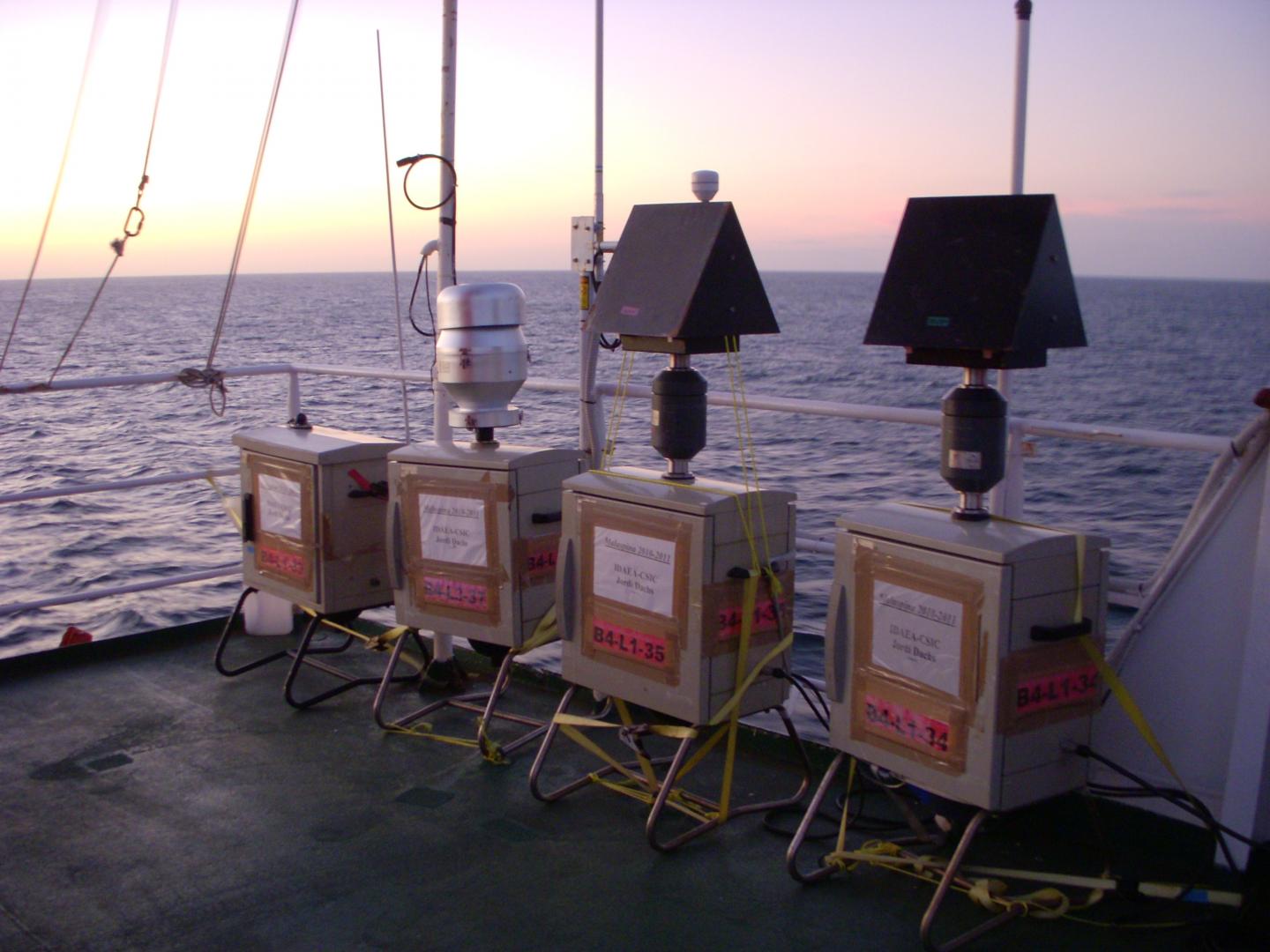
The results of this work are based on samples of air (gasses and aerosols), taken with high volume collectors, as well as samples of both rain, and from the ocean surface, collected during the circumnavigation project by the vessel Hespérides. Once the organic compounds were isolated, they were measured, quantified, and, depending on the concentrations logged, a calculation made of both atmosphere-to-ocean flows (using atmospheric models), and the exchange between the atmosphere and water.
Although the specific implications of the concentrations of polycyclic aromatic hydrocarbons which were measured are as yet uncertain, researchers point out that in the long term they could affect ocean life given their toxicity, and because they cause alterations in the formation of aerosols in the marine atmosphere, affecting cloud formation cycles amongst other things.
Belén González-Gaya, researcher at the Institute of Environmental Diagnostics and Water Studies, and the Institute of Organic Chemestry in Madrid, points out that, "We had very little information about the magnitude of pollution from polycyclic aromatic hydrocarbons in the open ocean. It was necessary to carry out a study on a global scale to know the relevance of these flows on a world-wide scale".
The next step planned by scientists in their investigation is to build a more detailed characterisation of the flow of these pollutants in the oceans, and of their impact on specific living beings.
###
The Malaspina Expedition
The Malaspina expedition is a Consolider-Ingenio 2010 project managed by CSIC (The Spanish National Research Council) and managed by the Spanish Economy and Finance Ministry. Malaspina comprises close to 50 research groups, 27 of them belonging to Spanish research groups, CSIC, the Spanish Oceanographic Institute, 16 Spanish universities, a museum, the AZTI-Tecnalia research foundation, and the Spanish Navy. A total of around €6m in finance came from CSIC, the IEO, and the BBVA Foundation.
Media Contact
Maria Gonzalez
[email protected]
34-915-681-819
@CSIC
http://www.csic.es