


• HOME
  • NEWS
  • EXPLORE
    • CAREER
      • Companies
      • Jobs
    • EVENTS
    • iGEM
      • News
      • Team
    • PHOTOS
    • VIDEO
    • WIKI
  • BLOG
  • COMMUNITY
    • FACEBOOK
    • INSTAGRAM
    • TWITTER
Saturday, February 7, 2026
BIOENGINEER.ORG
No Result
View All Result
  • Login
  • HOME
  • NEWS
  • EXPLORE
    • CAREER
      • Companies
      • Jobs
        • Lecturer
        • PhD Studentship
        • Postdoc
        • Research Assistant
    • EVENTS
    • iGEM
      • News
      • Team
    • PHOTOS
    • VIDEO
    • WIKI
  • BLOG
  • COMMUNITY
    • FACEBOOK
    • INSTAGRAM
    • TWITTER
  • HOME
  • NEWS
  • EXPLORE
    • CAREER
      • Companies
      • Jobs
        • Lecturer
        • PhD Studentship
        • Postdoc
        • Research Assistant
    • EVENTS
    • iGEM
      • News
      • Team
    • PHOTOS
    • VIDEO
    • WIKI
  • BLOG
  • COMMUNITY
    • FACEBOOK
    • INSTAGRAM
    • TWITTER
No Result
View All Result
Bioengineer.org
No Result
View All Result
Home NEWS Science News Cancer

Discovered the sixth DNA base?

Bioengineer by Bioengineer
May 4, 2015
in Cancer, Epigenomics
Reading Time: 2 mins read
0
Share on FacebookShare on TwitterShare on LinkedinShare on RedditShare on Telegram

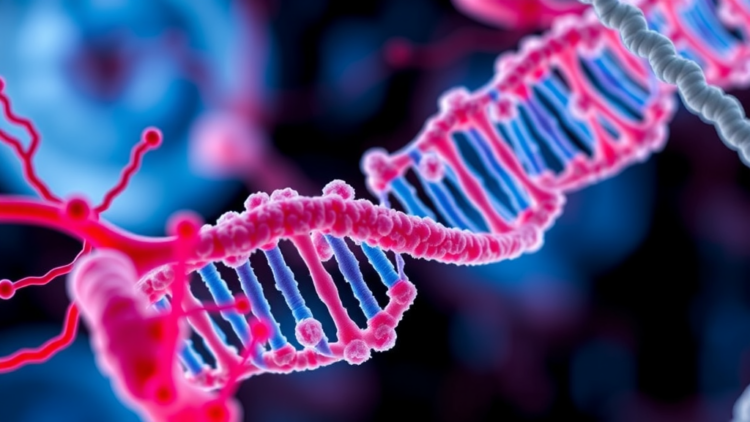
DNA (deoxyribonucleic acid) is the main component of our genetic material. It is formed by combining four parts: A, C, G and T (adenine, cytosine, guanine and thymine), called bases of DNA combine in thousands of possible sequences to provide the genetic variability that enables the wealth of aspects and functions of living beings.

Two more bases: the Methyl- cytosine and Methyl-adenine

In the early 80s, to these four “classic” bases of DNA was added a fifth: the methyl-cytosine (mC) derived from cytosine. And it was in the late 90’s when mC was recognized as the main cause of epigenetic mechanisms: it is able to switch genes on or off depending on the physiological needs of each tissue.

In recent years, interest in this fifth DNA base has increased by showing that alterations in the methyl-cytosine contribute to the development of many human diseases, including cancer.

Today, an article published in Cell by Manel Esteller, director of the Epigenetics and Cancer Biology Program of the Bellvitge Biomedical Research Institute (IDIBELL), ICREA researcher and Professor of Genetics at the University of Barcelona, describes the possible existence of a sixth DNA base, the methyl-adenine (mA), which also help determine the epigenome and would therefore be key in the life of the cells.

In bacteria and in complex organisms

“It was known for years that bacteria, evolutionarily very distant living organisms of us, had mA in its genome with a protective function against the insertion of genetic material from other organisms. But it was believed that this was a phenomenon of primitive cells and it was very static” describes Manel Esteller.

“However, this issue of CELL publishes three papers suggesting that more complex cells called eukaryotes such as the human body cells, also present the sixth DNA base. These studies suggest that algae, worms and flies possess mA and it acts to regulate the expression of certain genes, thus constituting a new epigenetic mark. This work has been possible thanks to the development of analytical methods with high sensitivity because levels of mA in described genomes are low. In addition it seems that mA would play a specific role in stem cells and early stages of development, “explains the researcher.

“Now the challenge we face is to confirm this data and find out whether mammals, including humans, we also have this sixth DNA base, and consider what its role is”.

Story Source:

The above story is based on materials provided by Institut d’Investigació Biomèdica de Bellvitge.
Photo Credit: DNA by Rxedox
Share13Tweet8Share2ShareShareShare2

Related Posts

Deep Learning Uncovers Tetrahydrocarbazoles as Potent Broad-Spectrum Antitumor Agents with Click-Activated Targeted Cancer Therapy Approach

February 7, 2026

Newly Discovered Limonoid DHL-11 from Munronia henryi Targets IMPDH2 to Combat Triple-Negative Breast Cancer

February 7, 2026

New Discovery Reveals Why Ovarian Cancer Spreads Rapidly in the Abdomen

February 6, 2026

New Study Finds Americans Favor In-Clinic Screening Over At-Home Tests for Cervical Cancer

February 6, 2026
Please login to join discussion

POPULAR NEWS

  • Robotic Ureteral Reconstruction: A Novel Approach

    Robotic Ureteral Reconstruction: A Novel Approach

    82 shares
    Share 33 Tweet 21
  • Digital Privacy: Health Data Control in Incarceration

    63 shares
    Share 25 Tweet 16
  • Study Reveals Lipid Accumulation in ME/CFS Cells

    57 shares
    Share 23 Tweet 14
  • Breakthrough in RNA Research Accelerates Medical Innovations Timeline

    53 shares
    Share 21 Tweet 13

About

We bring you the latest biotechnology news from best research centers and universities around the world. Check our website.

Follow us

Recent News

Personalized Guide to Understanding and Reducing Chemicals

Inflammasome Protein ASC Drives Pancreatic Cancer Metabolism

Phage-Antibiotic Combo Beats Resistant Peritoneal Infection

Subscribe to Blog via Email

Enter your email address to subscribe to this blog and receive notifications of new posts by email.

Join 73 other subscribers
  • Contact Us

Bioengineer.org © Copyright 2023 All Rights Reserved.

Welcome Back!

Login to your account below

Forgotten Password?

Retrieve your password

Please enter your username or email address to reset your password.

Log In
No Result
View All Result
  • Homepages
    • Home Page 1
    • Home Page 2
  • News
  • National
  • Business
  • Health
  • Lifestyle
  • Science

Bioengineer.org © Copyright 2023 All Rights Reserved.