• HOME
  • NEWS
  • EXPLORE
    • CAREER
      • Companies
      • Jobs
    • EVENTS
    • iGEM
      • News
      • Team
    • PHOTOS
    • VIDEO
    • WIKI
  • BLOG
  • COMMUNITY
    • FACEBOOK
    • INSTAGRAM
    • TWITTER
Wednesday, April 1, 2026
BIOENGINEER.ORG
No Result
View All Result
  • Login
  • HOME
  • NEWS
  • EXPLORE
    • CAREER
      • Companies
      • Jobs
        • Lecturer
        • PhD Studentship
        • Postdoc
        • Research Assistant
    • EVENTS
    • iGEM
      • News
      • Team
    • PHOTOS
    • VIDEO
    • WIKI
  • BLOG
  • COMMUNITY
    • FACEBOOK
    • INSTAGRAM
    • TWITTER
  • HOME
  • NEWS
  • EXPLORE
    • CAREER
      • Companies
      • Jobs
        • Lecturer
        • PhD Studentship
        • Postdoc
        • Research Assistant
    • EVENTS
    • iGEM
      • News
      • Team
    • PHOTOS
    • VIDEO
    • WIKI
  • BLOG
  • COMMUNITY
    • FACEBOOK
    • INSTAGRAM
    • TWITTER
No Result
View All Result
Bioengineer.org
No Result
View All Result
Home NEWS Science News Biology

DNA markers distinguish between harmless, deadly bacteria

Bioengineer by Bioengineer
February 11, 2018
in Biology
Reading Time: 2 mins read
0
Share on FacebookShare on TwitterShare on LinkedinShare on RedditShare on Telegram
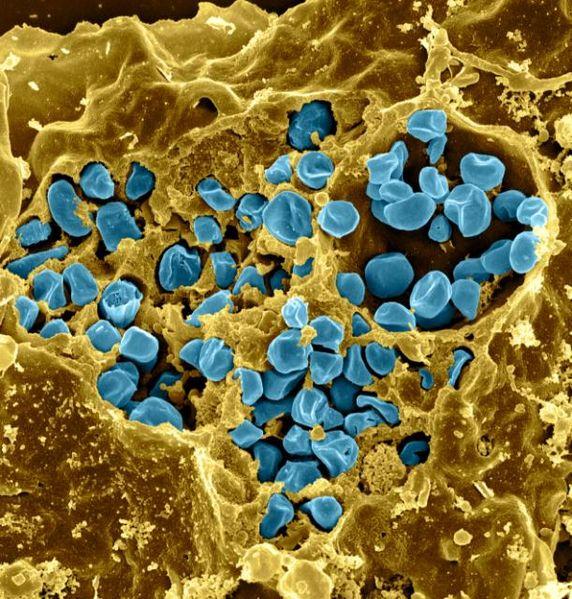
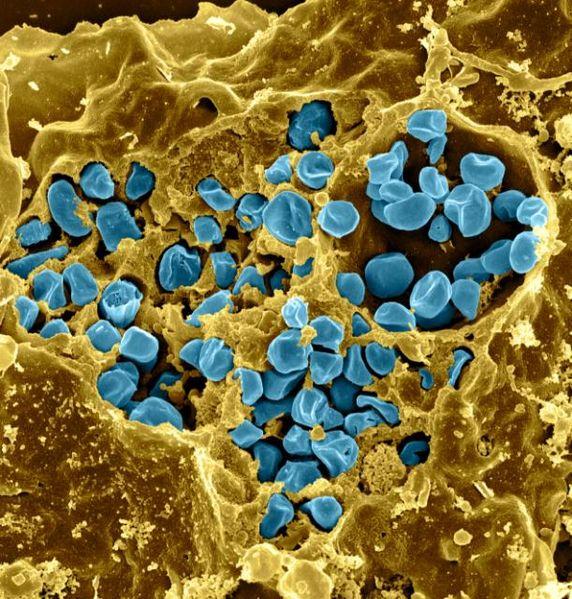
IMAGE

Credit: NIAID

LOS ALAMOS, N.M., Dec. 19, 2016 — The virulent pathogen that causes the disease tularemia, or "rabbit fever," was weaponized during past world wars and is considered a potential bioweapon. Through a new study of the coccobacillus Francisella, Los Alamos National Laboratory researchers are working to use DNA markers to discern related but relatively harmless species as they are identified and to provide a means to distinguish them from the harmful F. tularensis.

"This large study is particularly notable for having used 31 publicly available genomes plus select genes from about 90 additional isolates," said corresponding author Cheryl Kuske of the Bioenergy & Biome Sciences group at Los Alamos National Laboratory. The paper was published in the current issue of Applied and Environmental Microbiology (AEM).

The group's work includes developing a comprehensive, genomics-based understanding of organisms and their environment as part of the Lab's energy-security research into energy sources and their impact. "We conducted standard single and multi-gene comparisons with whole-genome approaches and identified potential virulence factors to discriminate new species from among the more traditional set. Thanks to coordination with the Centers for Disease Control and Prevention (CDC), we now have a framework to identify new isolates or environmental detections even if only partial information is available," Kuske said.

Humans can easily develop tularemia through incidental contact with infected rabbits, cats, rodents or other animals (and the ticks or fleas that may be on them). The disease manifests in a variety of forms: fever and chills with joint pain, cough or pneumonia, or abdominal pain and distress. Fatality rates range, depending on the form of the disease, from 2 percent to 24 percent, according to CDC data. Due to this severity, the CDC has made tularemia a reportable disease, and like the pathogens causing anthrax and plague, it is considered a bioweapon.

Through detailed genome comparisons, sequence-alignment algorithms and other bioinformatics tools run on Los Alamos computers, the Los Alamos team identified features that differentiate among F. tularensis and other novel clinical and environmental Francisella isolates, providing a knowledge base for comparison of new sequences from clinical or environmental surveys.

"For residents of areas such as the Southwest, where tularemia outbreaks are endemic and potentially life threatening, having more identification tools at hand is extremely valuable," Kuske said. The distribution of these isolates is global, however, suggesting a worldwide distribution of Francisella organisms that inhabit fish, ticks and a variety of environmental sources. The team designated four new species groups within the genus; Francisella opportunistica, an opportunistic pathogen of immune compromised patients; Francisella salina and Francisella uliginis, environmental isolates from coastal seawater near Galveston, TX; and Francisella frigiditurris from cooling-tower water in California.

###

The paper: "Whole genome relationships among Francisella bacteria of diverse origin define new species and provide specific regions for detection." (http://aem.asm.org/content/early/2016/11/21/AEM.02589-16.long)

Funding: The genomic sequencing was funded by the U.S. Department of Homeland Security, Science and Technology Directorate.

Media Contact

Nancy Ambrosiano
[email protected]
505-667-0471
@LosAlamosNatLab

http://www.lanl.gov

Share13Tweet8Share2ShareShareShare2

Related Posts

Survey Reveals Many Dog Owners Overlook Subtle Pain Signs Like Nighttime Restlessness and Clinginess

Survey Reveals Many Dog Owners Overlook Subtle Pain Signs Like Nighttime Restlessness and Clinginess

April 1, 2026
Ancient 500-Million-Year-Old Clawed Predator Redefines the Evolution of Spiders and Horseshoe Crabs

Ancient 500-Million-Year-Old Clawed Predator Redefines the Evolution of Spiders and Horseshoe Crabs

April 1, 2026

Chikungunya Virus Lingers in Joint Macrophages, Causes Chronic Disease

April 1, 2026

Unveiling How Two Genes Collaborate to Shape Dental and Facial Features

April 1, 2026
Please login to join discussion

POPULAR NEWS

  • blank

    Revolutionary AI Model Enhances Precision in Detecting Food Contamination

    96 shares
    Share 38 Tweet 24
  • Imagine a Social Media Feed That Challenges Your Views Instead of Reinforcing Them

    1006 shares
    Share 398 Tweet 249
  • Promising Outcomes from First Clinical Trials of Gene Regulation in Epilepsy

    51 shares
    Share 20 Tweet 13
  • Popular Anti-Aging Compound Linked to Damage in Corpus Callosum, Study Finds

    43 shares
    Share 17 Tweet 11

About

We bring you the latest biotechnology news from best research centers and universities around the world. Check our website.

Follow us

Recent News

Metabolic Enzyme Identified as Key Predictor of Cancer Immunotherapy Success—Opening Doors for Enhanced Patient Response

NYU Abu Dhabi and University of Denver Scientists Discover Promising Small Molecule Inhibitor for Parkinson’s and Other Brain Disorders

Quantum switches perform best in extreme cold, new research finds

Subscribe to Blog via Email

Enter your email address to subscribe to this blog and receive notifications of new posts by email.

Join 78 other subscribers
  • Contact Us

Bioengineer.org © Copyright 2023 All Rights Reserved.

Welcome Back!

Login to your account below

Forgotten Password?

Retrieve your password

Please enter your username or email address to reset your password.

Log In
No Result
View All Result
  • Homepages
    • Home Page 1
    • Home Page 2
  • News
  • National
  • Business
  • Health
  • Lifestyle
  • Science

Bioengineer.org © Copyright 2023 All Rights Reserved.