• HOME
  • NEWS
  • EXPLORE
    • CAREER
      • Companies
      • Jobs
    • EVENTS
    • iGEM
      • News
      • Team
    • PHOTOS
    • VIDEO
    • WIKI
  • BLOG
  • COMMUNITY
    • FACEBOOK
    • INSTAGRAM
    • TWITTER
Friday, November 27, 2026
BIOENGINEER.ORG
No Result
View All Result
  • Login
  • HOME
  • NEWS
  • EXPLORE
    • CAREER
      • Companies
      • Jobs
        • Lecturer
        • PhD Studentship
        • Postdoc
        • Research Assistant
    • EVENTS
    • iGEM
      • News
      • Team
    • PHOTOS
    • VIDEO
    • WIKI
  • BLOG
  • COMMUNITY
    • FACEBOOK
    • INSTAGRAM
    • TWITTER
No Result
View All Result
Bioengineer.org
No Result
View All Result
Home NEWS Science News Chemistry

MAP9 Staples Microtubule Protofilaments to Prevent Depolymerization and Guide Neuronal Growth

by
November 27, 2026
in Biology, Chemistry
Reading Time: 2 mins read
0
MAP9 Staples Microtubule Protofilaments to Prevent Depolymerization and Guide Neuronal Growth

MAP9 Staples Microtubule Protofilaments to Prevent Depolymerization and Guide Neuronal Growth

Share on FacebookShare on TwitterShare on LinkedinShare on RedditShare on Telegram

Researchers have identified MAP9 as a critical microtubule-associated protein that stabilizes dynamic cellular tracks and facilitates neuronal morphogenesis. While microtubule-associated proteins regulate the structural organization of microtubules and control intracellular transport, the distinct contributions of individual proteins to microtubule dynamics and motor regulation have remained poorly understood. The new findings establish that MAP9 plays an essential structural and regulatory role within developing nervous system cells.

Experimental knockdown of MAP9 demonstrated its indispensable requirement for cellular development, completely abolishing the outgrowth of neurites. Notably, this severe developmental phenotype was not observed through the loss of other neuronal microtubule-associated proteins.

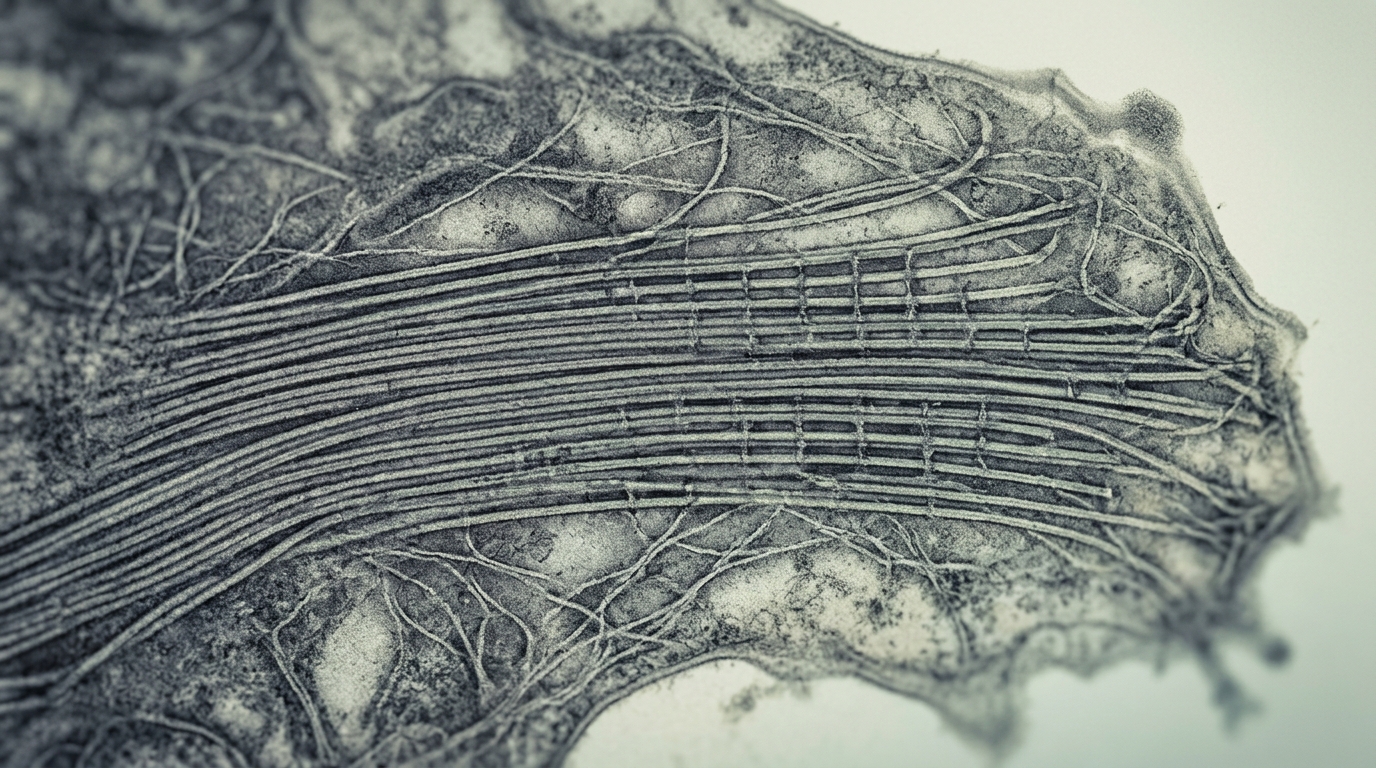
Structural investigations using cryo-electron microscopy uncovered the molecular architecture underlying this unique activity. Rather than binding longitudinally along individual protofilaments as observed for other microtubule-associated proteins, MAP9 binds around the outer circumference of the microtubule. It forms a single, extended alpha-helix that wraps around the cylindrical assembly, utilizing five consecutive structural repeats to mediate its interaction with the microtubule surface.

This circumferential binding arrangement allows MAP9 to staple adjacent protofilaments directly to one another. Cryo-electron microscopy and structural analyses revealed that pseudorepeats within the microtubule-binding domain of MAP9 are critical for establishing this contact across neighboring protofilaments. By bridging and physically locking adjacent protofilament strands together, the protein provides an external lattice scaffold that effectively prevents microtubule depolymerization.

Dynamic measurements further demonstrated that MAP9 actively promotes the polymerization of microtubules while suppressing catastrophe events in dynamic microtubule lattices.

The study also revealed that MAP9 selectively governs molecular motor transport along the stabilized tracks, differentially regulating kinesin and dynein motors. Measurements showed that MAP9 permits the motility of both kinesin-3 and retrograde dynein motors along the filament, while selectively hindering the movement of kinesin-1.

Detailed structural analyses indicated that MAP9 differentiates between kinesin motors through direct interactions involving its microtubule-binding domain. Specifically, the protein distinguishes kinesin-1 from kinesin-3 by engaging a divergent loop-8 sequence situated within the kinesin motor domain. This specific contact inhibits kinesin-1 progression while leaving kinesin-3 and dynein transport fully functional, elucidating a precise mechanism governing intracellular transport.

Subject of Research: Structural mechanism of microtubule stabilization and molecular motor regulation by MAP9

Article Title: Structure and mechanism of microtubule stabilization and motor regulation by MAP9

Article References: Cetin, B., Taheri, A., Golcuk, M., Monroy, B. Y., Fernandes, J., Ori-McKenney, K. M., Gur, M., Nogales, E., & Yildiz, A. (2026). Structure and mechanism of microtubule stabilization and motor regulation by MAP9. Nature Chemical Biology. https://doi.org/10.1038/s41589-026-02403-x

Image Credits: AI Generated

DOI: 10.1038/s41589-026-02403-x

Keywords: MAP9, microtubules, microtubule stabilization, cryo-electron microscopy, neuronal morphogenesis, neurite outgrowth, protofilaments, alpha-helix, pseudorepeats, depolymerization, catastrophe suppression, kinesin-1, kinesin-3, dynein, loop-8, microtubule-binding domain

News Source: Drew Townsend. (November 27, 2026). MAP9 Staples Microtubule Protofilaments to Prevent Depolymerization and Guide Neuronal Growth. Scienmag.

Tags: alpha-helixcatastrophe suppressioncryo-electron microscopydepolymerizationdyneinkinesin-1kinesin-3loop-8MAP9microtubule stabilizationmicrotubule-binding domainmicrotubulesneurite outgrowthneuronal morphogenesisprotofilamentspseudorepeats
Share12Tweet7Share2ShareShareShare1

Related Posts

Beneficial Root Bacteria Enhance Strawberry Fruit Quality Under Salinity Stress

Beneficial Root Bacteria Enhance Strawberry Fruit Quality Under Salinity Stress

November 27, 2026
Mammalian Urate Oxidase Helical Tiling Preserves Enzyme Accessibility and Stress Resistance

Mammalian Urate Oxidase Helical Tiling Preserves Enzyme Accessibility and Stress Resistance

November 27, 2026

Researchers Document First Voucher-Supported Record of Triticum monococcum in Iraqi Kurdistan

November 27, 2026

Clade IIb Mpox Infections Showed Intra-Host Heterogeneity in European Outbreak

November 27, 2026

POPULAR NEWS

  • Polidocanol Foam Ratios Show Similar Saphenous Vein Occlusion in Cohort Study

    Polidocanol Foam Ratios Show Similar Saphenous Vein Occlusion in Cohort Study

    29 shares
    Share 12 Tweet 7
  • Extracellular Biophysical Forces Drive Gene Regulation by Directly Deforming the Nucleus

    29 shares
    Share 12 Tweet 7
  • Viatorr Stents Improve Shunt Patency Over Bare Stents in TIPS Review

    29 shares
    Share 12 Tweet 7
  • Fisetin Reduces Bone Density Loss in Accelerated Aging Progeria Mouse Model

    29 shares
    Share 12 Tweet 7

About

We bring you the latest biotechnology news from best research centers and universities around the world. Check our website.

Follow us

Recent News

Claudin18.2 Expression Linked to Distinct Immune Infiltration in Gastric Adenocarcinomas

Beneficial Root Bacteria Enhance Strawberry Fruit Quality Under Salinity Stress

Game-Theoretic Federated Learning Detects Threats Across Diverse Multi-Cloud Systems

Subscribe to Blog via Email

Enter your email address to subscribe to this blog and receive notifications of new posts by email.

Join 89 other subscribers
  • Contact Us

Bioengineer.org © Copyright 2023 All Rights Reserved.

Welcome Back!

Login to your account below

Forgotten Password?

Retrieve your password

Please enter your username or email address to reset your password.

Log In
No Result
View All Result
  • Homepages
    • Home Page 1
    • Home Page 2
  • News
  • National
  • Business
  • Health
  • Lifestyle
  • Science

Bioengineer.org © Copyright 2023 All Rights Reserved.