• HOME
  • NEWS
  • EXPLORE
    • CAREER
      • Companies
      • Jobs
    • EVENTS
    • iGEM
      • News
      • Team
    • PHOTOS
    • VIDEO
    • WIKI
  • BLOG
  • COMMUNITY
    • FACEBOOK
    • INSTAGRAM
    • TWITTER
Thursday, January 1, 2026
BIOENGINEER.ORG
No Result
View All Result
  • Login
  • HOME
  • NEWS
  • EXPLORE
    • CAREER
      • Companies
      • Jobs
        • Lecturer
        • PhD Studentship
        • Postdoc
        • Research Assistant
    • EVENTS
    • iGEM
      • News
      • Team
    • PHOTOS
    • VIDEO
    • WIKI
  • BLOG
  • COMMUNITY
    • FACEBOOK
    • INSTAGRAM
    • TWITTER
  • HOME
  • NEWS
  • EXPLORE
    • CAREER
      • Companies
      • Jobs
        • Lecturer
        • PhD Studentship
        • Postdoc
        • Research Assistant
    • EVENTS
    • iGEM
      • News
      • Team
    • PHOTOS
    • VIDEO
    • WIKI
  • BLOG
  • COMMUNITY
    • FACEBOOK
    • INSTAGRAM
    • TWITTER
No Result
View All Result
Bioengineer.org
No Result
View All Result
Home NEWS Science News Cancer

World-first cancer drugs could work in larger group of patients

Bioengineer by Bioengineer
March 19, 2015
in Cancer
Reading Time: 2 mins read
0
Share on FacebookShare on TwitterShare on LinkedinShare on RedditShare on Telegram

A pioneering class of drugs that target cancers with mutations in the BRCA breast cancer genes could also work against tumours with another type of genetic fault, a new study suggests.

Scientists at The Institute of Cancer Research, London, found that errors in a gene called CBLC leave cancer cells vulnerable to PARP inhibitor drugs. Around 2 per cent of all tumours have defects in CBLC.

The study, which was carried out in collaboration with colleagues in Denmark and the Czech Republic, was funded in the UK by the European Union, and was published today in the journal Oncotarget.

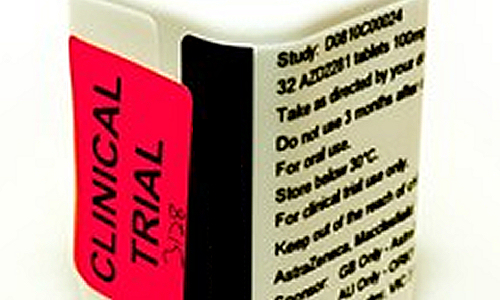
Olaparib, a PARP inhibitor, became the first cancer drug targeted at an inherited genetic fault to reach the market when it was approved in December for use in ovarian cancer patients with BRCA1 or BRCA2 mutations. Its development was underpinned by research at the ICR.

Using an approach known as RNA interference screening – which ‘silences’ genes to analyse their function – researchers systematically tested which of the 25,000 genes in the human genome affected the response of cancer cells to olaparib.

The ICR team found that cancer cells with a defect in the CBLC gene were as sensitive to the drug as those with a faulty BRCA2 gene.

By analysing the molecular processes that the CBLC gene controls, researchers found that it normally allows cells to repair damaged DNA by fixing broken DNA strands back together.

This finding indicates that a flaw in DNA repair mechanisms explains the sensitivity of CBLC-defective cancer cells to PARP inhibitors – which knock out the action of another DNA repair mechanism.

DNA repair is often disrupted in cancer cells, which sacrifice genetic stability as they gain mutations that allow them to divide uncontrollably. These cancer cells may be particularly vulnerable to drugs to block DNA repair proteins, since they may lack any alternative functioning repair systems to fall back on.

Study co-leader Dr Chris Lord, Team Leader in Gene Function at the ICR, said: “Our study has found that defects in a rather poorly studied DNA repair gene called CBLC
seem to greatly increase sensitivity to olaparib, a PARP inhibitor which is currently licensed only for BRCA-mutated cancer.

“PARP inhibitors are an exciting new class of cancer drug. Understanding why different types of tumour cells respond to PARP inhibitors will play a critical part in making sure these new drugs are used in the most effective way.”

Professor Paul Workman, Chief Executive of the ICR, said: “The development of PARP inhibitors is a UK success story, with collaboration between ICR academics, companies, charities and the NHS leading to trials in BRCA-mutated cancers and the licensing of olaparib only a few months ago.

“This new study adds to evidence that PARP inhibitors can be effective in a broader group of patients than those with BRCA mutations, and could lead to them being used more widely in patients with other kinds of faults in DNA repair.”

Story Source:

The above story is based on materials provided by Institute of Cancer Research.

Share12Tweet8Share2ShareShareShare2

Related Posts

Derazantinib Boosts Gemcitabine by Blocking MUC5AC

December 30, 2025

FOCUS Study Reveals Insights on Melphalan for Uveal Melanoma

December 29, 2025

Black Grape Anthocyanins Boost 5-FU Cancer Therapy

December 29, 2025

Girdin Silencing Boosts Mebendazole’s Ovarian Cancer Fight

December 29, 2025
Please login to join discussion

POPULAR NEWS

  • blank

    PTSD, Depression, Anxiety in Childhood Cancer Survivors, Parents

    110 shares
    Share 44 Tweet 28
  • NSF funds machine-learning research at UNO and UNL to study energy requirements of walking in older adults

    71 shares
    Share 28 Tweet 18
  • Exploring Audiology Accessibility in Johannesburg, South Africa

    52 shares
    Share 21 Tweet 13
  • SARS-CoV-2 Subvariants Affect Outcomes in Elderly Hip Fractures

    44 shares
    Share 18 Tweet 11

About

We bring you the latest biotechnology news from best research centers and universities around the world. Check our website.

Follow us

Recent News

Innovative Plate Implant Enhances Bone Healing Assessment

Multidimensional Asymmetric Switching in All-Fiber Devices

Mode Splitting Enables Speckle-Free Optical Wavelength Reconstruction

Subscribe to Blog via Email

Enter your email address to subscribe to this blog and receive notifications of new posts by email.

Join 71 other subscribers
  • Contact Us

Bioengineer.org © Copyright 2023 All Rights Reserved.

Welcome Back!

Login to your account below

Forgotten Password?

Retrieve your password

Please enter your username or email address to reset your password.

Log In
No Result
View All Result
  • Homepages
    • Home Page 1
    • Home Page 2
  • News
  • National
  • Business
  • Health
  • Lifestyle
  • Science

Bioengineer.org © Copyright 2023 All Rights Reserved.