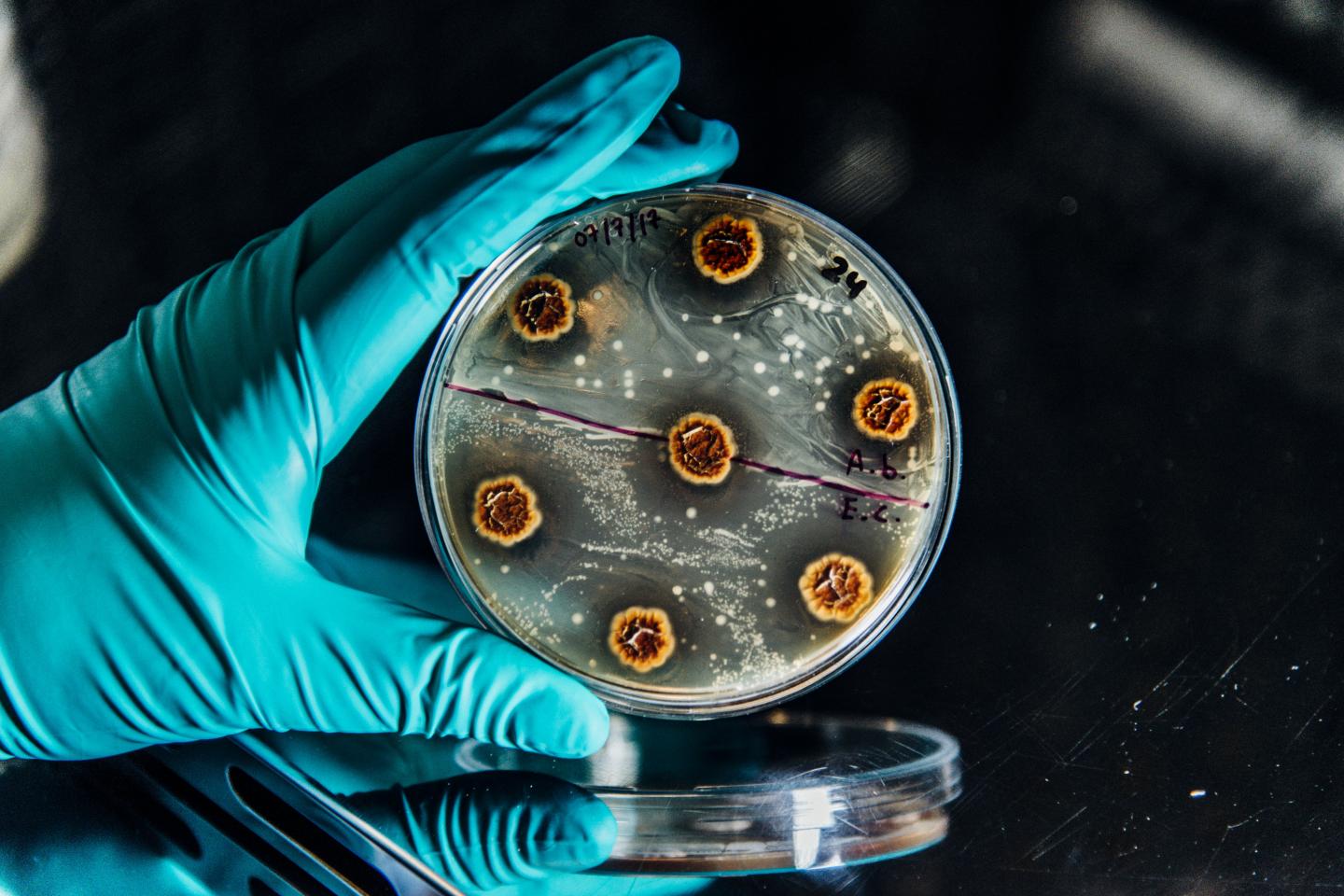
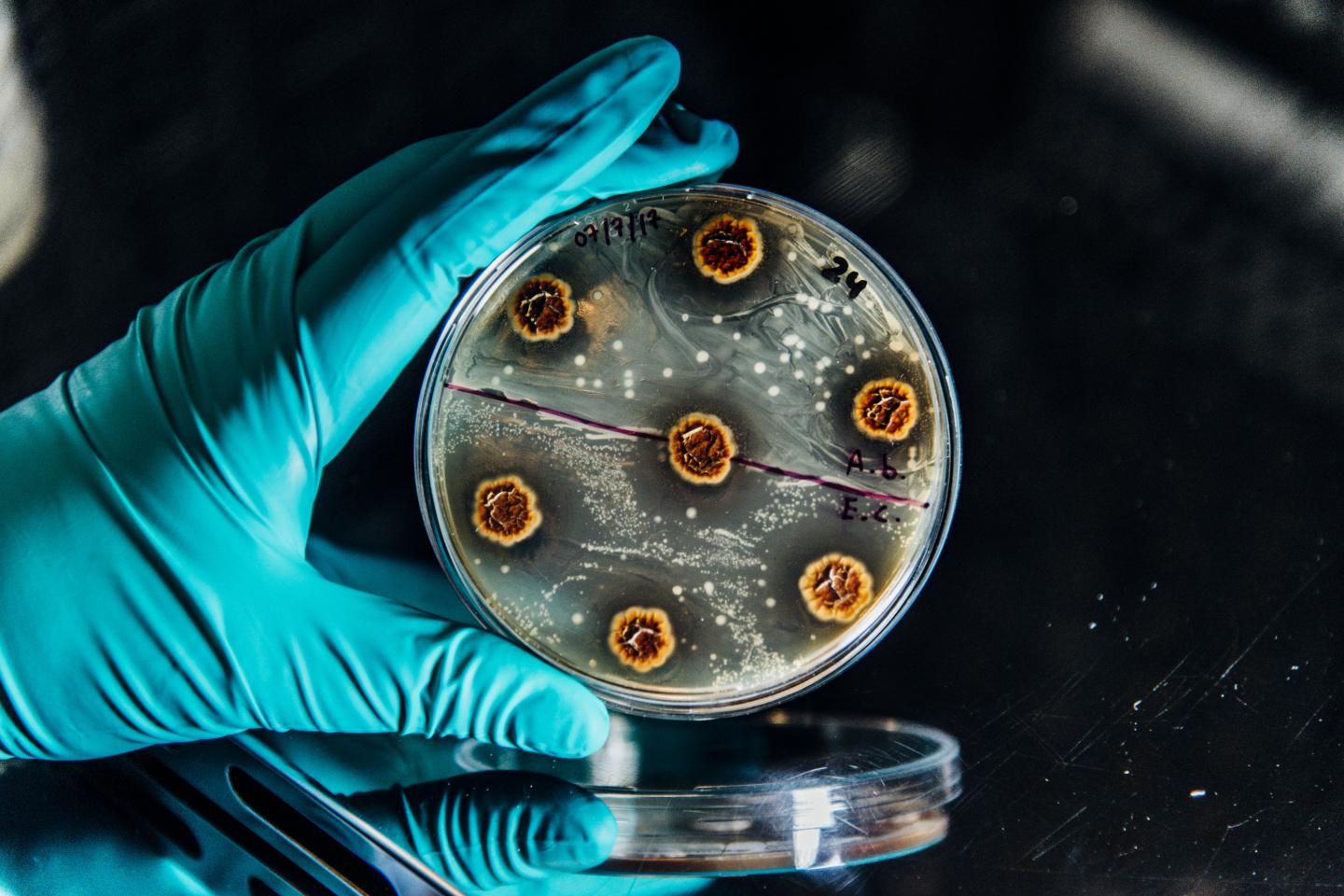
Credit: Christian Als/ The Novo Nordisk Foundation Center for Biosustainability at the Technical University of Denmark
Antibiotic-resistant Pseudomonas infections in cystic fibrosis patients show predictable sensitivities to other classes of antibiotics. A new study made by scientists from the Novo Nordisk Foundation Center for Biosustainability at the Technical University of Denmark suggests that this could lead to new ways of optimizing treatments for chronic infections.
"Our discovery of widespread antibiotic sensitivities in the multidrug-resistant pathogen Pseudomonas aeruginosa opens up the opportunity to limit the development of antibiotic resistance and perhaps even revert it. This could be important for the treatment of several chronic infections including the life-long lung infections of patients with cystic fibrosis," says Professor and Scientific Director at the Novo Nordisk Foundation Center for Biosustainability, Morten Sommer.
The researchers found some antibiotic vulnerabilities of multidrug-resistant pathogens were preserved across clinical isolates isolated over decades at the Cystic fibrosis clinic at Rigshospitalet in Copenhagen. Interestingly, it thereby became possible to identify the underlying mutations that caused the sensitivity.
"Targeting vulnerabilities of phenotypic states related to specific mutations could potentially have a huge impact because it makes it possible to make a more personalized treatment strategy for each patient." says Senior Researcher at the Novo Nordisk Foundation Center for Biosustainability, Lejla Imamovic.
Coping with antibiotic resistance
The emergence of drug-resistant bacteria combined with an increasing lack of novel classes of antibiotics has made antibiotic resistance one of the immense threats to global health. Therapeutic options and strategies are especially scarce for Gram-negative pathogens such as Pseudomonas aeruginosa causing trouble for optimal treatment of patients with nosocomial and chronic diseases, including people suffering from cystic fibrosis.
According to an article published by Aarhus University Hospital in 2015, the number of cystic fibrosis patients will increase by up to 50 percent during a 10-year span, which supports the notion that the need for rational treatment strategies is more important than ever before.
The research done at the Novo Nordisk Foundation Center for Biosustainability at the Technical University of Denmark is an important first step in the right direction.
"Results indicate that for some antibiotics, exposure and subsequent resistance evolution leads to convergence toward specific phenotypes states. Thus, collateral sensitivity may be particularly useful for optimizing treatments of chronic infections since their nature and severity warrants and requires tailored treatment strategies," says Lejla Imamovic.
Bridging the gap between lab and clinic
One thing is scientific research, another one is how it is actually translated into the work being done in the clinic. The current thinking on resistance evolution suggests that pathogens causing chronic infections become increasingly resistant in response to antibiotic treatment. Yet, the findings of widespread collateral sensitivity interactions among clinically applied drugs anticipate that the resistance profiles of chronic infecting bacteria would fluctuate over time in response to different drug exposures, according to Professor and Scientific Director at the Novo Nordisk Foundation Center for Biosustainability, Morten Sommer.
"Our research supports the notion that treatment of chronically infected patients could be significantly improved based on specific diagnostic markers that are associated with a collateral sensitivity to specific drugs," says he.
The next step is to translate these findings into clinical benefits to patients.
"Actually, some of our findings relate to drugs that are already used clinically and it is possible that benefits can be gained simply by making slight changes to the empirical treatment prescribed by physicians already now. Yet, larger controlled clinical trials will also be important in order to fully exploit these findings in the clinic," emphasizes Morten Sommer.
###
Publication can be found here: http://www.cell.com/cell/fulltext/S0092-8674(17)31492-7
Media Contact
Anders Østerby Mønsted
[email protected]
45-24-67-79-47
@DTUtweet
http://www.dtu.dk
Original Source
http://www.biosustain.dtu.dk/english/nyhedsbase/Nyhed?id={F456CC58-D5BA-4782-A75A-BEFBD3AA5E1C}