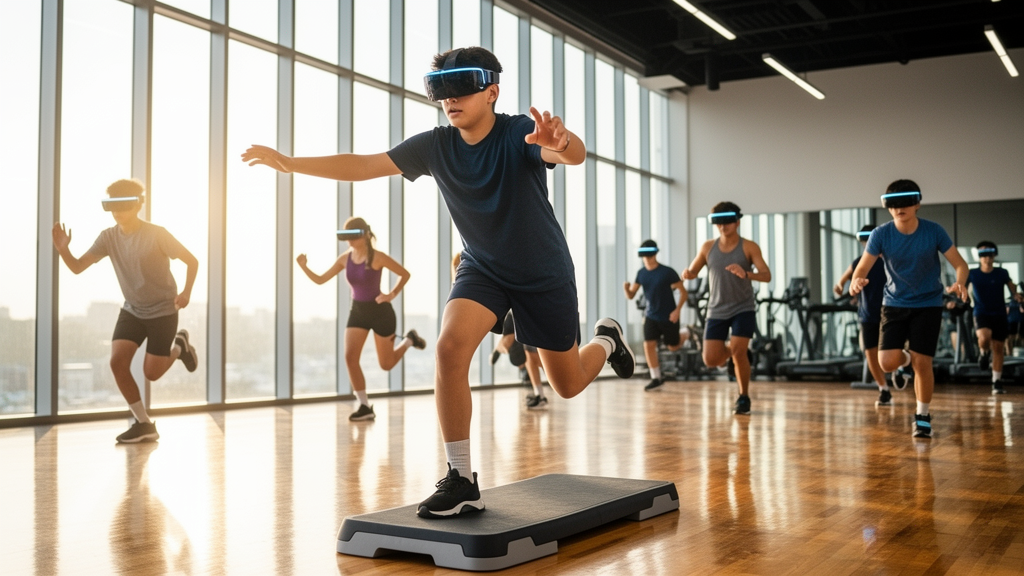
Immersive digital environments are establishing a quantifiable footprint in movement pedagogy, as demonstrated by a comprehensive three-level meta-analysis examining how extended reality technologies alter motor and athletic execution. The quantitative synthesis demonstrated that integrating computer-generated simulations and digitally superimposed perceptual cues into physical curricula consistently surpassed conventional movement instruction. Rather than functioning merely as an engaging novelty or passive visual demonstration, these digital environments provided actionable sensory scaffolding that substantially improved physical execution across diverse educational contexts. However, the analysis also uncovered substantial statistical variation across the assembled literature, confirming that while extended reality systems reliably enhance student capability, the exact magnitude of performance improvement remains heavily contingent upon instructional design, learner readiness, and the precise diagnostic criteria used to gauge physical development.
The fundamental necessity for technology-assisted training arises from the intricate pedagogical challenges inherent in physical education, where learners must simultaneously navigate demanding cognitive requirements and complex motor skill execution. Cognitive understanding requires students to internalize abstract biomechanical principles, tactical movement rules, and dynamic spatial relationships, whereas motor execution demands rigorous neuromuscular coordination, split-second movement timing, and kinesthetic precision. Traditional physical education curricula have long depended on instructor demonstrations paired with repetitive physical drill sequences, yet this conventional framework exhibits notable pedagogical constraints. In typical school environments, an instructor cannot easily deliver continuous, personalized corrective feedback in real time to numerous practicing students, sustain elevated intrinsic motivation across repetitive practice sessions, or safely simulate high-risk tactical scenarios and high-velocity sporting encounters. By spanning the continuum between entirely synthetic virtual realities and physically grounded augmented overlays, extended reality systems mitigate these instructional bottlenecks by superimposing visual guidance directly onto active physical spaces or generating immersive interactive simulations, enabling systematic repetition, perceptual feedback, and guided motor practice without compromising student physical safety.
Prior systematic efforts to quantify the educational and athletic utility of immersive technologies laid foundational groundwork but remained fragmented by disciplinary boundaries and inconsistent analytical structures. Earlier syntheses primarily evaluated health-promoting exercise interventions or generic classroom learning outcomes rather than isolating specialized motor skill acquisition and athletic movement quality within structured educational curricula. Other educational reviews documented positive effects for immersive virtual reality across primary, secondary, and higher education cohorts, yet their pooled metrics combined non-motor disciplines such as language learning, engineering, and natural sciences. Furthermore, earlier cross-disciplinary investigations encompassing surgical, industrial, and athletic psychomotor tasks suffered from pronounced methodological heterogeneity and failed to account for statistical dependence among multiple effect sizes extracted from the same study samples, leaving physical educators without precise, domain-specific effect estimates.
To establish a statistically rigorous foundation, the research team implemented an explicit literature screening protocol adhering to standard PRISMA reporting guidelines across three major bibliographic indexing databases: Web of Science, Scopus, and ProQuest. The initial search yielded 1,322 candidate records, which were subsequently refined to 1,243 unique publications following the removal of duplicate entries. Screening criteria excluded non-English publications, unavailable reports, studies published prior to 2015, and investigations that lacked direct relevance to sports performance, controlled experimental designs, or sufficient numerical data to compute standardized effect sizes. Following full-text eligibility evaluations of fifty-nine investigations, seventeen distinct empirical studies published between 2019 and 2026 met all inclusion criteria. This final synthesis corpus comprised 465 participants allocated to experimental extended reality interventions and 456 participants assigned to comparison conditions, producing eighty-four nested effect sizes. Individual studies contributed between one and twenty effect sizes, with an average of 4.94 and a median of four metrics per investigation, reflecting a multi-metric evidence base encompassing a broad spectrum of athletic disciplines.
Addressing the complex hierarchical architecture of the extracted data required an advanced random-effects three-level meta-analytic framework estimated via restricted maximum likelihood in R using the metafor computational package. Because multiple performance metrics and repeated measurement occasions were frequently obtained from identical participant cohorts, treating individual observations as independent would violate standard statistical assumptions and underestimate error variance. The three-level modeling approach explicitly partitioned variance across three separate strata: Level 1 modeled sampling error associated with each individual effect size; Level 2 captured within-study variance among effect sizes gathered from the same experimental cohort; and Level 3 represented true between-study heterogeneity. Decomposition of variance revealed that within-study differences accounted for 12.77 percent of total variation, with a variance component of 0.068 and standard deviation of 0.26, whereas between-study differences accounted for 69.13 percent of total variation, with a variance component of 0.369 and standard deviation of 0.61. A cumulative meta-analysis demonstrated that the pooled effect estimate stabilized as recent investigations accrued, while leave-one-out sensitivity analyses confirmed robust findings, with re-estimated pooled effects fluctuating narrowly between 0.79 and 0.94.
Meta-regression analyses revealed that the instructional scaffolding embedded within the learning environment served as a primary moderator of technological efficacy. Interventions designated as high-scaffold environments provided structured, explicit, and sustained pedagogical assistance, incorporating progressive task sequences, real-time error alerts, step-by-step biomechanical demonstrations, and continuous corrective feedback. Conversely, low-scaffold conditions required learners to engage virtual or augmented tasks with minimal structured intervention and greater independent discovery. The meta-regression established that high-scaffold interventions yielded significantly greater performance improvements than low-scaffold conditions, characterized by an unstandardized meta-regression coefficient of 0.58 with a standard error of 0.29, reaching statistical significance. Subgroup analyses corroborated this disparity, showing that high-scaffold environments achieved an impressive pooled Hedges’ g of 1.29 across twenty-eight effect sizes, whereas low-scaffold environments generated a moderate pooled effect of 0.57 across fifty-six effect sizes. These findings align with cognitive load and instructional scaffolding frameworks, which postulate that immersive displays present dense visual and spatial stimuli that can overwhelm working memory unless purposeful instructional prompts guide learner attention toward biomechanically critical execution cues.
Learner expertise emerged as another statistically significant moderator, demonstrating that participant baseline proficiency substantially dictates the degree to which individuals profit from extended reality training. Participants classified as beginners—those possessing foundational athletic familiarity or basic school-level training—achieved the greatest performance gains, producing an unstandardized regression coefficient of 0.65 relative to learners with no prior athletic experience. Subgroup analyses revealed that beginners attained a substantial pooled effect of 1.29 across fifty-five effect sizes, significantly exceeding the pooled effect of 0.56 observed across thirteen effect sizes for absolute novices and the modest effect of 0.34 recorded across sixteen effect sizes for advanced competitive athletes. Exploratory interaction modeling further revealed that the performance advantage conferred by high instructional scaffolding was most pronounced among beginners, producing a statistically significant interaction term of 1.21. In contrast, advanced athletes exhibited negligible differential responsiveness to scaffolding variations, as their well-established motor schemas rendered general instructional feedback somewhat redundant, while complete novices frequently lacked the internal movement representations necessary to rapidly translate rich virtual feedback into refined bodily actions.
The evaluation metrics deployed by researchers represented a third significant source of systematic variance, distinguishing intermediate technique adjustments from macroscopic performance outcomes. Process-oriented quality metrics measured fine-grained execution parameters such as joint kinematics, posture, movement coordination, reaction timing, and technical fluency, whereas outcome-oriented metrics assessed summative athletic results, including scoring accuracy, competition points, and overall trial success. Meta-regression showed that outcome-oriented performance metrics exhibited significantly smaller effect sizes than process-oriented assessments, reflected in an unstandardized coefficient of negative 0.50 with a standard error of 0.22. Subgroup estimations confirmed that process-oriented evaluations yielded a pooled Hedges’ g of 0.97 across seventy-one effect sizes, while outcome-oriented metrics produced a smaller, though still substantial, pooled effect of 0.72 across thirteen effect sizes. This pattern highlights the proximal nature of extended reality feedback, which directly targets specific mechanical faults during ongoing movement, whereas converting refined technical execution into higher overall game scores requires extensive contextual practice, physical stabilization, and situational transfer within dynamic sporting environments.
In contrast to the powerful moderating influences of scaffolding, expertise, and outcome categorization, other structural variables failed to generate statistically significant meta-regression differences. When comparing technological configurations, augmented reality systems, which overlay digital models onto real physical surroundings, virtual reality environments, which replace physical surroundings with synthetic representations, and broadly designated extended reality setups exhibited comparable overall effectiveness. Similarly, instructional settings categorized as formal classroom teaching versus self-directed practice outside scheduled class periods showed no statistically significant performance contrast, nor did sport type categorized into coactive sports performed independently versus interactive sports requiring direct interpersonal coordination. Qualitative examination of included primary studies revealed distinct functional niches despite statistical equivalence: augmented reality was predominantly implemented for technical skill acquisition and cognitive comprehension of movement paths, such as manipulative three-dimensional movement modeling in martial arts and running exercises, whereas virtual reality was preferentially selected for dynamic perceptual-motor reaction training, balance stability, and cardiorespiratory conditioning exercises.
Rigorous publication bias diagnostics indicated that the synthesized evidence base was generally balanced, although interpretation requires appropriate caution given broader literature constraints. Funnel plot evaluations of seventeen aggregated study-level effect estimates displayed visual symmetry, corroborated by non-significant statistical tests including Egger’s linear regression test, which yielded a test statistic of 0.99, an intercept limit estimate of 0.57, and a p-value of 0.322, alongside Begg’s rank-correlation test, which registered a Kendall’s tau of 0.15 and a p-value of 0.450. Nevertheless, critical limitations contextualize these findings: total between-study variance remained elevated at 69.13 percent, indicating that unmeasured pedagogical factors continue to drive divergent outcomes across institutions. Furthermore, several moderator categories relied on sparse study counts, and most investigations recorded immediate post-intervention performance without administering delayed retention tests to gauge longitudinal skill durability. Future empirical investigations must systematically examine fine-grained design variables, such as adaptive feedback timing and artificial intelligence scaffolding, to determine how immersive physical education tools can be tailored to individual developmental trajectories.
Subject of Research: Meta-analytic evaluation of extended reality technologies on physical education performance and instructional moderation
Article Title: Effects of extended reality on learners’ performance in physical education: A three-level meta-analysis
Article References: Wang, Y., Wu, J. G., & Xian, J. (2026). Effects of extended reality on learners’ performance in physical education: A three-level meta-analysis. Computers & Education: X Reality, 9, Article 100188. https://doi.org/10.1016/j.cexr.2026.100188
Image Credits: AI Generated
DOI: 10.1016/j.cexr.2026.100188
Keywords: extended reality, virtual reality, augmented reality, physical education, three-level meta-analysis, motor skill execution, teaching scaffolding, learner proficiency, process-oriented metrics, outcome-oriented metrics, educational technology, sports training, random-effects model, multimedia learning, interactive sports, coactive sports, perceptual-motor learning
News Source: Courtney Benton. (November 26, 2026). Extended Reality Boosts Physical Education Performance Across Seventeen Controlled Studies. Scienmag.