Orofacial cleft repair surgery serves as the standard treatment for patients with orofacial clefts, yet training surgical trainees in this discipline remains a difficult challenge due to its highly demanding nature. Traditional educational methodologies have historically relied heavily on theoretical instruction, which often leaves dental trainees unable to practice real-world surgical techniques before entering clinical environments.
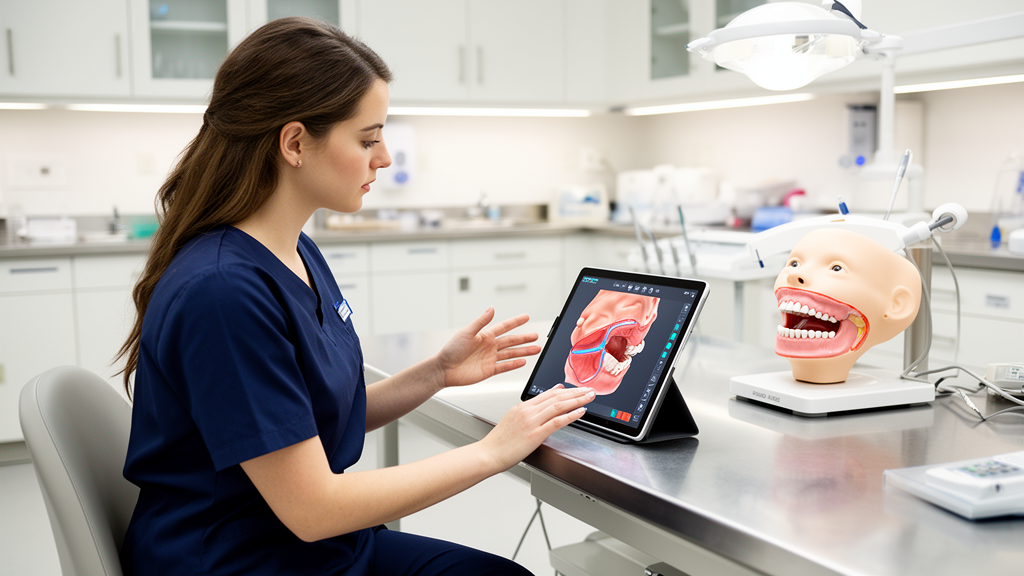
To address these pedagogical limitations, researchers conducted a single-arm pre-and-post pilot study to evaluate a newly developed digital simulation-based training platform. The investigation sought to assess multiple facets of the educational tool, specifically focusing on platform usability and user acceptability, changes in platform-based performance measured before and after instructional training, post-training perceived confidence among learners, and broader participant perceptions.
The pilot trial was carried out at Nanjing Medical University in China and enrolled a total cohort of 120 dental trainees. This participant group was evenly divided between 60 fourth-year undergraduate dental students and 60 first-year graduate dental students. Platform-based performance assessments were administered to the trainees at two distinct time points, with the pre-training assessment and post-training assessment separated by a follow-up interval of approximately two months.
The digital platform incorporated a dedicated automated scoring system designed to record trainee actions and assess competency metrics across five specific domains. Pre-training and post-training evaluation scores were quantitatively compared using paired two-tailed t tests. Across all five assessed domains, participants demonstrated higher platform-generated scores after completing the educational modules. In the domain of instrument selection, the mean paired score difference reached 47.2 points, accompanied by a t statistic of 123.6 with 119 degrees of freedom, a 95 percent confidence interval from 46.4 to 47.9, and a statistically significant P value of less than .001.
A similar upward shift occurred in the assessment of surgical procedure knowledge, where the mean paired difference between pre-training and post-training scores was 40.2 points. This domain yielded a t statistic of 84.1 with 119 degrees of freedom, a 95 percent confidence interval spanning 39.3 to 41.1, and a P value of less than .001. In contrast to these standardized knowledge metrics, the platform’s history-taking score was formally classified by investigators as exploratory. Researchers noted that this exploratory designation was necessary due to specific technical uncertainties inherent to automated rule-based scoring of free text and speech-recognition transcription processes.
Alongside automated platform scoring, all 120 participating students completed a post-training questionnaire designed to capture subjective learner perceptions regarding platform usability, overall learning experience, and individual confidence levels. Participants generally reported favorable perceptions concerning the digital interface usability and the associated learning workflow. When asked specifically in questionnaire item eleven whether the platform helped improve their surgical skills in orofacial cleft repair surgery, 94 participants, representing 78.3 percent of the study cohort, agreed or strongly agreed with the statement. However, investigators noted that this measure captures self-reported personal perceptions rather than objectively demonstrated clinical skill gains.
While general ratings of usability and instructional experience were favorable, responses regarding post-training perceived confidence were notably mixed among the trainee cohort. The platform successfully tracked internal performance gains over the two-month study period, but the educational intervention was tested without a randomized concurrent control group, precluding comparative effectiveness conclusions.
The authors emphasized that the observed performance outcomes represent unvalidated platform-generated metrics whose precise relationship to actual clinical competence remains unknown. Because the investigation was structured as a preliminary pilot study, the recorded scoring improvements should not be interpreted as definitive evidence of improved real-world surgical ability or comparative educational effectiveness.
Subject of Research: Digital simulation-based training for orofacial cleft repair surgery
Article Title: Evaluation of a digital simulation-based platform for orofacial cleft repair training: a pilot study
Article References: Xu, Y., Gao, C., Gao, S., Xiao, N., Zhu, Y., Cheng, J., Jiang, H., & Yuan, H. (2026). Evaluation of a digital simulation-based platform for orofacial cleft repair training: a pilot study. BMC Medical Education. https://doi.org/10.1186/s12909-026-10831-5
Image Credits: AI Generated
DOI: 10.1186/s12909-026-10831-5
Keywords: orofacial cleft repair, surgical simulation, dental education, Nanjing Medical University, automated scoring, pilot study, pre-post evaluation, instrument selection, surgical procedure knowledge, history-taking assessment, learner perception, educational technology, simulation platform, speech recognition, undergraduate dental training, graduate dental education, clinical competence
News Source: Ophelia Keating. (November 26, 2026). Digital Platform Boosts Dental Trainees’ Orofacial Cleft Scores in Pilot Study. Scienmag.