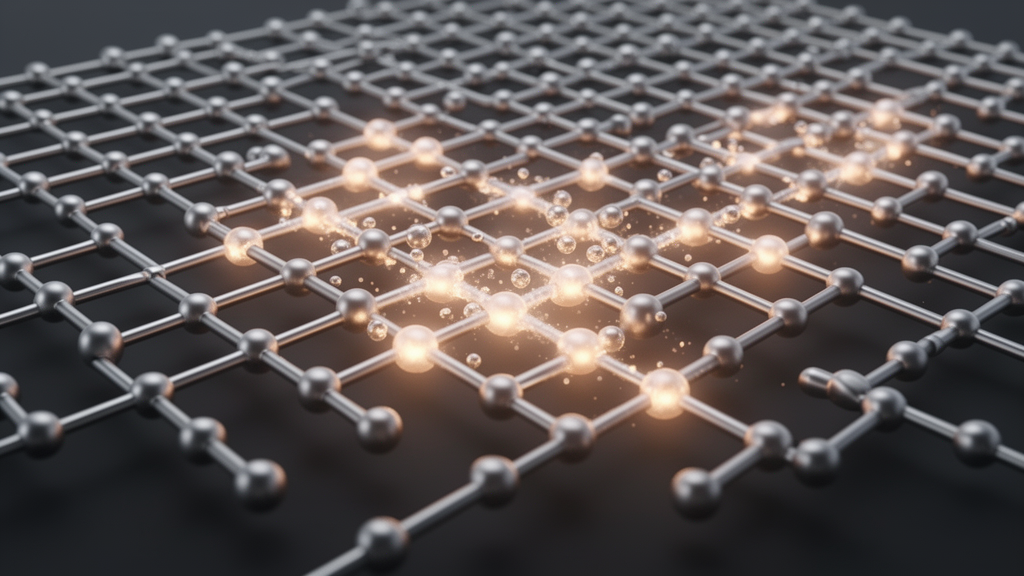
A research team has developed tunable diffusive memristor arrays that achieve controlled relaxation dynamics and improved device uniformity for neuromorphic temporal computing. Reporting in Nature Materials, the researchers demonstrated an integrated framework combining materials engineering and programming protocols to govern the dynamic behavior of diffusive memristor devices, enabling scalable physical emulation of artificial synapses and neurons.
Diffusive memristors are promising candidates for bio-realistic neuromorphic systems due to their dynamic switching and relaxation properties. However, scaling individual devices into functional computing arrays has faced persistent challenges. The stochastic nature of active ionic motion and filament evolution has historically caused severe device-to-device variability and limited tunability, impeding the reliable hardware implementation of larger neuromorphic systems.
To overcome these limitations, the researchers introduced an intrinsic engineering strategy that confines active metal-ion migration within the solid-state matrix. By utilizing percolation pathways inside a thin platinum interfacial layer alongside grain boundaries in a polycrystalline hafnium oxide layer, the team guided ion transport along defined spatial routes. This structural confinement substantially improved switching uniformity across devices and facilitated threshold voltage reduction through the interfacial network.
Alongside intrinsic structural modifications, the authors implemented extrinsic control over device kinetics.
The team evaluated system-level feasibility by assembling a prototype hardware platform that coupled an array of tailored diffusive memristors with a memristive system-on-chip.
Using this integrated platform, the researchers implemented the hierarchy-of-time-surfaces algorithm and evaluated its performance on a downsampled neuromorphic-MNIST benchmark dataset. The experimental hardware achieved a pattern recognition accuracy of 91.14 percent, demonstrating that tailoring ionic relaxation kinetics offers a viable and energy-efficient pathway toward scalable hardware systems for neuromorphic temporal computing and artificial intelligence.
Detailed device characterization provided mechanistic insights into the confined ionic transport occurring within the matrix. By examining how the interfacial network facilitates threshold voltage reduction, the physical investigations clarified the fundamental mechanisms underlying enhanced device control and operational uniformity.
Deploying the diffusive memristor time surface generator alongside the memristive system on chip demonstrates that uniting material engineering with specialized programming resolves persistent integration obstacles. Consequently, the combined framework establishes an effective foundation for scalable and energy efficient neuromorphic platforms capable of realistic emulation of neurons and synapses for next generation artificial intelligence temporal computing hardware.
Subject of Research: Neuromorphic temporal computing with tunable diffusive memristor arrays
Article Title: Tunable diffusive memristor arrays for neuromorphic temporal computing
Article References: Ling, Y., Xiong, Z., Huang, Y., Jaberi Rad, A., Wang, J., Zhao, W., Kumar, K., Wang, Z., Park, J., Nonnenmann, S. S., Bai, P., Zhang, L., Tan, H., & Xia, Q. (2026). Tunable diffusive memristor arrays for neuromorphic temporal computing. Nature Materials. https://doi.org/10.1038/s41563-026-02815-z
Image Credits: AI Generated
DOI: 10.1038/s41563-026-02815-z
Keywords: diffusive memristors, neuromorphic computing, relaxation dynamics, temporal computing, hafnium oxide, platinum interfacial layer, metal-ion migration, filament evolution, device uniformity, programming protocols, relaxation kinetics, hierarchy-of-time-surfaces, neuromorphic-MNIST, system-on-chip, threshold voltage reduction, artificial synapses
News Source: Denise Maddox. (November 26, 2026). Confined Ion Migration Improves Diffusive Memristor Arrays for Neuromorphic Computing. Scienmag.