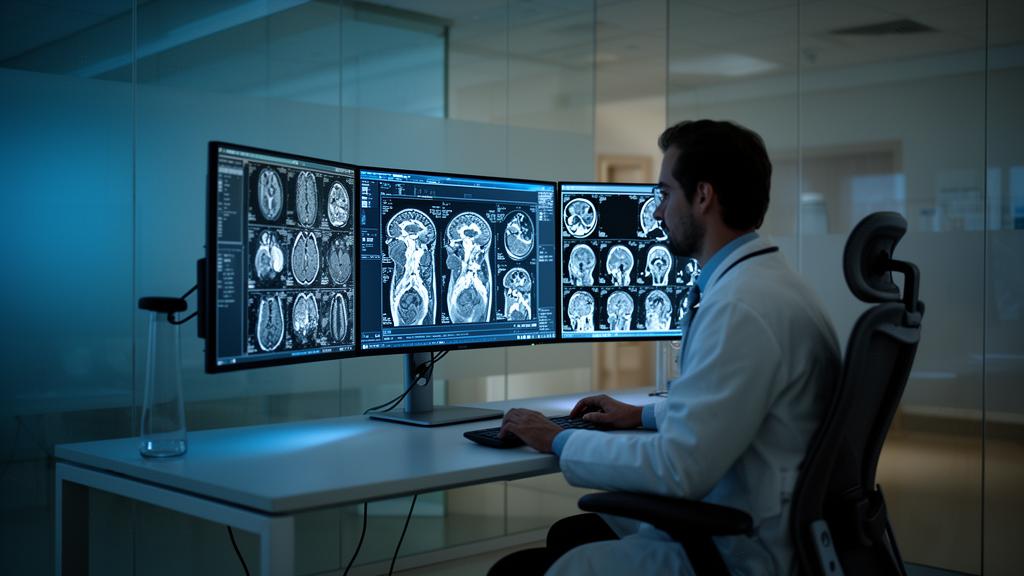
A newly developed deep learning framework named CDPru-Net achieved a diagnostic accuracy of 97.00 percent across 16 disease categories by evaluating diverse medical imaging modalities, according to a study published in Applied Intelligence. The framework addresses challenges in multi-disease to single medical image analysis, demonstrating measurable diagnostic capabilities across varied clinical conditions and imaging techniques.
To establish generalizable diagnostic capabilities, the researchers initially trained the framework on a combined dataset that incorporated classes from multiple diseases. This foundational multi-disease training phase enabled the neural network to learn shared diagnostic features spanning distinct pathologies and diverse medical imaging modalities.
A core innovation of the CDPru-Net design lies in its initialization strategy, which replaces conventional pre-trained ImageNet weights with domain-specific ClinicaNet weights. The authors derived these novel ClinicaNet weights directly from the multi-disease pre-training phase rather than relying on non-medical imagery. By utilizing medical weight initializations, the framework eliminates biases inherent in non-clinical training categories, allowing the model to specialize effectively in individual disease characteristics and ultimately improving overall diagnostic performance across specialized medical tasks.
To ensure computational efficiency alongside high diagnostic accuracy, the engineering architecture implemented a pruned MobileNet backbone. This structural design systematically eliminates redundant neural network layers, significantly reducing computational overhead while fully maintaining the network capacity required to process complex medical imaging data.
The framework further integrates a Dense Multi-scale Feature Learning module, designated as DMSFL, to enhance feature processing capabilities. This dedicated module facilitates efficient extraction and fusion of visual characteristics across multiple scales within the network architecture.
To address variations across image resolutions, the researchers incorporated Chirplet transformation directly into the diagnostic pipeline. This mathematical transformation enhances the capacity of the model to capture both frequency components and hierarchical feature structures across complex clinical inputs.
To improve model interpretability, the investigators incorporated Gradient-weighted Class Activation Mapping, known as Grad-CAM, to provide visual insights into the internal decision-making process of the network. The researchers noted that the CDPru-Net architecture provides a robust, computationally efficient solution for clinical medical image analysis, with the underlying study code published openly on GitHub to facilitate clinical evaluation and broader scientific implementation.
Subject of Research: Deep learning medical image diagnosis using a pruned multi-scale framework
Article Title: A ClinicaNet-based pruned deep learning framework for generalizable and explainable medical image diagnosis
Article References: Bilal, O., Hekmat, A., Khan, S. U. R., Deb, N., Mahmud, M., & Bhuyan, M. (2026). A ClinicaNet-based pruned deep learning framework for generalizable and explainable medical image diagnosis. Applied Intelligence, 56(17), Article 568. https://doi.org/10.1007/s10489-026-07622-2
Image Credits: AI Generated
DOI: 10.1007/s10489-026-07622-2
Keywords: CDPru-Net, ClinicaNet weights, medical image diagnosis, pruned MobileNet, Dense Multi-scale Feature Learning, Chirplet transformation, Grad-CAM, multi-modal medical imaging, transfer learning, multi-disease classification, deep learning in healthcare, computational efficiency, model interpretability, feature fusion, image resolution adaptation, Applied Intelligence, open-source medical AI
News Source: Blake Davidson. (November 26, 2026). Pruned Deep Learning Framework Accurately Diagnoses Diseases Across Medical Image Modalities. Scienmag.