• HOME
  • NEWS
  • EXPLORE
    • CAREER
      • Companies
      • Jobs
    • EVENTS
    • iGEM
      • News
      • Team
    • PHOTOS
    • VIDEO
    • WIKI
  • BLOG
  • COMMUNITY
    • FACEBOOK
    • INSTAGRAM
    • TWITTER
Thursday, November 26, 2026
BIOENGINEER.ORG
No Result
View All Result
  • Login
  • HOME
  • NEWS
  • EXPLORE
    • CAREER
      • Companies
      • Jobs
        • Lecturer
        • PhD Studentship
        • Postdoc
        • Research Assistant
    • EVENTS
    • iGEM
      • News
      • Team
    • PHOTOS
    • VIDEO
    • WIKI
  • BLOG
  • COMMUNITY
    • FACEBOOK
    • INSTAGRAM
    • TWITTER
No Result
View All Result
Bioengineer.org
No Result
View All Result
Home NEWS Science News Technology

Pruned Deep Learning Framework Accurately Diagnoses Diseases Across Medical Image Modalities

by
November 26, 2026
in Technology
Reading Time: 2 mins read
0
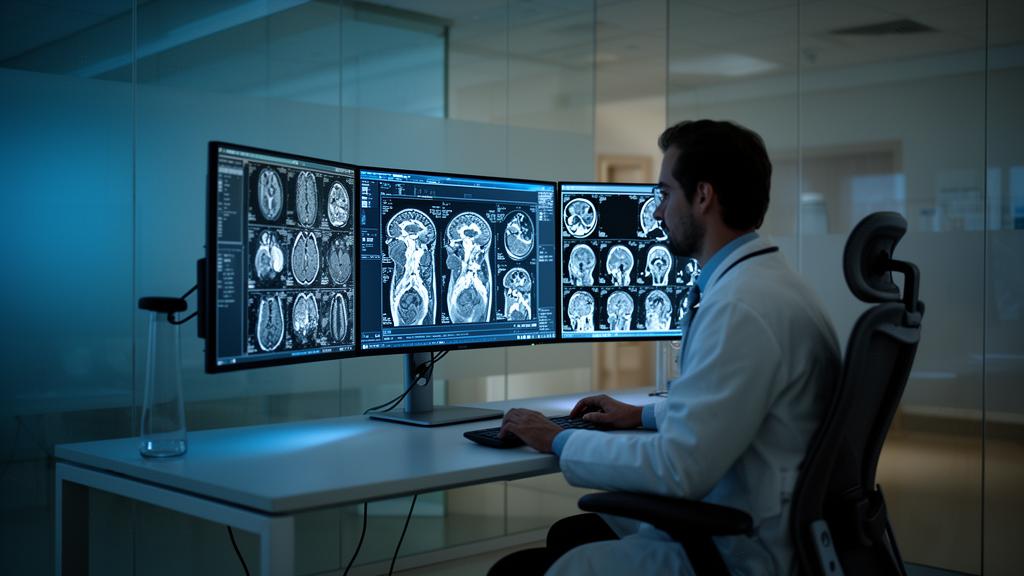
Pruned Deep Learning Framework Accurately Diagnoses Diseases Across Medical Image Modalities

Pruned Deep Learning Framework Accurately Diagnoses Diseases Across Medical Image Modalities

Share on FacebookShare on TwitterShare on LinkedinShare on RedditShare on Telegram

A newly developed deep learning framework named CDPru-Net achieved a diagnostic accuracy of 97.00 percent across 16 disease categories by evaluating diverse medical imaging modalities, according to a study published in Applied Intelligence. The framework addresses challenges in multi-disease to single medical image analysis, demonstrating measurable diagnostic capabilities across varied clinical conditions and imaging techniques.

To establish generalizable diagnostic capabilities, the researchers initially trained the framework on a combined dataset that incorporated classes from multiple diseases. This foundational multi-disease training phase enabled the neural network to learn shared diagnostic features spanning distinct pathologies and diverse medical imaging modalities.

A core innovation of the CDPru-Net design lies in its initialization strategy, which replaces conventional pre-trained ImageNet weights with domain-specific ClinicaNet weights. The authors derived these novel ClinicaNet weights directly from the multi-disease pre-training phase rather than relying on non-medical imagery. By utilizing medical weight initializations, the framework eliminates biases inherent in non-clinical training categories, allowing the model to specialize effectively in individual disease characteristics and ultimately improving overall diagnostic performance across specialized medical tasks.

To ensure computational efficiency alongside high diagnostic accuracy, the engineering architecture implemented a pruned MobileNet backbone. This structural design systematically eliminates redundant neural network layers, significantly reducing computational overhead while fully maintaining the network capacity required to process complex medical imaging data.

The framework further integrates a Dense Multi-scale Feature Learning module, designated as DMSFL, to enhance feature processing capabilities. This dedicated module facilitates efficient extraction and fusion of visual characteristics across multiple scales within the network architecture.

To address variations across image resolutions, the researchers incorporated Chirplet transformation directly into the diagnostic pipeline. This mathematical transformation enhances the capacity of the model to capture both frequency components and hierarchical feature structures across complex clinical inputs.

To improve model interpretability, the investigators incorporated Gradient-weighted Class Activation Mapping, known as Grad-CAM, to provide visual insights into the internal decision-making process of the network. The researchers noted that the CDPru-Net architecture provides a robust, computationally efficient solution for clinical medical image analysis, with the underlying study code published openly on GitHub to facilitate clinical evaluation and broader scientific implementation.

Subject of Research: Deep learning medical image diagnosis using a pruned multi-scale framework

Article Title: A ClinicaNet-based pruned deep learning framework for generalizable and explainable medical image diagnosis

Article References: Bilal, O., Hekmat, A., Khan, S. U. R., Deb, N., Mahmud, M., & Bhuyan, M. (2026). A ClinicaNet-based pruned deep learning framework for generalizable and explainable medical image diagnosis. Applied Intelligence, 56(17), Article 568. https://doi.org/10.1007/s10489-026-07622-2

Image Credits: AI Generated

DOI: 10.1007/s10489-026-07622-2

Keywords: CDPru-Net, ClinicaNet weights, medical image diagnosis, pruned MobileNet, Dense Multi-scale Feature Learning, Chirplet transformation, Grad-CAM, multi-modal medical imaging, transfer learning, multi-disease classification, deep learning in healthcare, computational efficiency, model interpretability, feature fusion, image resolution adaptation, Applied Intelligence, open-source medical AI

News Source: Blake Davidson. (November 26, 2026). Pruned Deep Learning Framework Accurately Diagnoses Diseases Across Medical Image Modalities. Scienmag.

Tags: Applied IntelligenceCDPru-NetChirplet transformationClinicaNet weightsComputational efficiencyDeep learning in healthcareDense Multi-scale Feature Learningfeature fusionGrad-CAMimage resolution adaptationmedical image diagnosismodel interpretabilitymulti-disease classificationmulti-modal medical imagingopen-source medical AIpruned MobileNetTransfer Learning
Share12Tweet7Share2ShareShareShare1

Related Posts

AI Robot Supports Group Learning in Mixed Reality

AI Robot Supports Group Learning in Mixed Reality

November 26, 2026
Physics-Driven Workflow Predicts Aero-Engine Turbine Disc Fatigue and Defect Tolerance

Physics-Driven Workflow Predicts Aero-Engine Turbine Disc Fatigue and Defect Tolerance

November 26, 2026

Metrological Framework Pinpoints Uncertainty Sources in Satellite Microwave Radiometer Calibrations

November 26, 2026

Review Finds Artificial Intelligence Stress And Obesity Models Lack External Clinical Validation

November 26, 2026

POPULAR NEWS

  • Intraoral Scanner Captures Subgingival Tooth Structure Beyond Vertical Preparation Margins

    Intraoral Scanner Captures Subgingival Tooth Structure Beyond Vertical Preparation Margins

    29 shares
    Share 12 Tweet 7
  • Review Finds Artificial Intelligence Stress And Obesity Models Lack External Clinical Validation

    29 shares
    Share 12 Tweet 7
  • Freeze-Drying Preserves Coffee Fruit Microbiome DNA Far Better Than Refrigeration

    29 shares
    Share 12 Tweet 7
  • Buyang Huanwu Decoction Linked to Lower Oxidative Markers in Stroke Meta-Analysis

    29 shares
    Share 12 Tweet 7

About

We bring you the latest biotechnology news from best research centers and universities around the world. Check our website.

Follow us

Recent News

Immunoproteasome Function in Heart Disease Varies by Context and Catalytic Subunit

Targeting Bone-Forming Cells to Boost NAD+ Attenuates Age-Associated Bone Loss in Mice

AI Robot Supports Group Learning in Mixed Reality

Subscribe to Blog via Email

Enter your email address to subscribe to this blog and receive notifications of new posts by email.

Join 89 other subscribers
  • Contact Us

Bioengineer.org © Copyright 2023 All Rights Reserved.

Welcome Back!

Login to your account below

Forgotten Password?

Retrieve your password

Please enter your username or email address to reset your password.

Log In
No Result
View All Result
  • Homepages
    • Home Page 1
    • Home Page 2
  • News
  • National
  • Business
  • Health
  • Lifestyle
  • Science

Bioengineer.org © Copyright 2023 All Rights Reserved.