• HOME
  • NEWS
  • EXPLORE
    • CAREER
      • Companies
      • Jobs
    • EVENTS
    • iGEM
      • News
      • Team
    • PHOTOS
    • VIDEO
    • WIKI
  • BLOG
  • COMMUNITY
    • FACEBOOK
    • INSTAGRAM
    • TWITTER
Thursday, November 26, 2026
BIOENGINEER.ORG
No Result
View All Result
  • Login
  • HOME
  • NEWS
  • EXPLORE
    • CAREER
      • Companies
      • Jobs
        • Lecturer
        • PhD Studentship
        • Postdoc
        • Research Assistant
    • EVENTS
    • iGEM
      • News
      • Team
    • PHOTOS
    • VIDEO
    • WIKI
  • BLOG
  • COMMUNITY
    • FACEBOOK
    • INSTAGRAM
    • TWITTER
No Result
View All Result
Bioengineer.org
No Result
View All Result
Home NEWS Science News Biology

DefunCNV Framework Predicts Pathogenicity of Functional Noncoding Brain Disorder Variations

by
November 26, 2026
in Biology, Technology
Reading Time: 2 mins read
0
DefunCNV Framework Predicts Pathogenicity of Functional Noncoding Brain Disorder Variations

DefunCNV Framework Predicts Pathogenicity of Functional Noncoding Brain Disorder Variations

Share on FacebookShare on TwitterShare on LinkedinShare on RedditShare on Telegram

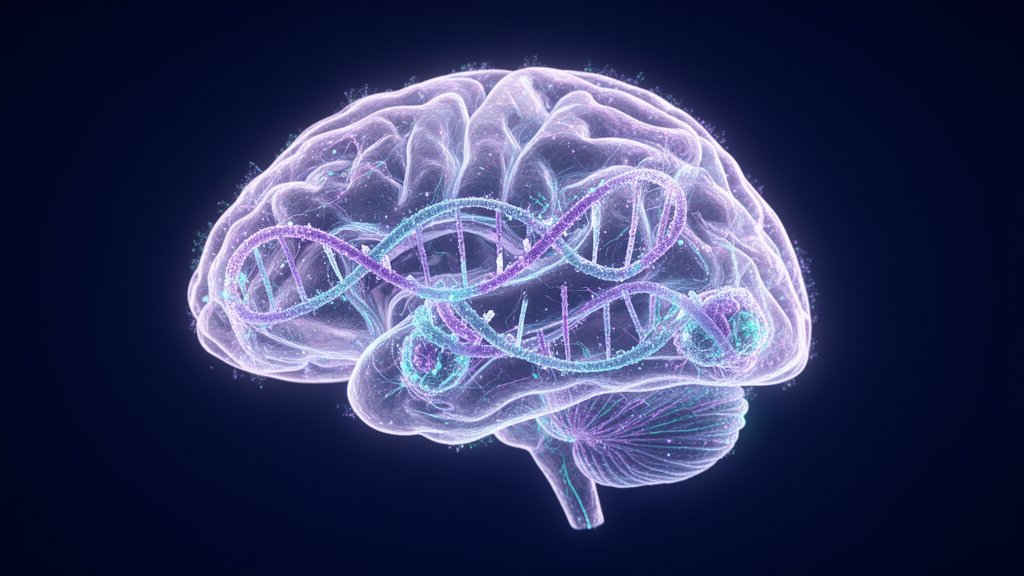
Researchers have developed DefunCNV, a deep learning framework designed to systematically predict the pathogenicity of functional noncoding copy number variations associated with brain disorders.

Studies indicate that a substantial fraction of copy number variations linked to brain disorders are situated in noncoding regions of the genome. While existing deep learning architectures effectively resolve short-range regulatory elements, they encounter major computational challenges when modeling the global characteristics of long-range chromatin interactions that extend across tens to hundreds of kilobases, leaving the pathogenicity of noncoding variations difficult to assess accurately.

To overcome the limitations of linear-sequence paradigms, DefunCNV reshapes 100-kilobase DNA sequences into two-dimensional feature matrices. This architectural strategy reorganizes extended genomic sequences into a two-dimensional layout that, combined with windowed attention mechanisms, captures long-range regulatory synergies that purely sequential analytical views fragment, enabling the precise annotation of 552 brain-related chromatin features.

Using these regulatory feature annotations, the research team constructed two specialized evaluation datasets by calculating log2 ratio differences across the 552 chromatin features between reference and variant genomic sequences. These benchmarks comprise a mixed coding and noncoding copy number variation dataset containing 2,638 entries alongside a dedicated noncoding copy number variation dataset containing 673 entries.

Experimental results demonstrated that DefunCNV outperforms existing computational tools in predicting the pathogenicity of copy number variations associated with brain disorders. By accurately modeling long-range sequence epigenetic regulation, the framework provides an established computational basis for both mechanistic interpretation and clinical evaluation of noncoding structural variants.

The operational scope of the framework is defined by its fixed window of approximately 100 kilobases, corresponding to exactly 98,304 base pairs. Because DefunCNV is specifically engineered for variations occurring within this defined length scale, the authors note that the model does not directly evaluate very large recurrent genomic rearrangements.

Subject of Research: Pathogenicity prediction of noncoding copy number variations in brain disorders using deep learning

Article Title: DefunCNV: a deep learning framework for functional noncoding copy number variations prediction

Article References: Bai, Y., Pei, M., Yu, Z., Du, F., Song, L., Gao, Y., Kang, Y., & Shi, F. (2026). DefunCNV: a deep learning framework for functional noncoding copy number variations prediction. Frontiers in Bioinformatics, 6, 1954308. https://doi.org/10.3389/fbinf.2026.1954308

Image Credits: AI Generated

DOI: 10.3389/fbinf.2026.1954308

Keywords: DefunCNV, copy number variations, noncoding CNVs, brain disorders, pathogenicity prediction, deep learning framework, chromatin features, epigenetic regulation, long-range chromatin interactions, two-dimensional feature matrices, windowed attention, log2 ratio differences, sequence annotation, genomic analysis, functional noncoding variations, recurrent rearrangements

News Source: Cassandra Pierce. (November 26, 2026). DefunCNV Framework Predicts Pathogenicity of Functional Noncoding Brain Disorder Variations. Scienmag.

Tags: brain disorderschromatin featuresCopy Number VariationsDeep learning frameworkDefunCNVepigenetic regulationfunctional noncoding variationsGenomic analysislog2 ratio differenceslong-range chromatin interactionsnoncoding CNVspathogenicity predictionrecurrent rearrangementssequence annotationtwo-dimensional feature matriceswindowed attention
Share12Tweet7Share2ShareShareShare1

Related Posts

Large Language Model Review Sentiment Improves Amazon Product Sales Forecasting Accuracy

Large Language Model Review Sentiment Improves Amazon Product Sales Forecasting Accuracy

November 26, 2026
Review Explores How Mitochondria-Derived Vesicles May Influence Premature Infant Lung Injury

Review Explores How Mitochondria-Derived Vesicles May Influence Premature Infant Lung Injury

November 26, 2026

Optimized Neural Network Detects Oral Cancer With High Accuracy in Image Tests

November 26, 2026

Unornamented New Zealand Pipefish Exhibits Extensive Cryptic Molecular Dimorphism Between Sexes

November 26, 2026

POPULAR NEWS

  • Large Language Model Review Sentiment Improves Amazon Product Sales Forecasting Accuracy

    Large Language Model Review Sentiment Improves Amazon Product Sales Forecasting Accuracy

    29 shares
    Share 12 Tweet 7
  • Pluripotent Stem Cell Exosomes Enter Clinical Trials Challenging Mesenchymal Benchmarks

    29 shares
    Share 12 Tweet 7
  • Webinar Attendees in Ukraine Report High Confidence Applying Pediatric Mental Health Training

    29 shares
    Share 12 Tweet 7
  • Two-Probe Digital PCR Identifies Authentic Arnebia euchroma and Counterfeit Herbal Preparations

    29 shares
    Share 12 Tweet 7

About

We bring you the latest biotechnology news from best research centers and universities around the world. Check our website.

Follow us

Recent News

Urban Residence Linked to Lower Odds of High Disease Burden in Nigeria

Replacing Sedentary Time With Activity Predicts Healthier Lifestyle Scores in Older Adults

Large Language Model Review Sentiment Improves Amazon Product Sales Forecasting Accuracy

Subscribe to Blog via Email

Enter your email address to subscribe to this blog and receive notifications of new posts by email.

Join 89 other subscribers
  • Contact Us

Bioengineer.org © Copyright 2023 All Rights Reserved.

Welcome Back!

Login to your account below

Forgotten Password?

Retrieve your password

Please enter your username or email address to reset your password.

Log In
No Result
View All Result
  • Homepages
    • Home Page 1
    • Home Page 2
  • News
  • National
  • Business
  • Health
  • Lifestyle
  • Science

Bioengineer.org © Copyright 2023 All Rights Reserved.