• HOME
  • NEWS
  • EXPLORE
    • CAREER
      • Companies
      • Jobs
    • EVENTS
    • iGEM
      • News
      • Team
    • PHOTOS
    • VIDEO
    • WIKI
  • BLOG
  • COMMUNITY
    • FACEBOOK
    • INSTAGRAM
    • TWITTER
Friday, November 27, 2026
BIOENGINEER.ORG
No Result
View All Result
  • Login
  • HOME
  • NEWS
  • EXPLORE
    • CAREER
      • Companies
      • Jobs
        • Lecturer
        • PhD Studentship
        • Postdoc
        • Research Assistant
    • EVENTS
    • iGEM
      • News
      • Team
    • PHOTOS
    • VIDEO
    • WIKI
  • BLOG
  • COMMUNITY
    • FACEBOOK
    • INSTAGRAM
    • TWITTER
No Result
View All Result
Bioengineer.org
No Result
View All Result
Home NEWS Science News Chemistry

Multiscale Modeling Framework Links Protein Structures to Pancreatic Beta-Cell Function

by
November 26, 2026
in Chemistry
Reading Time: 2 mins read
0
Multiscale Modeling Framework Links Protein Structures to Pancreatic Beta-Cell Function

Multiscale Modeling Framework Links Protein Structures to Pancreatic Beta-Cell Function

Share on FacebookShare on TwitterShare on LinkedinShare on RedditShare on Telegram

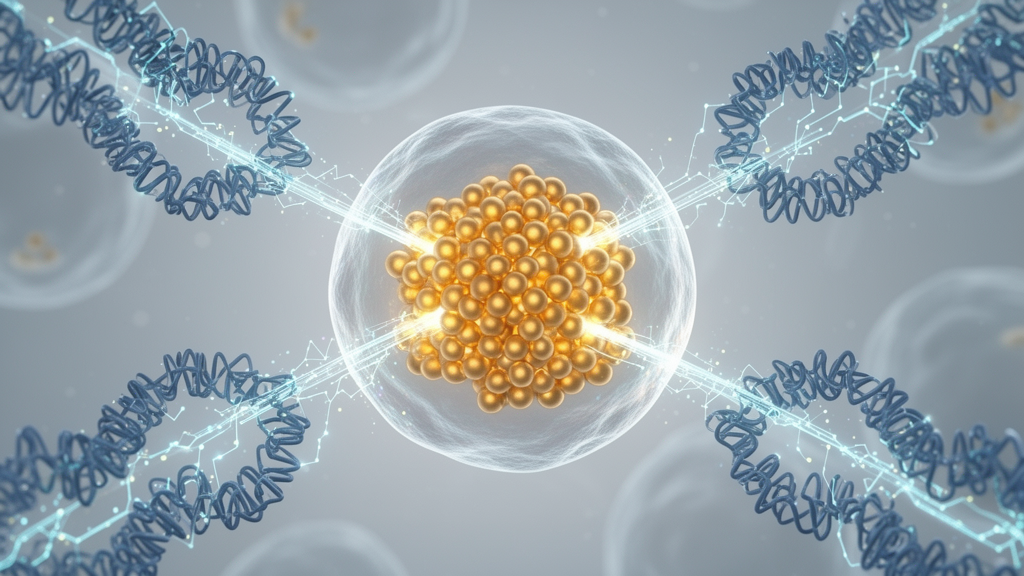
Researchers have proposed a structure-informed multiscale modeling framework that connects molecular structures and simulations directly to computational models of pancreatic beta cells. Although pancreatic beta cells have been computationally modeled for four decades, existing beta-cell and islet models have lacked kinetic schemes derived from protein structures or molecular dynamics simulations. Historically, kinetic and conductance parameters in these cellular models were either estimated or obtained by fitting mathematical representations to functional experimental data.

To address this gap, the authors presented a hypothesis and roadmap based on a four-stage framework using the ATP-sensitive potassium channel as a prototypical example. The outlined workflow begins with establishing a cryo-electron microscopy state library, followed by running molecular dynamics simulations to sample protein conformations. These simulation data are then translated into a discrete-state kinetic scheme, which is ultimately integrated into a larger cell model.

Within this multi-step scheme, the framework outlines how structural data and atomistic simulations can directly constrain the state set, connectivity, and relative stability of a Markov model. Combining these structural constraints with electrophysiological measurements complements and improves the identifiability of kinetic models. The researchers demonstrated the feasibility of this design by embedding the resulting scheme into a minimal prototype within a human beta-cell model, providing an explicit route to relate disease-causing genetic mutations to protein gating and subsequent cellular and islet dysfunction.

Beyond the prototypical potassium channel, the study evaluated the readiness of seven additional protein classes crucial to pancreatic beta-cell function. These targets comprise voltage-gated potassium, calcium, and sodium channels, calcium-activated potassium channels, connexin-36 gap junctions, incretin receptors, and intracellular cyclic adenosine monophosphate effectors. The assessment separated what has already been experimentally demonstrated, what remains currently plausible, and what is still unresolved across each biological system.

The team highlighted shared obstacles spanning all protein targets, including substantial timescale separation, parameter identifiability, computational cost, and uncertainty propagation. To overcome these barriers, the authors discussed practical mitigation strategies alongside the shared infrastructure needed across the community, such as benchmark standards and shared data repositories. The study concludes that while not yet a complete route to fully predictive models, structure-informed modeling is becoming an increasingly feasible strategy for understanding beta-cell function and dysfunction.

Subject of Research: Structure-informed multiscale computational modeling of pancreatic beta-cell function

Article Title: Bridging molecular structures and β-cell models: a structure-informed multiscale modeling framework for β-cell function and dysfunction

Article References: Félix-Martínez, G. J., & Godínez-Fernández, J. R. (2026). Bridging molecular structures and β-cell models: a structure-informed multiscale modeling framework for β-cell function and dysfunction. Frontiers in Chemical Biology, 5, 1996838. https://doi.org/10.3389/fchbi.2026.1996838

Image Credits: AI Generated

DOI: 10.3389/fchbi.2026.1996838

Keywords: pancreatic beta cells, computational modeling, multiscale modeling, KATP channels, molecular dynamics simulations, cryo-EM, Markov models, kinetic schemes, electrophysiological measurements, voltage-gated ion channels, calcium-activated potassium channels, Cx36 gap junctions, incretin receptors, cAMP effectors, parameter identifiability, uncertainty propagation, timescale separation, pancreatic islets

News Source: Bethany Barker. (November 26, 2026). Multiscale Modeling Framework Links Protein Structures to Pancreatic Beta-Cell Function. Scienmag.


Tags: calcium-activated potassium channelscAMP effectorscomputational modelingCryo-EMCx36 gap junctionselectrophysiological measurementsincretin receptorsKATP channelskinetic schemesMarkov modelsmolecular dynamics simulationsmultiscale modelingpancreatic beta cellspancreatic isletsparameter identifiabilitytimescale separationuncertainty propagationvoltage-gated ion channels
Share12Tweet7Share2ShareShareShare1

Related Posts

Spent Mushroom Waste Yields Functional Cellulose Acetate Films for Sustainable Packaging

Spent Mushroom Waste Yields Functional Cellulose Acetate Films for Sustainable Packaging

November 27, 2026
Microplastics Impair Crop Photosynthesis and Cellular Metabolism in Scientific Review

Microplastics Impair Crop Photosynthesis and Cellular Metabolism in Scientific Review

November 27, 2026

Review evaluates functional hydrogel platforms for water purification and environmental remediation

November 27, 2026

Wild Grape Yeasts Increase Fruity Acetate Esters in Wine Co-Fermentations

November 27, 2026

POPULAR NEWS

  • Polidocanol Foam Ratios Show Similar Saphenous Vein Occlusion in Cohort Study

    Polidocanol Foam Ratios Show Similar Saphenous Vein Occlusion in Cohort Study

    29 shares
    Share 12 Tweet 7
  • Extracellular Biophysical Forces Drive Gene Regulation by Directly Deforming the Nucleus

    29 shares
    Share 12 Tweet 7
  • Viatorr Stents Improve Shunt Patency Over Bare Stents in TIPS Review

    29 shares
    Share 12 Tweet 7
  • Fisetin Reduces Bone Density Loss in Accelerated Aging Progeria Mouse Model

    29 shares
    Share 12 Tweet 7

About

We bring you the latest biotechnology news from best research centers and universities around the world. Check our website.

Follow us

Recent News

New Multilevel Exercise Empowerment Scale Demonstrates High Reliability in Adults

Most Surveyed Jowhar Farmers Report Drought Losses and Severe Maize Impacts

Plant Mutualistic Networks Maintained Stable Modular Structures Over Millions of Years

Subscribe to Blog via Email

Enter your email address to subscribe to this blog and receive notifications of new posts by email.

Join 89 other subscribers
  • Contact Us

Bioengineer.org © Copyright 2023 All Rights Reserved.

Welcome Back!

Login to your account below

Forgotten Password?

Retrieve your password

Please enter your username or email address to reset your password.

Log In
No Result
View All Result
  • Homepages
    • Home Page 1
    • Home Page 2
  • News
  • National
  • Business
  • Health
  • Lifestyle
  • Science

Bioengineer.org © Copyright 2023 All Rights Reserved.