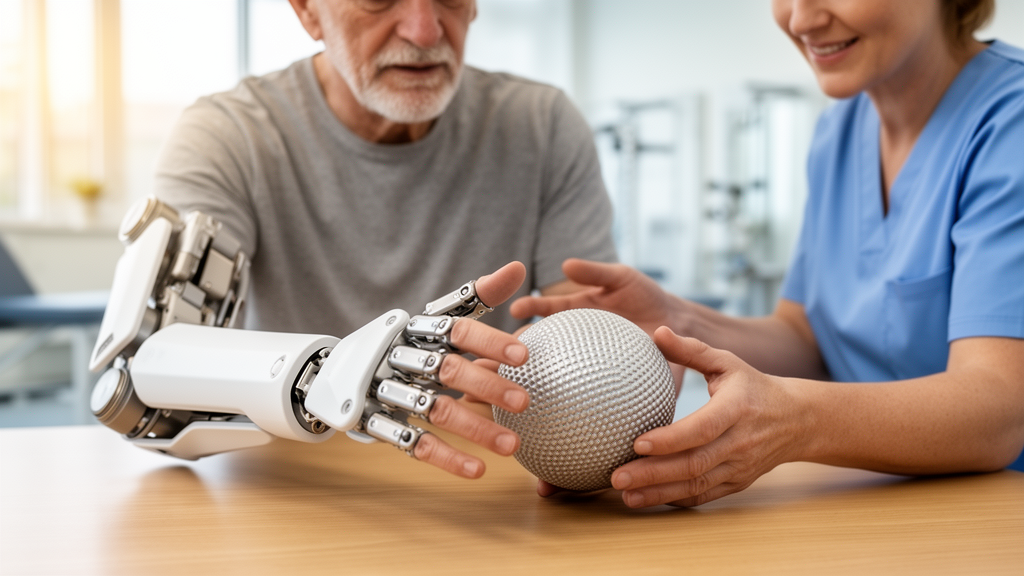
A systematic review and meta-analysis of twenty-eight randomized controlled trials suggests that exoskeleton-assisted training can improve upper limb motor function in patients recovering from stroke. The study, published in the Journal of NeuroEngineering and Rehabilitation, synthesized data from 1,407 participants to evaluate the efficacy of these robotic devices. While the findings indicate a positive effect on motor scores, the researchers emphasize that substantial heterogeneity among the included studies warrants cautious interpretation of the results.
The research team, led by Xiaomin Chen and colleagues, aimed to address inconsistent evidence regarding the use of upper limb exoskeletons in rehabilitation. Post-stroke motor impairment often severely affects daily activities and quality of life, making the potential benefits of robotic assistance a significant area of clinical interest. The review specifically explored whether treatment effects varied based on the stage of stroke and specific training parameters, seeking to clarify which factors might influence the outcome of such interventions.
To conduct the analysis, the authors retrieved trials from major databases including PubMed, Web of Science, the Cochrane Library, CNKI, and Wanfang. They assessed the risk of bias using the original Cochrane tool and evaluated the certainty of evidence using the GRADE framework. Meta-analysis was performed using RevMan 5.4 and R 4.5.1, with treatment effects calculated as between-group differences in change-from-baseline scores. This methodological approach allowed for a standardized comparison of the exoskeleton group against conventional rehabilitation controls.
The primary results showed that exoskeleton-assisted training improved scores on several key functional measures compared to conventional rehabilitation. For the Fugl-Meyer Assessment for Upper Extremity (FMA-UE), which is a common measure of motor function, the meta-analysis of 23 trials found a mean difference of 5.30 points, with a 95% confidence interval ranging from 3.82 to 6.79. This indicates a statistically significant improvement in motor ability for patients using the exoskeletons.
Additional outcomes supported the benefit of robotic training. Scores on the Wolf Motor Function Test increased by a mean difference of 4.78 points, and the Action Research Arm Test (ARAT) showed a mean difference of 2.70 points. Furthermore, the Modified Barthel Index, which assesses activities of daily living, improved by a mean difference of 7.50 points. These findings suggest that the intervention may have broader impacts on both motor control and functional independence in daily tasks.
However, not all outcomes showed statistically significant benefits. The Functional Independence Measure (FIM) effect was not significant, with a mean difference of 3.97 and a 95% confidence interval that crossed zero, ranging from -1.70 to 9.65. The authors noted that the FIM results were sensitive to the exclusion of individual trials, highlighting the variability in how different studies measured functional independence. This discrepancy between the Modified Barthel Index and the FIM suggests that the impact on daily living activities may depend on the specific metric used.
Substantial heterogeneity was observed in the data, particularly for the FMA-UE scores, where the I-squared statistic was 90%, and for the FIM, where it was 97%. To address this, the researchers conducted a sensitivity analysis restricted to trials with comparable scheduled treatment time. This analysis retained a positive effect for FMA-UE, with a mean difference of 4.54 across 13 trials, although heterogeneity remained high at 83%. The ARAT results were also sensitive to individual trial exclusions, indicating that the overall effect size may be influenced by specific study characteristics.
Exploratory subgroup analyses suggested associations between the stage of stroke, various training parameters, and the FMA-UE effects. Univariable meta-regression was used to assess these associations, but the authors caution that these are exploratory findings. The optimal training dose remains uncertain, and the study highlights the need for direct randomized comparisons of different training regimens to establish best practices. Potential study-level confounding further limits the ability to draw definitive causal conclusions from the aggregated data.
In conclusion, the meta-analysis supports the use of exoskeleton-assisted training for improving upper limb motor function after stroke. However, the findings regarding activities of daily living were mixed, and the high levels of heterogeneity and sensitivity to individual trials suggest that more rigorous, standardized research is needed. The study provides a valuable baseline for understanding the current state of evidence while underscoring the importance of cautious clinical interpretation and further investigation into optimal rehabilitation protocols.
Subject of Research: Systematic review and meta-analysis of exoskeleton rehabilitation robots for stroke upper limb recovery
Article Title: Efficacy of exoskeleton rehabilitation robots for upper limb function recovery in stroke patients: a systematic review and meta-analysis
Article References: Chen, X., Duan, Y., Qin, Y., & Lu, S. (2026). Efficacy of exoskeleton rehabilitation robots for upper limb function recovery in stroke patients: a systematic review and meta-analysis. Journal of NeuroEngineering and Rehabilitation. https://doi.org/10.1186/s12984-026-02229-7
Image Credits: AI Generated
DOI: 10.1186/s12984-026-02229-7
Keywords: stroke rehabilitation, upper limb function, exoskeleton robots, meta-analysis, Fugl-Meyer Assessment, Wolf Motor Function Test, Action Research Arm Test, Modified Barthel Index, Functional Independence Measure, randomized controlled trials, motor impairment, robotic assistance, clinical efficacy, heterogeneity analysis, sensitivity analysis, training parameters, stroke stage, Journal of NeuroEngineering and Rehabilitation, rehabilitation technology, evidence certainty
News Source: Cassandra Pierce. (November 26, 2026). Exoskeletons improve stroke arm function, new meta-analysis finds. Scienmag.