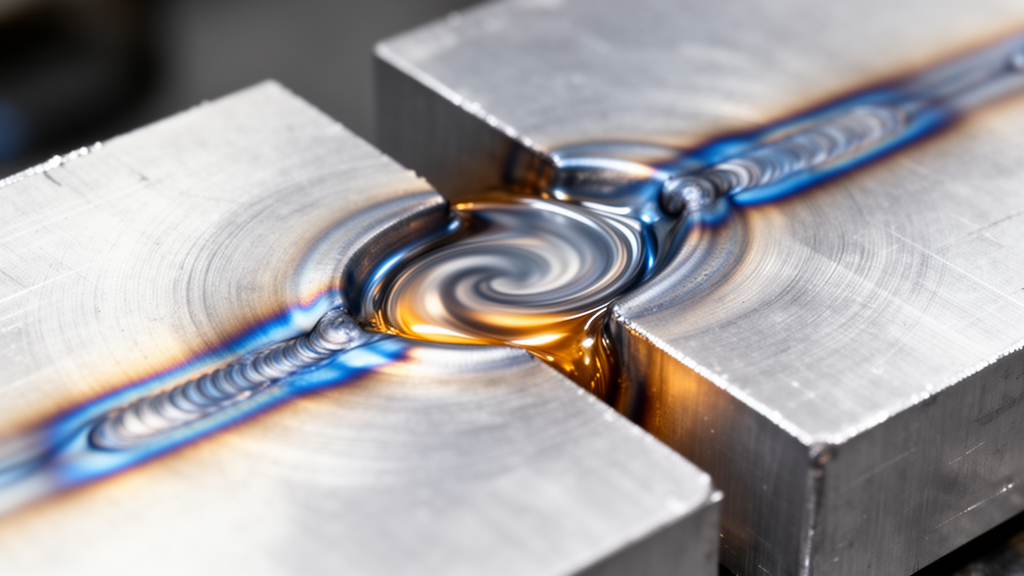
A coupled computational fluid dynamics and multiphase field model has been developed to investigate the thermo-mechanical behavior, dynamic recrystallization induced grain evolution, and material flow during the friction stir welding of dissimilar aluminum and magnesium alloys. Within this framework, temperature and strain rate histories generated by the computational fluid dynamics model serve as direct inputs for the multiphase field model to predict the progression of grain size evolution.
The predicted grain size evolution from the multiphase field model is then incorporated directly into the constitutive relationship of the computational fluid dynamics model to account for grain boundary strengthening and its corresponding effect on material flow. Compared with the previous grain size calculation method that relied on dislocation density, this improved coupled modeling technique predicts a more reasonable grain size distribution across the weld zone. In addition, incorporating this refined grain calculation improves the numerical prediction of the thermo-mechanically affected zone boundary between the aluminum and magnesium alloy plates.
The multiscale simulation results show that differences in the local thermo-mechanical responses of aluminum and magnesium lead to distinct material flow behaviors between the two metals. Because the two alloys respond differently under thermal and mechanical loading, these distinct flow patterns highlight the critical importance of coordinated material flow in facilitating effective interfacial mixing.
Specifically, increasing the tool rotation speed enhances circumferential material flow around the welding tool, whereas increasing the welding speed promotes rearward material flow behind the tool path.
Coordinated control of rotation speed and welding speed promotes balanced material flow and interfacial mixing while simultaneously regulating the overall heat input into the workpieces.
Subject of Research: Multiscale simulation of material flow and grain evolution during friction stir welding of dissimilar aluminum and magnesium alloys
Article Title: Multiscale simulation study on material flow and mixing behavior during friction stir welding of Al/Mg dissimilar alloys
Article References: Zhang, G., Wu, C., Gao, J., & Meng, X. (2026). Multiscale simulation study on material flow and mixing behavior during friction stir welding of Al/Mg dissimilar alloys. Journal of Materials Science. https://doi.org/10.1007/s10853-026-14125-5
Image Credits: AI Generated
DOI: 10.1007/s10853-026-14125-5
Keywords: friction stir welding, dissimilar alloys, aluminum alloys, magnesium alloys, computational fluid dynamics, multiphase field model, material flow, interfacial mixing, dynamic recrystallization, grain size evolution, grain boundary strengthening, thermo-mechanical behavior, thermo-mechanically affected zone, dislocation density, tool rotation speed, welding speed, circumferential material flow, joint mechanical properties
News Source: Audrey Campbell. (November 26, 2026). Coupled Simulation Shows Coordinated Flow Improves Aluminum-Magnesium Welds. Scienmag.