• HOME
  • NEWS
  • EXPLORE
    • CAREER
      • Companies
      • Jobs
    • EVENTS
    • iGEM
      • News
      • Team
    • PHOTOS
    • VIDEO
    • WIKI
  • BLOG
  • COMMUNITY
    • FACEBOOK
    • INSTAGRAM
    • TWITTER
Thursday, October 1, 2026
BIOENGINEER.ORG
No Result
View All Result
  • Login
  • HOME
  • NEWS
  • EXPLORE
    • CAREER
      • Companies
      • Jobs
        • Lecturer
        • PhD Studentship
        • Postdoc
        • Research Assistant
    • EVENTS
    • iGEM
      • News
      • Team
    • PHOTOS
    • VIDEO
    • WIKI
  • BLOG
  • COMMUNITY
    • FACEBOOK
    • INSTAGRAM
    • TWITTER
  • HOME
  • NEWS
  • EXPLORE
    • CAREER
      • Companies
      • Jobs
        • Lecturer
        • PhD Studentship
        • Postdoc
        • Research Assistant
    • EVENTS
    • iGEM
      • News
      • Team
    • PHOTOS
    • VIDEO
    • WIKI
  • BLOG
  • COMMUNITY
    • FACEBOOK
    • INSTAGRAM
    • TWITTER
No Result
View All Result
Bioengineer.org
No Result
View All Result
Home Headlines

Organ-on-a-chip model offers insights into premature aging and vascular disease

Bioengineer.org by Bioengineer.org
January 31, 2018
in Headlines, Health, Science News
Reading Time: 2 mins read
0
Share on FacebookShare on TwitterShare on LinkedinShare on RedditShare on Telegram
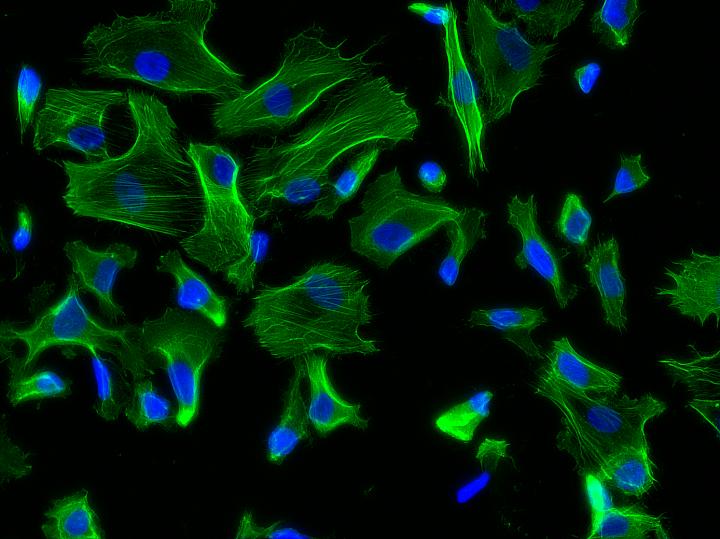
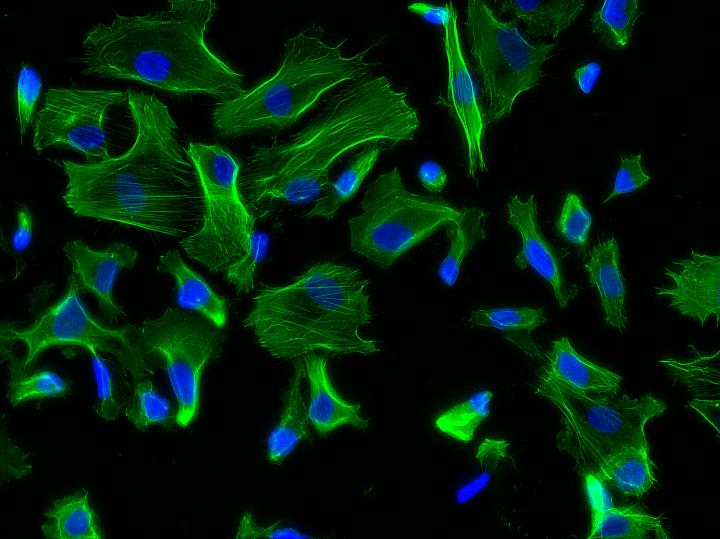
IMAGE

Credit: Joao Ribas, Brigham and Women's Hospital

Hutchinson-Gilford progeria syndrome (HGPS) is an extremely rare genetic condition that causes premature and accelerated aging. Recently, researchers have been able to generate induced pluripotent stem cells from patients with HGPS to better understand the mechanisms of aging and look for new treatments. HGPS primarily affects vascular cells, which undergo biomechanical strains in blood vessels. However, the impact of these biomechanical strains on aging and vascular diseases has been challenging to study in the lab as most models fail to mimic the biomechanics that cells experience in the body. Using a new progeria-on-a-chip model, investigators from Brigham and Women's Hospital, led by João Ribas, PhD candidate, and Ali Khademhosseini, PhD, of the Biomaterials Innovation Research Center, have developed a way to recapitulate blood vessel dynamics to better understand vascular disease and aging.

The new organ-on-a-chip device consists of a top fluidic channel and underlying vacuum channel, which mimics, upon pressure, the mechanical stretching that cells experience within blood vessels. The team found that cells derived from HGPS donors but not from healthy donors showed an exacerbated response to biomechanical strain, with an increase in markers of inflammation, which are strongly associated with vascular disease and aging.

"Vascular diseases and aging are intimately linked yet rarely studied in an integrated approach," the authors write. "Gaining a deeper understanding of the molecular pathways regulating inflammation during vascular aging might pave the way for new strategies to minimizing cardiovascular risk with age."

###

Paper cited: Ribas J et al. "Biomechanical Strain Exacerbates Inflammation on a Progeria-on-a-Chip Model." Small DOI: 10.1002/smll.201603737

Media Contact

Haley Bridger
[email protected]
617-525-6383
@BrighamWomens

http://www.brighamandwomens.org

Share12Tweet8Share2ShareShareShare2

Related Posts

Causal AI Predicts IVF Success and Reveals Which Changes Actually Help

October 1, 2026
Computational Models Point to Linezolid-Like Antibiotics That Outbind the Original

Computational Models Point to Linezolid-Like Antibiotics That Outbind the Original

October 1, 2026

DNA Repair Protein RAD54L Protects Developing Egg and Sperm Precursors from Toxic Enzyme Traps

October 1, 2026

Neural Networks Give Markowitz’s 70-Year-Old Portfolio Formula a Confidence Boost

October 1, 2026
Please login to join discussion

POPULAR NEWS

  • Causal AI Predicts IVF Success and Reveals Which Changes Actually Help

    29 shares
    Share 12 Tweet 7
  • Computational Models Point to Linezolid-Like Antibiotics That Outbind the Original

    29 shares
    Share 12 Tweet 7
  • DNA Repair Protein RAD54L Protects Developing Egg and Sperm Precursors from Toxic Enzyme Traps

    29 shares
    Share 12 Tweet 7
  • Neural Networks Give Markowitz’s 70-Year-Old Portfolio Formula a Confidence Boost

    29 shares
    Share 12 Tweet 7

About

We bring you the latest biotechnology news from best research centers and universities around the world. Check our website.

Follow us

Recent News

Causal AI Predicts IVF Success and Reveals Which Changes Actually Help

Computational Models Point to Linezolid-Like Antibiotics That Outbind the Original

DNA Repair Protein RAD54L Protects Developing Egg and Sperm Precursors from Toxic Enzyme Traps

Subscribe to Blog via Email

Enter your email address to subscribe to this blog and receive notifications of new posts by email.

Join 85 other subscribers
  • Contact Us

Bioengineer.org © Copyright 2023 All Rights Reserved.

Welcome Back!

Login to your account below

Forgotten Password?

Retrieve your password

Please enter your username or email address to reset your password.

Log In
No Result
View All Result
  • Homepages
    • Home Page 1
    • Home Page 2
  • News
  • National
  • Business
  • Health
  • Lifestyle
  • Science

Bioengineer.org © Copyright 2023 All Rights Reserved.