• HOME
  • NEWS
  • EXPLORE
    • CAREER
      • Companies
      • Jobs
    • EVENTS
    • iGEM
      • News
      • Team
    • PHOTOS
    • VIDEO
    • WIKI
  • BLOG
  • COMMUNITY
    • FACEBOOK
    • INSTAGRAM
    • TWITTER
Thursday, November 26, 2026
BIOENGINEER.ORG
No Result
View All Result
  • Login
  • HOME
  • NEWS
  • EXPLORE
    • CAREER
      • Companies
      • Jobs
        • Lecturer
        • PhD Studentship
        • Postdoc
        • Research Assistant
    • EVENTS
    • iGEM
      • News
      • Team
    • PHOTOS
    • VIDEO
    • WIKI
  • BLOG
  • COMMUNITY
    • FACEBOOK
    • INSTAGRAM
    • TWITTER
No Result
View All Result
Bioengineer.org
No Result
View All Result
Home NEWS Science News Health

Autopsy Analysis Reveals Fatal Pulmonary Thrombi Develop Across Multiple Distinct Stages

by
November 25, 2026
in Health
Reading Time: 2 mins read
0
Autopsy Analysis Reveals Fatal Pulmonary Thrombi Develop Across Multiple Distinct Stages

Autopsy Analysis Reveals Fatal Pulmonary Thrombi Develop Across Multiple Distinct Stages

Share on FacebookShare on TwitterShare on LinkedinShare on RedditShare on Telegram

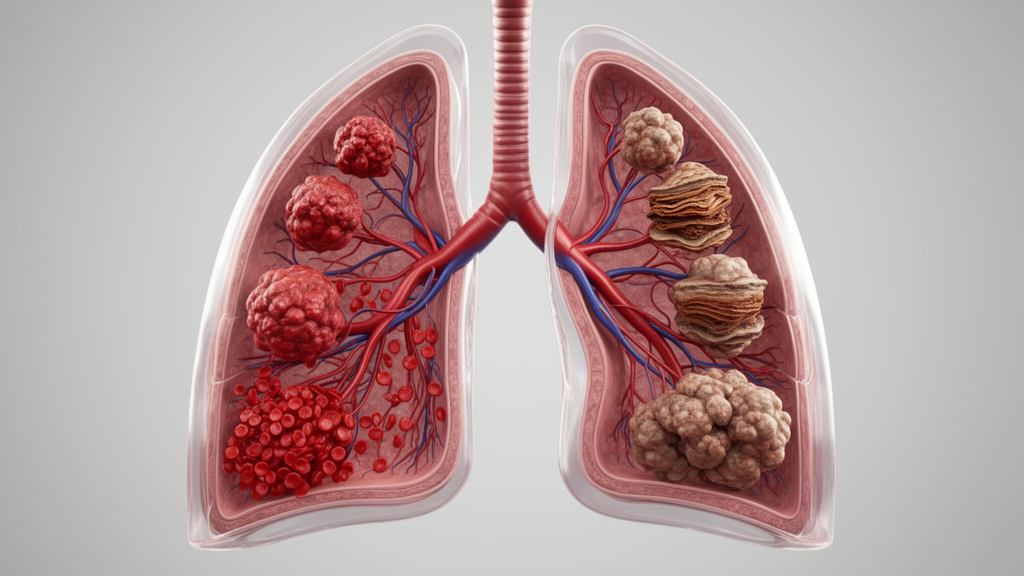
Forensic examination of fatal pulmonary embolism cases indicates that blood clots frequently develop through a multistage sequence over hours or days rather than as a single acute event. By integrating quantitative cellular modeling with tissue analysis, investigators established a reproducible framework to reconstruct the chronological timeline of thromboembolic processes in deceased individuals.

The investigation examined postmortem findings from twenty-six autopsy cases where pulmonary embolism had been certified as the definitive cause of death. Researchers collected and evaluated a total of eighty-one thrombi across the cohort, including sixty-seven pulmonary thrombi and fourteen extrapulmonary venous thrombi.

To capture potential chronological variation within individual clots, the research team sampled multiple anatomically distinct regions from each specimen. This protocol produced one hundred sixty-two separate histological samples, allowing pathologists to evaluate structural and cellular diversity across different portions of the same thrombus.

Thrombus age was calculated using a bi-exponential Levenberg–Marquardt model based on the ratio of neutrophils to macrophages. The mathematical estimations were interpreted in conjunction with ancillary histological and immunohistochemical markers that track the cellular organization and maturation of thrombotic material.

The estimated ages of the evaluated thrombi spanned a broad chronological spectrum, ranging from less than one hour to more than ten days. Microscopic evidence of structural thrombus organization was identified predominantly in specimens whose estimated chronological age exceeded five days.

Detailed mapping revealed complex internal stratification within several pulmonary thrombi, where mural, central, and distal sections exhibited substantially different estimated ages. Comparing pulmonary clots with extrapulmonary venous thrombi demonstrated marked temporal overlap without a consistent sequence, underscoring the coexistence of temporally distinct clots during fatal episodes.

Subject of Research: Forensic chronological dating of thrombi in fatal pulmonary embolism autopsies

Article Title: Forensic dating of thrombi in pulmonary embolism: neutrophil-to-macrophage ratio and bi-exponential modelling in an autopsy series

Article References: Cecchi, R., Camatti, J., Bonasoni, M. P., Donelli, R., Carazza, E., Torelli, L., Tamagnini, I., Sarti, A., Filippini, T., Vinceti, M., Fais, P., Bugelli, V., & Santunione, A. L. (2026). Forensic dating of thrombi in pulmonary embolism: neutrophil-to-macrophage ratio and bi-exponential modelling in an autopsy series. International Journal of Legal Medicine. https://doi.org/10.1007/s00414-026-04095-3

Image Credits: AI Generated

DOI: 10.1007/s00414-026-04095-3

Keywords: pulmonary embolism, thrombus dating, forensic pathology, neutrophil-to-macrophage ratio, bi-exponential modelling, Levenberg–Marquardt model, autopsy series, histological analysis, immunohistochemical markers, thrombus organization, extrapulmonary venous thrombi, internal stratification, medico-legal evaluation, thromboembolic chronology, multistage thrombosis, fatal pulmonary embolism, pulmonary thrombi

News Source: Ophelia Keating. (November 25, 2026). Autopsy Analysis Reveals Fatal Pulmonary Thrombi Develop Across Multiple Distinct Stages. Scienmag.


Tags: autopsy seriesbi-exponential modellingextrapulmonary venous thrombifatal pulmonary embolismforensic pathologyhistological analysisimmunohistochemical markersinternal stratificationLevenberg–Marquardt modelmedico-legal evaluationmultistage thrombosisneutrophil-to-macrophage ratiopulmonary embolismpulmonary thrombithromboembolic chronologythrombus datingthrombus organization
Share12Tweet7Share2ShareShareShare1

Related Posts

Review Traces Expanding Roles of cGAS and STING Across Diverse Human Diseases

Review Traces Expanding Roles of cGAS and STING Across Diverse Human Diseases

November 26, 2026
Rwanda Reference Laboratory Achieved 98 Percent Capacity in Marburg Outbreak Response

Rwanda Reference Laboratory Achieved 98 Percent Capacity in Marburg Outbreak Response

November 26, 2026

Adapted Mindful Self-Compassion Program Proves Feasible for Indian Dementia Caregivers

November 26, 2026

Engineered Stem Cell Vaccine Shows Proof of Concept Against Feline Panleukopenia

November 26, 2026

POPULAR NEWS

  • Deep Learning and IoT Architecture Enhances College Physical Education Performance Tracking

    Deep Learning and IoT Architecture Enhances College Physical Education Performance Tracking

    29 shares
    Share 12 Tweet 7
  • Medical Student Summer Research Shows No Association With Residency Match Prestige

    29 shares
    Share 12 Tweet 7
  • Computational Compound Bypasses Defective Insulin Receptors to Treat Severe Resistance in Mice

    29 shares
    Share 12 Tweet 7
  • Artificial Intelligence Predicts Hip Fracture Outcomes but Lacks Formal Economic Evaluation

    29 shares
    Share 12 Tweet 7

About

We bring you the latest biotechnology news from best research centers and universities around the world. Check our website.

Follow us

Recent News

Adjustable Suction-Side Turbine Vane Cuts Total Pressure Loss by Forty Percent

Review Traces Expanding Roles of cGAS and STING Across Diverse Human Diseases

Rwanda Reference Laboratory Achieved 98 Percent Capacity in Marburg Outbreak Response

Subscribe to Blog via Email

Enter your email address to subscribe to this blog and receive notifications of new posts by email.

Join 89 other subscribers
  • Contact Us

Bioengineer.org © Copyright 2023 All Rights Reserved.

Welcome Back!

Login to your account below

Forgotten Password?

Retrieve your password

Please enter your username or email address to reset your password.

Log In
No Result
View All Result
  • Homepages
    • Home Page 1
    • Home Page 2
  • News
  • National
  • Business
  • Health
  • Lifestyle
  • Science

Bioengineer.org © Copyright 2023 All Rights Reserved.