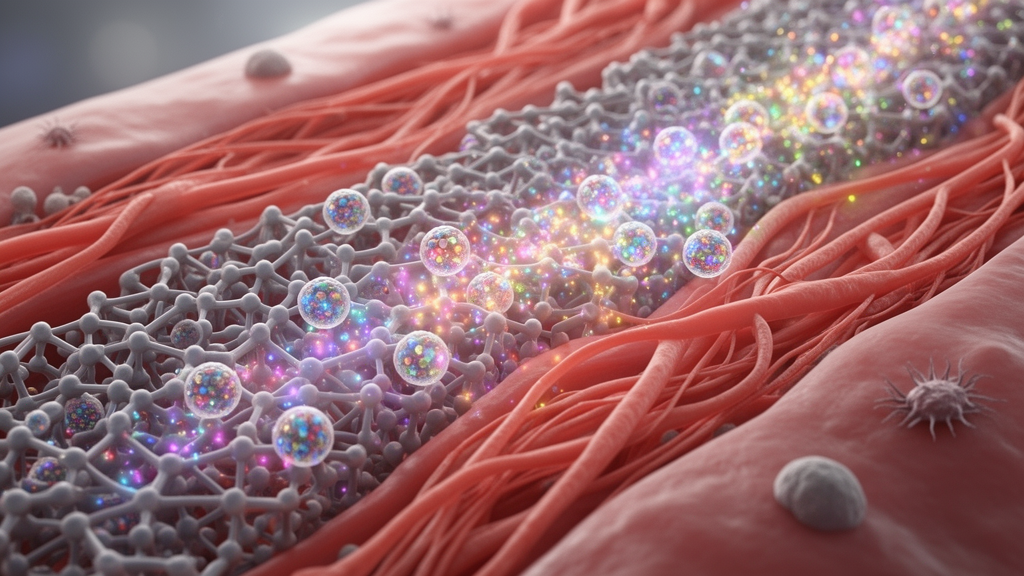
Nanoscale materials and targeted delivery systems operating at molecular and cellular dimensions are bridging critical gaps in soft tissue regeneration by coordinating cellular adhesion, migration, differentiation, and immune modulation. According to an editorial collection published in Frontiers in Bioengineering and Biotechnology, engineering biophysical scaffolds and stimuli-responsive nanomedicines provides an instructive approach to repairing complex biological tissues where conventional interventions have historically proven insufficient.
Severe tissue trauma, chronic ulcerations, and peripheral nerve injuries present persistent therapeutic hurdles because standard clinical options like autografts, allografts, and conventional synthetic scaffolds cannot replicate dynamic physiological microenvironments. The authors explain that these conventional structural replacements frequently result in clinical complications, notably excessive fibrous scarring, deficient local vascular networks, lingering chronic inflammation, and incomplete functional recovery.
Addressing these biological barriers requires precise spatial and temporal control over therapeutic release kinetics across distinct pathological phases. In a featured review of spinal cord injury interventions, researchers examined how hydrogel-based nano-biomaterials, polymeric micelles, lipid nanoparticles, and discrete nanocarriers navigate past the blood-spinal cord barrier, emphasizing the necessity of aligning therapeutic delivery profiles with the acute, subacute, and chronic stages of tissue trauma.
Specific biomaterial formulations highlight the efficacy of combining bioactive compounds with responsive structural frameworks to stimulate cellular regeneration. Investigators developed an injectable hydrogel combining gallic acid-grafted gelatin with a zinc-based zeolitic imidazolate framework encapsulating cinnamaldehyde, which delivers both zinc ions and polyphenol bioactivity through pH-sensitive degradation to promote endothelial tube assembly and accelerate wound closure in diabetic rat models.
Expanding multi-target therapeutics, another study demonstrated that incorporating caffeic acid into a double-network hydrogel simultaneously delivers antibacterial, antioxidant, and immunomodulatory functions. This platform suppresses local bacterial proliferation, promotes collagen synthesis by dermal fibroblasts, and shifts inflammatory macrophages into a pro-resolving M2 phenotype, establishing that multi-functional platforms can concurrently resolve infection and guide tissue matrix deposition.
Physical signaling has emerged as a complementary, drug-free regulatory mechanism in soft tissue restoration. By engineering an electrically conductive scaffold from polyurethane and carbon nanotubes, researchers demonstrated that the application of exogenous electrical stimulation actively guides macrophage polarization toward the regenerative M2 state while accelerating overall dermal wound closure in vivo.
Topographical alignment coupled with conductive properties provides critical directional cues for neural tissue re-innervation. In a related study evaluating electroactive patches composed of aligned polycaprolactone and carbon nanotubes, electrical stimulation accelerated cutaneous nerve regeneration, upregulated specific neural differentiation markers, and stimulated directional neurite extension, demonstrating the value of integrating electrical cues with surface architecture.
Utilizing aligned poly(L-lactide) fibrous matrices, investigators demonstrated that piezoelectric signaling alone redirected aberrant axonal growth, elevated Schwann cell myelination, and attenuated biochemical indicators of neuropathic pain within a rat sciatic nerve trauma model.
Advanced nanoscale manufacturing has also addressed sustained vascular grafting and responsive biomedical coatings. Coaxial-emulsion electrospinning produced core-shell nanofibers capable of steadily releasing endothelial cell derivatives and anticoagulant heparin over a 60-day period in small-diameter vascular scaffolds, while Pickering emulsions improved the oral bioavailability of protective plant flavonoids in cerebral ischemia models, and pH-triggered bilayer hydrogel coatings on urinary catheters provided on-demand antimicrobial peptide and magnesium oxide release alongside persistent surface lubrication.
The gathered studies collectively demonstrate that effective tissue restoration depends on comprehensive biological outcomes—including ordered collagen deposition, functional vascularization, and proper innervation—rather than basic wound closure alone. Translating these multi-target nanoscale strategies from experimental models to clinical practice will require establishing scalable fabrication methodologies, conducting standardized biosafety evaluations, and designing human clinical trials capable of accommodating individual patient heterogeneity.
The editorial compendium, published in the Healthy Longevity section of Frontiers in Bioengineering and Biotechnology, brings together researchers across materials science, immunology, and neuroscience to address persistent hurdles in soft tissue repair. Coordinated by Yawei Liu of the Changchun Institute of Applied Chemistry at the Chinese Academy of Sciences in Beijing, Feng Lin of the Chinese Academy of Sciences Wenzhou Institute, and Lin Su from Queen Mary University of London, the collection was reviewed under the editorship of Gianni Ciofani from the Italian Institute of Technology. Spanning nine peer-reviewed contributions, the initiative highlights how nanoscale engineering operates precisely at cellular and molecular dimensions, shifting regenerative strategies toward active biological guidance.
In framing the collection, the editors observe that soft tissue repair remains among the most formidable therapeutic challenges within regenerative medicine. Severe traumatic injuries, chronic wounds, and peripheral nerve defects repeatedly fail to achieve functional restoration when managed through conventional options such as autografts, allografts, or traditional synthetic scaffolds. These therapies cannot recreate the complex, dynamic microenvironments required to coordinate cellular activity across regeneration phases. Consequently, interventions frequently succumb to well-documented complications, including dense fibrotic scarring, deficient vascularization, persistent inflammation, and delayed or incomplete healing.
To overcome these limitations, modern biomaterial approaches leverage nanoscale design to regulate essential repair processes, including cell adhesion, migration, differentiation, and immune modulation. By operating at the scale of native biological structures, these platforms bridge the gap between biological complexity and clinical need, establishing supportive microenvironments where coordinated tissue regeneration can proceed.
Addressing central nervous system trauma, Cheng and colleagues evaluated nanocarrier-mediated drug delivery for spinal cord injury, illustrating how nanotechnologies overcome physiological boundaries like the blood-spinal cord barrier. Their review synthesizes findings on diverse nanoscale platforms, including hydrogel-based nano-biomaterials, polymeric micelles, lipid nanoparticles, and discrete nanoparticles, to deliver therapeutics with spatial and temporal precision. A central principle emphasized in their analysis is the necessity of matching release kinetics to the distinct biological stages of injury. The authors underscore that interventions must specifically accommodate the acute, subacute, and chronic phases, as each interval presents unique pathological microenvironments.
Original research contributions substantiate these principles through material designs capable of addressing multiple pathological challenges simultaneously. Zhou and colleagues developed an injectable hydrogel combining gallic acid-grafted gelatin with a cinnamaldehyde-loaded zeolitic imidazolate framework-8. This platform merges pH-responsive metal-organic framework delivery with polyphenol bioactivity. When evaluated in diabetic rats, the hydrogel co-delivered zinc ions and cinnamaldehyde, accelerating wound closure and stimulating endothelial tube formation. By delivering these therapeutic components through a single platform, the formulation demonstrated that impaired angiogenesis and persistent chronic inflammation can be addressed concurrently within compromised diabetic wounds.
Targeting infected tissue injuries, Zhang and colleagues developed a caffeic acid-loaded double-network hydrogel providing integrated antibacterial, antioxidant, and immunomodulatory bioactivities within a single system. In addition to reducing bacterial burden, the hydrogel shifted inflammatory macrophages toward the pro-resolving M2 phenotype and stimulated collagen synthesis by dermal fibroblasts. This multifaceted response underscores the therapeutic benefit of multi-target bioactivity within a single hydrogel platform, demonstrating that materials can concurrently resolve bacterial contamination, temper inflammatory signaling, and promote extracellular matrix deposition during infected wound repair.
Physical and electrical cues provide potent, drug-free regulation of tissue repair. Zhang and colleagues constructed an electrically conductive scaffold incorporating polyurethane and carbon nanotubes. Under exogenous electrical stimulation, this conductive scaffold polarized macrophages toward the M2 phenotype while accelerating wound healing in vivo. In a separate study, Zhang and colleagues engineered electroactive patches composed of aligned polycaprolactone and carbon nanotubes. When paired with exogenous electrical stimulation, this aligned topography enhanced neurite outgrowth, upregulated neural differentiation markers, and promoted cutaneous nerve regeneration alongside high-quality wound repair, establishing combined topography guidance and electrical stimulation as a rational regenerative strategy.
Piezoelectric materials and advanced nanofiber fabrication extend physical signaling to nerve protection and durable vascular reconstruction. Chen and colleagues investigated aligned piezoelectric poly(L-lactide) fibrous scaffolds to prevent traumatic neuroma formation. In a rat sciatic nerve model, the aligned piezoelectric fibers promoted Schwann cell myelination and reduced neuropathic pain markers, demonstrating that physical cues alone can redirect aberrant axonal regeneration. Separately, Wang and colleagues prepared core-shell nanofibers using coaxial-emulsion electrospinning for small-caliber vascular scaffolds. These nanofibers sustainably released endothelial cell derivatives and heparin for up to 60 days, achieving antithrombotic and pro-endothelialization effects critical for durable small-diameter vascular grafts.
Overcoming translation barriers separating laboratory findings from clinical reality forms another primary theme of the Research Topic. Gao and colleagues employed a Pickering emulsion to encapsulate total flavonoids from Dracocephalum moldavica L., improving compound stability and oral bioavailability while enhancing angiogenesis in the ischemic penumbra following cerebral ischemia reperfusion. For indwelling clinical devices, Cheng and colleagues engineered a pH-triggered bilayer hydrogel coating on urinary catheters. By pairing infection-responsive magnesium oxide release with sustained antimicrobial peptide delivery and persistent lubrication, the coating countered catheter-associated infections and patient discomfort, highlighting that stimuli-responsive systems are essential for matching therapeutic action to dynamic pathological conditions.
Synthesizing these contributions, the editors highlight several interdisciplinary insights governing modern soft tissue regeneration. Multi-target strategies combining antioxidant and anti-inflammatory functions, co-delivering ions and drugs, or uniting physical and biochemical cues consistently outperform single-drug regimens. Furthermore, the immune microenvironment, particularly macrophage polarization, has emerged as a key therapeutic target for nanomaterial-based interventions. Functional tissue repair also demands prioritizing overall healing quality, including orderly collagen deposition, vascularization, innervation, and myelination, rather than simple wound closure. Achieving clinical translation will ultimately depend on scalable manufacturing, rigorous biosafety evaluation, and clinical trial designs that account for patient heterogeneity, establishing nanobiotechnology as an instructive design philosophy for reconstructing native tissue complexity.
Subject of Research: Nanobiotechnology strategies and biomaterial delivery systems for soft tissue regeneration
Article Title: Editorial: Nanobiotechnology-driven strategies for soft tissue repair: integrating nano-biomaterials, stem cells, and nanomedicine delivery systems
Article References: Liu, Y., Lin, F., & Su, L. (2026). Editorial: Nanobiotechnology-driven strategies for soft tissue repair: integrating nano-biomaterials, stem cells, and nanomedicine delivery systems. Frontiers in Bioengineering and Biotechnology, 14, Article 2059012. https://doi.org/10.3389/fbioe.2026.2059012
Image Credits: AI Generated
DOI: 10.3389/fbioe.2026.2059012
Keywords: nanobiotechnology, soft tissue repair, nano-biomaterials, nanomedicine delivery systems, macrophage polarization, hydrogel scaffolds, carbon nanotubes, piezoelectric scaffolds, electrical stimulation, nerve regeneration, angiogenesis, Pickering emulsion, coaxial electrospinning, metal-organic frameworks, spinal cord injury, wound healing, antimicrobial coatings, tissue engineering
News Source: Gregory Coleman. (November 25, 2026). Nanotechnology Platforms Coordinate Multi-Target Cellular Cues to Accelerate Soft Tissue Repair. Scienmag.