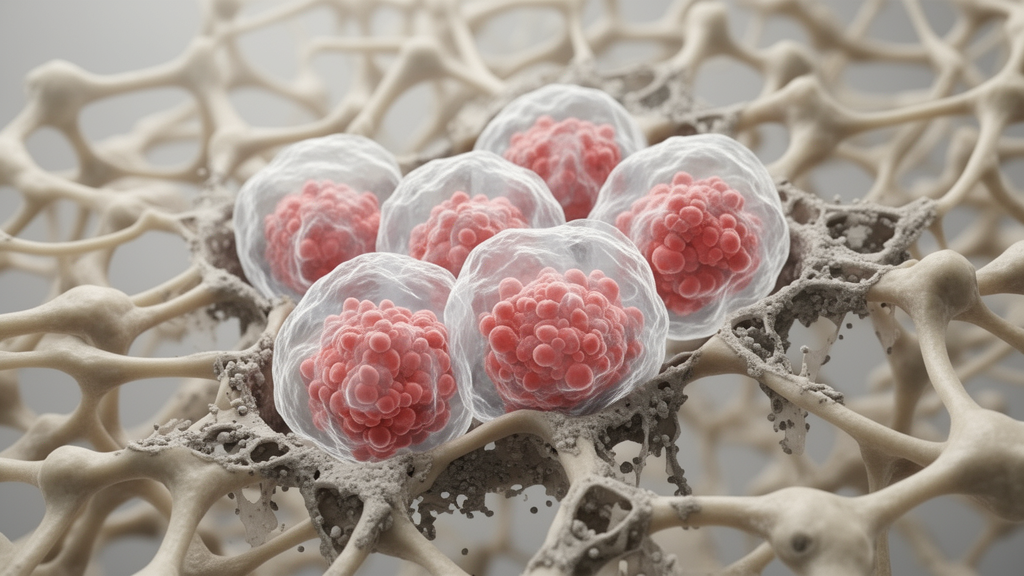
Researchers investigating the skeletal pathology of Gaucher disease have established an engineered osteoblast model using CRISPR-Cas9 gene editing, uncovering extensive transcriptional and functional defects that impair bone matrix deposition while actively driving osteoclast formation. Gaucher disease is an inherited autosomal recessive lysosomal storage disorder caused by pathogenic variants in the GBA1 gene, which encodes the lysosomal enzyme acid beta-glucosidase. Deficiency of this enzyme impairs the hydrolysis of glucosylceramide into ceramide and glucose, triggering progressive lysosomal accumulation of both glucosylceramide and its deacylated metabolite, glucosylsphingosine, predominantly within cells of the reticuloendothelial lineage. Although clinical phenotypes range from non-neuronopathic type 1 disease—which carries an elevated risk of Parkinson’s disease associated with alpha-synuclein aggregation—to acute and chronic neuronopathic forms, skeletal manifestations affect up to ninety percent of all patients across the continuum. Skeletal complications include osteopenia, osteoporosis, osteonecrosis, and severe chronic bone pain, which substantially diminish patient quality of life. Currently approved specific Gaucher disease therapies demonstrate limited efficacy in preventing or reversing skeletal complications, prompting researchers to interrogate the molecular mechanisms underlying osteoblast dysfunction.
To overcome the limited proliferative capacity of primary osteoblasts and the technical complexity of stem cell-derived lineages, the investigators edited the human osteosarcoma cell line SaOS-2, a mature osteoblast-like model that homogeneously expresses high levels of alkaline phosphatase and produces mineralized matrix. Utilizing synthetic guide RNA and Cas9 protein targeting exon 3 of GBA1, the team isolated a single knockout clone, designated SaOS GBA1 KO. Genomic sequencing demonstrated that both alleles sustained frameshift deletions, specifically c.247_250del on allele 1 and c.227_252del on allele 2, resulting in premature termination codons predicted to prompt nonsense-mediated mRNA decay. Western blot analysis confirmed the complete absence of acid beta-glucosidase protein, and enzymatic assays employing a fluorogenic 4-methylumbelliferyl substrate revealed undetectable residual catalytic activity. Consistent with this complete loss of function, ultra-high-performance liquid chromatography coupled with tandem mass spectrometry demonstrated a massive intracellular accumulation of glucosylsphingosine. Comprehensive sequencing of predicted genomic off-target sites across coding regions confirmed that no unintended editing occurred, establishing a genetically defined cellular platform to examine cell-autonomous disease mechanisms.
Functional evaluations revealed that the absence of functional acid beta-glucosidase fundamentally alters the capacity of osteoblasts to assemble and mineralize bone matrix. Quantitative real-time polymerase chain reaction assays demonstrated a modest reduction in the mRNA expression of the alkaline phosphatase gene ALPL alongside a fifty percent decrease in the expression of COL1A1, which encodes the pro-alpha1 chain of type I collagen. Because type I collagen represents the principal organic constituent of bone extracellular matrix and provides the physical scaffold required for mineral crystallization, the team analyzed matrix deposition using histological staining. Quantitation of extracted Alizarin Red staining showed a slight but statistically significant decrease in calcium deposition in knockout cells compared with isogenic controls, although the authors noted that the modest magnitude of this reduction renders its biological relevance uncertain. In contrast, Sirius Red staining demonstrated a pronounced and statistically significant reduction in collagen deposition, confirming that loss of GBA1 severely compromises the synthesis and deposition of the organic extracellular scaffold prior to mineralization.
Beyond intrinsic matrix deficits, the study demonstrated that GBA1-deficient osteoblasts actively perturb cellular communication with bone-resorbing osteoclasts through aberrant molecular crosstalk. Physiological bone remodeling depends on finely tuned signaling between receptor activator of NF-κB ligand, known as RANKL, and osteoprotegerin, an endogenous decoy receptor produced by osteoblasts that competitively binds RANKL to prevent interaction with its receptor RANK on osteoclast precursors. Quantitative real-time polymerase chain reaction assays revealed that SaOS GBA1 KO cells displayed a significant two-fold increase in the overall RANKL-to-OPG mRNA expression ratio, establishing an altered molecular balance that favors osteoclast differentiation. Although soluble RANKL in conditioned culture media was present below the analytical detection limit of standard enzyme-linked immunosorbent assays, functional differentiation experiments confirmed biological activity. Culturing human THP-1 monocytes in medium conditioned by knockout osteoblasts for ten days stimulated significantly higher rates of osteoclastogenesis than culture in medium from wild-type osteoblasts, as evidenced by an increased abundance of multinucleated cells positive for tartrate-resistant acid phosphatase exhibiting three or more nuclei.
To verify that osteoclast differentiation was specifically mediated by RANKL rather than other secreted factors, the team introduced fifty nanograms per milliliter of recombinant osteoprotegerin into the conditioned medium collected from knockout osteoblasts. Supplementing the culture with osteoprotegerin markedly attenuated osteoclast formation, confirming that elevated osteoblast-derived RANKL, including its potentially membrane-bound or low-abundance soluble forms, drives the enhanced osteoclastogenic potential. Furthermore, to exclude the involvement of common inflammatory mediators known to stimulate bone resorption, the researchers quantified pro-inflammatory cytokines in conditioned media using a microfluidic immunoassay platform with picogram-level sensitivity. Knockout cells showed no significant differences in the secretion of interleukin-1 beta, interleukin-6, interleukin-8, or tumor necrosis factor-alpha relative to wild-type controls. These measurements definitively excluded an increased secretome of classic inflammatory cytokines from driving osteoclastogenesis in this system, highlighting an altered osteoblast-to-osteoclast signaling axis directly downstream of GBA1 deficiency.
To delineate the molecular networks responsible for altered matrix formation and osteoclast crosstalk, the authors performed comprehensive transcriptomic profiling on total RNA using high-throughput paired-end sequencing across three biological replicates. Of nearly forty thousand sequenced transcripts, more than two hundred genes exhibited statistically significant differential expression, defined by a false discovery rate below 0.05 and a minimum two-fold change in either direction. More than one hundred genes were significantly upregulated, while more than one hundred were significantly downregulated. Bioinformatic clustering using Ingenuity Pathway Analysis and the Database for Annotation, Visualization and Integrated Discovery revealed that the dysregulated genes clustered predominantly into functional categories governing collagen biosynthesis, extracellular matrix organization, Wnt signaling cascades, and the regulation of osteoblast differentiation and bone mineralization, providing an expansive catalog of molecular targets underlying osteoblastic pathology in Gaucher disease.
Secondary validation through quantitative real-time polymerase chain reaction confirmed major disturbances across extracellular matrix and collagen-related pathways. Consistent with RNA sequencing, knockout osteoblasts exhibited substantial downregulation of COL1A1 alongside a massive upregulation of COL10A1, a gene encoding collagen type X alpha 1 that forms hexagonal lattice networks rather than standard fibrillar matrices. The analysis also confirmed modest upregulation of COL12A1 and marked downregulation of both COL11A2 and COL22A1, whose protein products normally regulate fibrillar collagen spacing and organization during extracellular fibrillogenesis. Although initial sequencing indicated a 2.16-fold decrease in COL3A1, targeted validation revealed no statistically significant alteration, prompting its exclusion from further analysis. Additionally, the team validated the significant downregulation of nephronectin, an extracellular matrix gene involved in matrix organization and osteoblast differentiation.
Transcriptomic validation also revealed pronounced suppression of the Wnt signaling cascade, an essential regulatory pathway that governs osteoblast commitment, bone formation, and skeletal remodeling. Knockout osteoblasts exhibited significant overexpression of potent canonical Wnt pathway inhibitors, including dickkopf WNT signaling pathway inhibitor 1, dickkopf WNT signaling pathway inhibitor 3, and sclerostin, encoded by SOST. Concurrently, positive regulators and pathway modulators, including frizzled related protein, APC down-regulated 1, and peroxisome proliferator activated receptor delta, were significantly downregulated, while non-canonical WNT5A was overexpressed. Examination of bone mineralization and differentiation regulators demonstrated significant downregulation of interferon-induced transmembrane protein 5, a positive promoter of mineral crystallization, whereas phosphoethanolamine/phosphocholine phosphatase 1 was excluded following non-significant secondary verification. In parallel, quantitative validation confirmed marked upregulation of negative osteogenic regulators, including RAR-related orphan receptor B, cyclin-dependent kinase 6, and insulin-like growth factor binding protein 5, with the latter showing a striking twenty-two-fold increase in expression.
To evaluate whether targeting these dysregulated factors could rescue osteoblastic phenotypes, the researchers conducted small interfering RNA knockdown experiments targeting RORB, CDK6, and IGFBP5 in knockout cells. Silencing RORB reduced its transcript abundance to approximately ten percent of control levels, leading to a significant increase in ALPL expression, a significant reduction in the pro-osteoclastogenic RANKL-to-OPG ratio, and a significant downregulation of the Wnt inhibitor SOST, despite an unexpected further decrease in COL1A1 expression. Silencing CDK6 similarly elevated ALPL expression without altering RANKL, OPG, or SOST levels. Silencing IGFBP5 significantly lowered the RANKL-to-OPG expression ratio and reduced SOST transcription. When the researchers combined all three small interfering RNAs in a triple-knockdown experiment, the knockout osteoblasts displayed a significant rescue marked by increased ALPL expression and a normalized RANKL-to-OPG ratio, demonstrating that multi-target modulation of dysregulated pathways can partially reverse pathological osteoblast phenotypes.
The authors acknowledged several key methodological limitations inherent to the experimental design that frame the interpretation of their findings. The investigation relied on an osteosarcoma-derived continuous cell line and evaluated a single gene-edited knockout clone, which cannot entirely eliminate potential clone-specific artifacts or neoplastic background effects, though the use of isogenic parental controls and concordance with literature from stem cell models provide substantial validation. Furthermore, the complete genetic knockout generated total enzymatic loss and severe glucosylsphingosine accumulation, whereas most clinical Gaucher disease patients retain residual acid beta-glucosidase activity. The study did not measure secondary enzymatic activities from beta-glucocerebrosidase 2 or acid ceramidase, nor did it directly resolve the intermediary lysosomal signaling pathways, such as altered mTORC1 and TFEB regulation of the CLEAR network or oxidative stress, connecting substrate accumulation to transcriptional reprogramming. Consequently, these findings provide a valuable high-throughput screening platform and mechanistic proof of concept that requires further validation in primary osteoblasts, multi-clonal lines, and in vivo disease models.
Subject of Research: Transcriptomic and functional characterization of CRISPR-Cas9 GBA1-knockout osteoblasts in Gaucher disease bone pathology
Article Title: New insights into bone pathology through a transcriptomic profiling of an osteoblast model of Gaucher disease
Article References: Pavan, E., Peruzzo, P., Ormazabal, M., Ferino, D., Cuttini, E., Cusan, M., Biasizzo, J., Scarpa, M., Bulfoni, M., & Dardis, A. (2026). New insights into bone pathology through a transcriptomic profiling of an osteoblast model of Gaucher disease. Molecular Genetics and Metabolism Reports, 49, Article 101367. https://doi.org/10.1016/j.ymgmr.2026.101367
Image Credits: AI Generated
DOI: 10.1016/j.ymgmr.2026.101367
Keywords: Gaucher disease, GBA1, acid beta-glucosidase, osteoblasts, osteoclastogenesis, CRISPR-Cas9, transcriptomics, glucosylsphingosine, extracellular matrix, collagen deposition, RANKL, osteoprotegerin, Wnt signaling, sclerostin, RORB, CDK6, IGFBP5, bone remodeling
News Source: Juliet Wilcox. (November 24, 2026). Gaucher Disease Osteoblast Model Identifies Potential Gene Mediators of Bone Dysfunction. Scienmag.