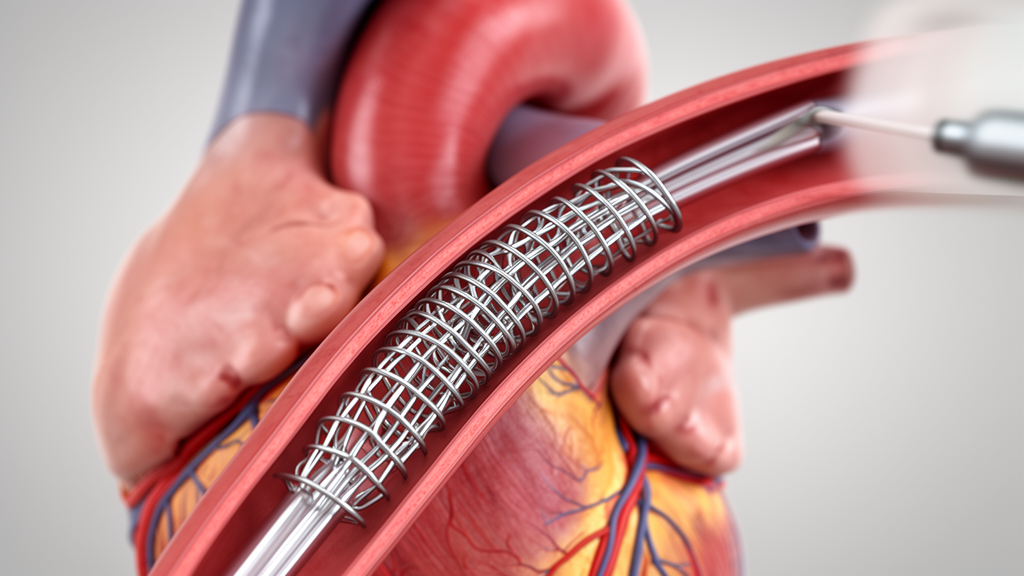
A systematic review and meta-analysis evaluating randomized clinical trials has revealed that performing routine percutaneous coronary intervention in patients with severe aortic stenosis and concomitant coronary artery disease undergoing transcatheter aortic valve implantation does not reduce all-cause mortality or myocardial infarction compared with a conservative or deferred strategy. The investigation, conducted by Soliman and colleagues and published in Structural Heart, synthesized evidence across three randomized controlled trials encompassing 1,156 patients to address an ongoing clinical dilemma regarding whether stable, severe coronary lesions should be systematically revascularized before or during valve replacement.
Using a random-effects model as the primary statistical framework alongside fixed-effects and leave-one-out sensitivity analyses, the meta-analysis demonstrated that routine revascularization yielded no statistically significant survival advantage. Specifically, the pooled hazard ratio for all-cause mortality, which served as the primary endpoint, was 0.88 with a 95 percent confidence interval spanning 0.67 to 1.17. Similarly, cardiovascular death showed no significant difference between the intervention and deferral strategies, demonstrating a pooled hazard ratio of 0.77 with a 95 percent confidence interval from 0.49 to 1.19. The incidence of myocardial infarction also remained statistically comparable between both cohorts, yielding a pooled hazard ratio of 0.84 and a 95 percent confidence interval of 0.44 to 1.59.
In contrast to the neutral outcomes observed for mortality and ischemic injury, the analysis identified divergent consequences regarding procedural recurrence and hemorrhagic complications. Patients assigned to routine percutaneous intervention experienced a statistically significant reduction in any subsequent coronary revascularization, with a pooled hazard ratio of 0.24 and a 95 percent confidence interval of 0.06 to 0.86. However, this preventive effect was offset by a notable rise in hemorrhagic complications, as routine intervention doubled the relative risk of bleeding events, corresponding to a pooled hazard ratio of 1.96 and a 95 percent confidence interval of 1.28 to 3.00. Both of these findings retained statistical significance in the fixed-effects sensitivity model.
These clinical findings emerge from the complex pathophysiological interplay between severe aortic valve narrowing and coronary blood flow. In severe aortic stenosis, the cardiac muscle exhibits hypertrophy and remains susceptible to hypoperfusion, creating theoretical concerns that symptomatic or silent myocardial ischemia could precipitate adverse cardiovascular events. Nevertheless, the physical risks inherent to catheter-based coronary instrumentation, coupled with the compulsory administration of antithrombotic and antiplatelet regimens following stent deployment, present substantial hazards that may diminish or completely counteract the potential clinical benefits expected from prophylactic revascularization.
Substantial heterogeneity in how individual clinical trials defined significant coronary artery disease contributed to variations in treatment effects. In the ACTIVATION and PRO-TAVI trials, significant coronary disease was defined primarily as angiographic stenosis between 70 percent and 99 percent. PRO-TAVI additionally permitted the inclusion of intermediate lesions with 40 percent to 70 percent diameter reduction if physiological testing proved them to be significant, whereas ACTIVATION did not employ physiological evaluations. Conversely, the NOTION-3 trial implemented a stricter angiographic threshold requiring greater than 90 percent stenosis, while incorporating fractional flow reserve assessments for intermediate lesions between 50 percent and 90 percent. As a result, NOTION-3 enrolled patients with markedly more severe anatomical narrowing, where the majority exhibited stenosis of 90 percent or higher, which likely contributed to the greater relative reduction in coronary events documented within that specific trial.
An examination of target lesion revascularization patterns revealed that the majority of subsequent unplanned procedures in the conservative arms were targeted at previously recognized lesions. In the PRO-TAVI trial, 18 of the 24 coronary interventions executed during follow-up in the deferral cohort, representing 75 percent, involved index coronary lesions that had originally been left untreated under the randomized protocol. In a similar manner, 37 of the 48 revascularizations performed during follow-up in the NOTION-3 conservative cohort, or 77 percent, addressed vessels identified at baseline. These numbers demonstrate that subsequent interventions were primarily driven by known pre-existing anatomy rather than unanticipated de novo disease, emphasizing the necessity of precise patient and lesion stratification.
The timing of coronary interventions relative to the valve replacement procedure represented another critical parameter evaluated across the trials. Prophylactic stenting was predominantly scheduled prior to or concurrently with the valve intervention, encompassing 100 percent of procedures in ACTIVATION, 91 percent in NOTION-3, and 100 percent in PRO-TAVI. Despite this upfront orientation, early clinical markers showed no procedural protection from pre-emptive stenting. Randomized comparisons demonstrated no significant differences across early complications, including periprocedural myocardial infarction, inotropic support requirements, ventricular arrhythmias, acute heart failure episodes, emergency tracheal intubations, or the necessity for mechanical circulatory support.
The absence of early hemodynamic benefits has raised practical interest in deferred revascularization strategies, where coronary procedures are postponed until after successful valve deployment. Delivering transcatheter heart valves under unfractionated heparin alone avoids the intensified antiplatelet therapy required after coronary stenting, potentially minimizing periprocedural bleeding and vascular access site complications. Furthermore, serious interventional adverse events such as coronary dissection or the no-reflow phenomenon present heightened dangers when occurring in patients with uncorrected severe aortic stenosis. Although historical reservations regarding catheter re-engagement through tall-frame self-expanding valves favored pre-TAVI stenting, contemporary deployment methods involving commissural alignment and large-cell frame architecture have substantially improved post-valve coronary access.
The evolution of interventional devices and clinical methodology across different eras also represents an important caveat when assessing the pooled trial outcomes. The ACTIVATION trial enrolled patients during an earlier era of transcatheter practice, which introduced distinct methodological variations into the pooled dataset. Specifically, nearly 8 percent of randomized participants in ACTIVATION did not ultimately receive transcatheter valve replacement under an intention-to-treat framework, and approximately 15 percent underwent access via non-transfemoral routes. Furthermore, roughly 20 percent of stented subjects in ACTIVATION received bare-metal stents, devices historically linked to higher rates of early stent-related complications, whereas newer drug-eluting stents were implanted in more than 90 percent of patients in the PRO-TAVI trial.
The accumulation of antithrombotic therapy appears to be the primary driver behind the heightened bleeding hazard observed with routine coronary intervention. Unlike acute myocardial infarction scenarios where patients routinely receive dual antiplatelet therapy regardless of nonculprit treatment, valve replacement recipients without another medical indication do not derive benefit from prolonged dual antiplatelet therapy. Introducing percutaneous coronary stenting imposes an additional antiplatelet burden, an effect further aggravated by the fact that over 30 percent of patients in the pooled trials required oral anticoagulants. Fortunately, the vast majority of hemorrhagic events in the analyzed trials were categorized as minor, with 73 of the 98 bleeding episodes in PRO-TAVI, or 74 percent, meeting Valve Academic Research Consortium-3 type 1 criteria, suggesting that tailored regimens minimizing antithrombotic exposure could refine the clinical balance for high-risk anatomy.
Chief among these limitations is the restricted statistical power resulting from the inclusion of only three randomized controlled trials encompassing 1,156 participants. Because the number of eligible investigations was small, the researchers supplemented their primary random-effects model with fixed-effects calculations and a leave-one-out sensitivity analysis. While the statistically significant reductions in repeat revascularization and the heightened risks of bleeding remained consistent across the fixed-effects analysis, the modest overall patient volume limits statistical power for mortality and infarction outcomes.
The clinical assessment of post-procedural bleeding also requires examining how event severity influences long-term prognostic trajectories. In cardiovascular interventions, the prognostic implications of bleeding are largely dependent on severity, with major bleeding events generally carrying the greatest adverse prognostic impact on patient survival. In addition, the procedural context of vascular access substantially affects clinical risk; in acute myocardial infarction, the incremental bleeding hazard attributable to preventive coronary intervention remains relatively limited, particularly when operators utilize radial access.
Translating these trial results into contemporary interventional practice requires careful consideration of device evolution, anatomical lesion severity, and procedural timing. Differences in device technology, vascular access routes, and percutaneous procedural practice across trial eras must be weighed when extrapolating pooled findings to current clinical environments. Importantly, the clinical benefit of percutaneous coronary intervention appears greater in patients presenting with more severe coronary stenoses, such as the critical narrowings exceeding ninety percent evaluated in the NOTION-3 trial. Because existing evidence has not established an early procedural benefit from routinely performing stenting before valve implantation, a deferred revascularization strategy may offer practical advantages. Ultimately, future clinical studies will help determine the optimal procedural timing for patients requiring revascularization, underscoring that rigorous lesion and patient selection remains the defining principle for optimizing the balance between ischemic benefit and procedural harm.
Subject of Research: Routine percutaneous coronary intervention versus conservative management in patients undergoing transcatheter aortic valve implantation
Article Title: PCI in the Workup for TAVI: Walking the Fine Line Between Benefit and Harm
Article References: Alperi, A., Valle, R. D., & Avanzas, P. (2026). PCI in the Workup for TAVI: Walking the Fine Line Between Benefit and Harm. Structural Heart, Article 101174. https://doi.org/10.1016/j.shj.2026.101174
Image Credits: AI Generated
DOI: 10.1016/j.shj.2026.101174
Keywords: transcatheter aortic valve implantation, percutaneous coronary intervention, severe aortic stenosis, coronary artery disease, myocardial revascularization, bleeding complications, all-cause mortality, myocardial infarction, meta-analysis, randomized controlled trials, ACTIVATION trial, NOTION-3 trial, PRO-TAVI trial, antithrombotic therapy, oral anticoagulants, VARC-3 criteria, drug-eluting stents
News Source: Ophelia Keating. (November 23, 2026). Routine PCI Before TAVI Reduces Repeat Procedures but Raises Bleeding Risk. Scienmag.