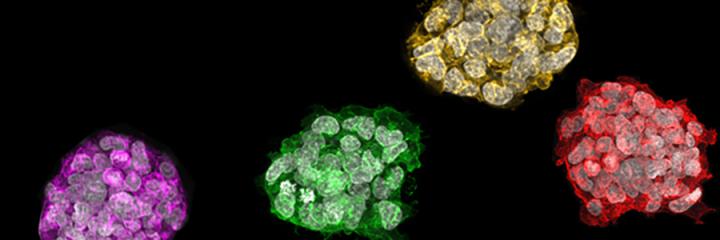
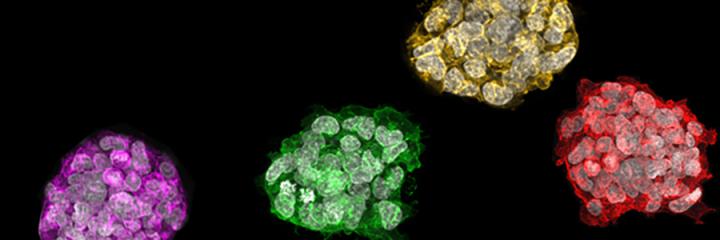
Credit: Dr. Sarita Panula, Karolinska Institute.
Researchers have identified a set of molecular 'flags' that are present on the surface of human stem cells. Stem cells are cells that have the potential to differentiate into a variety of specialised cells. By recognising the flags, researchers can now accurately track and investigate stem cells as the cells transition between different states. This approach has revealed new insights into the timing and coordination of the changes in gene activity and modifications to the DNA that occur as cells are reprogrammed from one state to another. These findings will open up new ways to improve the efficiency of cell reprogramming and to drive stem cells to become different types of specialised cell. These are important steps towards future applications in regenerative medicine, which would require the use of stem cells to create specialised cells, tissues or organs to maintain normal function.
Human embryonic stem cells can exist in two different states that are termed naïve (the ground state) and primed (the state before differentiation into a specialised cell). The two states differ in the set of genes they express, the pattern of modifications to their DNA, and whether an X chromosome in female cells is silenced or not. The two cell types can transition back and forth, but do so with very low efficiency. Until now, researchers have lacked the right tools to tell naïve and primed stem cells apart when they are mixed together, and this has hindered the investigation of the cells as they transition from one state to another.
Researchers at the Babraham Institute and the Karolinska Institute report today in Cell Stem Cell that they have identified a set of proteins (molecular 'flags') that are present on the surface of either naïve or primed human embryonic stem cells. By recognising the different flags with highly specific antibodies, the researchers could accurately distinguish between the two stem cell types. This strategy enabled the researchers to track and capture specific cell types as primed cells were reprogrammed to naïve cells, including at a much earlier time point and with better sensitivity than was previously possible.
Dr Peter Rugg-Gunn, group leader in the Babraham Institute's Epigenetics research programme and a senior co-author on the paper, explains: "One of the exciting aspects of this study is that we were able to capture naïve stem cells at a very early stage of their reprogramming – these early cells had switched on a subset of naïve-specific genes, but they had not yet fully matured. Further reprogramming was required to establish a mature naïve cell, and we could associate this process with the activation of the previously silent X chromosome and to the increased activity of other genes that define the naïve stem cell state. This is exciting because we can begin to draft a roadmap charting the molecular routes that are available to human stem cells as they navigate their way between the two states."
The researchers now intend to investigate how the different processes that regulate DNA modifications and gene activity might be linked, and which regions of the genome are initially resistant to reprogramming and why that might be. Ultimately, this knowledge will be useful for understanding the very early events in human development, which are reflected in the naïve and primed stem cell states, and could also lead to improved methods to reprogram human cells for stem cell-based therapies.
###
This research was funded through grants provided to Dr Peter Rugg-Gunn by the Wellcome Trust and the Medical Research Council (MRC). The Babraham Institute is strategically funded by the Biotechnology and Biological Sciences Research Council (BBSRC).
Media Contact
Dr. Katy Evans-Roberts
[email protected]
@babrahaminst
http://www.babraham.ac.uk/