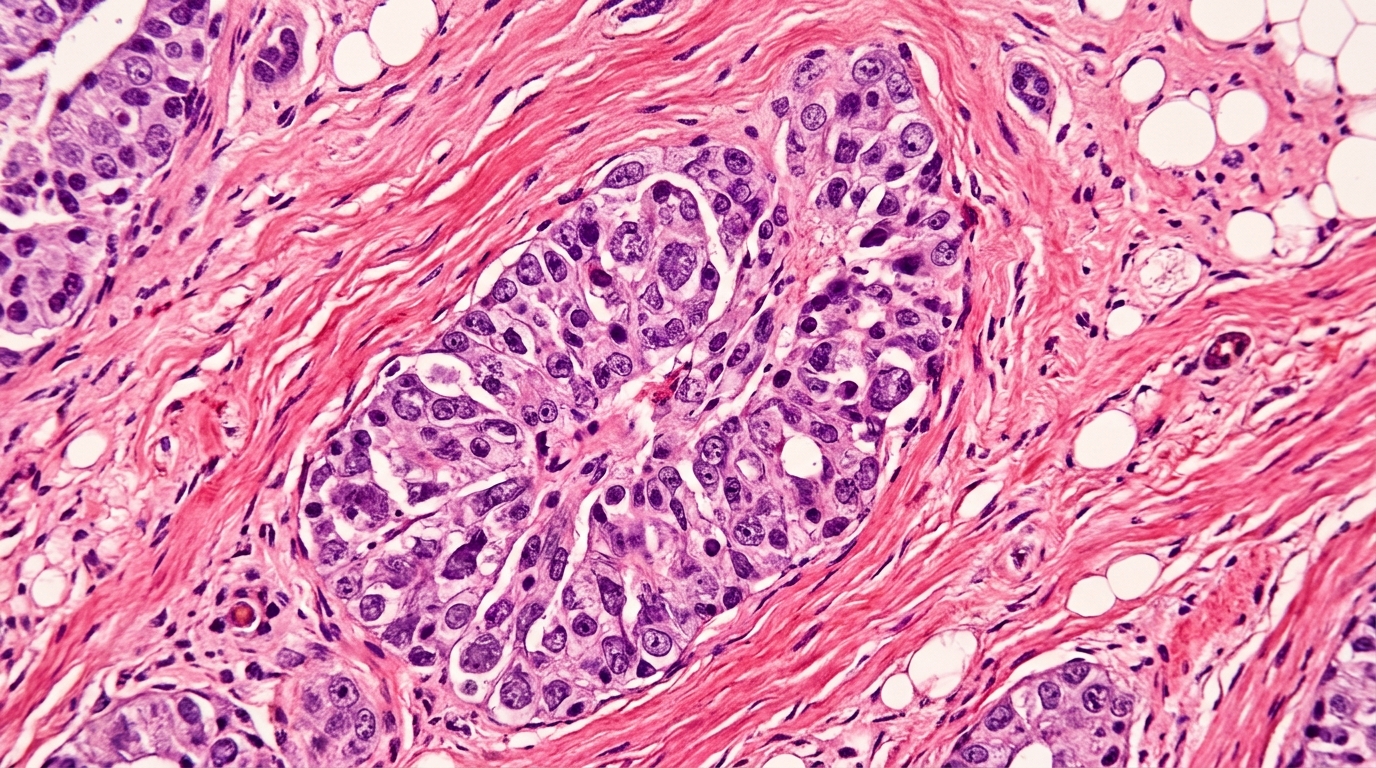
A comprehensive study has detailed the clinical features, treatment patterns, and prognostic outcomes of malignant adenomyoepithelioma of the breast, an exceptionally rare biphasic tumor. Because the disease exhibits uncertain biological behavior and clinical evidence has historically been limited, the investigation was designed to systematically clarify its presentation, pathological profile, and long-term survival trajectories.
The researchers compiled data across a wide multi-decade timeframe by systematically reviewing published medical literature from 2000 through 2026. This extensive literature search identified 48 eligible studies that collectively encompassed 86 patients. To strengthen the depth and diagnostic consistency of the investigation, the authors incorporated 11 additional patient cases treated directly at their own clinical institution, bringing the final analytical cohort to 97 patients.
From the combined records, the investigators extracted comprehensive variables covering patient demographics, primary tumor characteristics, detailed immunophenotypes, specific molecular alterations, surgical approaches, and ultimate clinical outcomes. The demographic assessment demonstrated a heavy female predominance, with the patient cohort consisting of 96 female patients and 1 male patient, exhibiting an overall median age of 58 years at diagnosis.
Immunophenotypic evaluations revealed that the tumors predominantly displayed a triple-negative receptor profile. Specifically, estrogen receptor expression was absent in 76.8 percent of evaluated cases, progesterone receptor was negative in 86.2 percent, and human epidermal growth factor receptor 2 testing was negative in 98.2 percent. In contrast, characteristic diagnostic markers showed remarkably high positivity rates across the sample, with P63 positive in 100 percent of cases, cytokeratin 5/6 positive in 97.0 percent, and cytokeratin 7 positive in 94.4 percent.
Molecular profiling conducted in the series identified recurrent genetic alterations that may carry therapeutic relevance for future patient management. Among the tested tumors, molecular alterations included HRAS mutations in four cases and PIK3CA mutations in three cases. The investigators noted that discovering these specific alterations provides potential therapeutic targets for this uncommon tumor type.
Surgical intervention served as the primary clinical treatment pattern across the cohort, split almost evenly between breast-conserving surgery in 48.7 percent of patients and complete mastectomy in 51.3 percent. Notably, axillary lymph node metastasis was rare among the evaluated cases. The authors emphasized that complete surgical resection remains the fundamental cornerstone of clinical management, while individualized adjuvant therapy should be considered based on high-risk pathological features.
Over a median clinical follow-up duration of 35 months, documented disease recurrence and survival outcomes demonstrated distinct clinical risks. Local recurrence occurred in 5.8 percent of patients, while distant hematogenous metastasis was documented in 16.3 percent, and overall mortality reached 5.8 percent. Given the rarity of the malignancy and the risks of recurrence, the authors concluded that further large-scale collaborative studies are necessary to establish standardized, evidence-based treatment regimens and robust prognostic models.
Subject of Research: Clinical, pathological, and prognostic characteristics of breast malignant adenomyoepithelioma
Article Title: Malignant adenomyoepithelioma of the breast: clinicopathological features, treatment patterns, and prognostic implications in 97 cases
Article References: Xian, K., Wang, X., Lu, Y., Li, Z., Zhang, W., Wang, Z., Kong, X., & Wang, J. (2026). Malignant adenomyoepithelioma of the breast: clinicopathological features, treatment patterns, and prognostic implications in 97 cases. Breast Cancer Research. https://doi.org/10.1186/s13058-026-02408-3
Image Credits: AI Generated
DOI: 10.1186/s13058-026-02408-3
Keywords: malignant adenomyoepithelioma, breast cancer, biphasic tumor, triple-negative breast cancer, estrogen receptor, progesterone receptor, HER-2, P63, CK7, CK5/6, HRAS mutations, PIK3CA mutations, breast-conserving surgery, mastectomy, axillary lymph node metastasis, local recurrence, hematogenous metastasis, prognostic implications
News Source: Nathaniel Bowman. (November 20, 2026). Rare Breast Malignancy Study Analyzes Clinical Features and Outcomes Across 97 Cases. Scienmag.