• HOME
  • NEWS
  • EXPLORE
    • CAREER
      • Companies
      • Jobs
    • EVENTS
    • iGEM
      • News
      • Team
    • PHOTOS
    • VIDEO
    • WIKI
  • BLOG
  • COMMUNITY
    • FACEBOOK
    • INSTAGRAM
    • TWITTER
Friday, August 28, 2026
BIOENGINEER.ORG
No Result
View All Result
  • Login
  • HOME
  • NEWS
  • EXPLORE
    • CAREER
      • Companies
      • Jobs
        • Lecturer
        • PhD Studentship
        • Postdoc
        • Research Assistant
    • EVENTS
    • iGEM
      • News
      • Team
    • PHOTOS
    • VIDEO
    • WIKI
  • BLOG
  • COMMUNITY
    • FACEBOOK
    • INSTAGRAM
    • TWITTER
  • HOME
  • NEWS
  • EXPLORE
    • CAREER
      • Companies
      • Jobs
        • Lecturer
        • PhD Studentship
        • Postdoc
        • Research Assistant
    • EVENTS
    • iGEM
      • News
      • Team
    • PHOTOS
    • VIDEO
    • WIKI
  • BLOG
  • COMMUNITY
    • FACEBOOK
    • INSTAGRAM
    • TWITTER
No Result
View All Result
Bioengineer.org
No Result
View All Result
Home NEWS Science News Health

Compound found in grapes, red wine may help prevent memory loss

Bioengineer by Bioengineer
February 5, 2015
in Health
Reading Time: 2 mins read
0
Share on FacebookShare on TwitterShare on LinkedinShare on RedditShare on Telegram

A compound found in common foods such as red grapes and peanuts may help prevent age-related decline in memory, according to new research published by a faculty member in the Texas A&M Health Science Center College of Medicine.
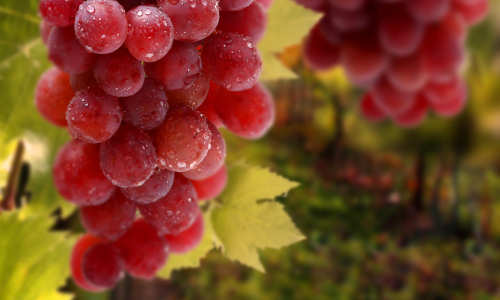
red grapes

Ashok K. Shetty, Ph.D., a professor in the Department of Molecular and Cellular Medicine and Director of Neurosciences at the Institute for Regenerative Medicine, has been studying the potential benefit of resveratrol, an antioxidant that is found in the skin of red grapes, as well as in red wine, peanuts and some berries.

Resveratrol has been widely touted for its potential to prevent heart disease, but Shetty and a team that includes other researchers from the health science center believe it also has positive effects on the hippocampus, an area of the brain that is critical to functions such as memory, learning and mood.
Because both humans and animals show a decline in cognitive capacity after middle age, the findings may have implications for treating memory loss in the elderly. Resveratrol may even be able to help people afflicted with severe neurodegenerative conditions such as Alzheimer’s disease.

In a study published online Jan. 28 in Scientific Reports, Shetty and his research team members reported that treatment with resveratrol had apparent benefits in terms of learning, memory and mood function in aged rats.

“The results of the study were striking,” Shetty said. “They indicated that for the control rats who did not receive resveratrol, spatial learning ability was largely maintained but ability to make new spatial memories significantly declined between 22 and 25 months. By contrast, both spatial learning and memory improved in the resveratrol-treated rats.”

Shetty said neurogenesis (the growth and development of neurons) approximately doubled in the rats given resveratrol compared to the control rats. The resveratrol-treated rats also had significantly improved microvasculature, indicating improved blood flow, and had a lower level of chronic inflammation in the hippocampus.

“The study provides novel evidence that resveratrol treatment in late middle age can help improve memory and mood function in old age,” Shetty said.

Story Source:

The above story is based on materials provided by Texas A&M University.

Share13Tweet8Share2ShareShareShare2

Related Posts

Clinical AI Generators and Reviewers Must Be Evaluated Together

August 28, 2026

Eye and Pupil Responses Reveal Alzheimer’s Profiles in Mild Cognitive Impairment

August 28, 2026

Aging Essential 8: Bridging Geroscience and the Public

August 28, 2026

BirthARssistant: Childbirth Training Simulator Combines HoloLens 2, 3D Printing and Electromagnetic Tracking

August 28, 2026
Please login to join discussion

POPULAR NEWS

  • How Differential Replication Helps Adapt Deployed AI Under Real-World Constraints

    29 shares
    Share 12 Tweet 7
  • ARFOR combines adaptive random forests and owl optimization for energy-efficient WSN-IoT routing

    29 shares
    Share 12 Tweet 7
  • New Co-Evolutionary Algorithm Tackles Sparse, Large-Scale Multi-Objective Optimization Problems

    29 shares
    Share 12 Tweet 7
  • Explainable Skin Lesion Classification Uses Lightweight Multiscale Fusion, Convolutional Transformers, and SegmentAware-TreeSHAP

    29 shares
    Share 12 Tweet 7

About

We bring you the latest biotechnology news from best research centers and universities around the world. Check our website.

Follow us

Recent News

How Differential Replication Helps Adapt Deployed AI Under Real-World Constraints

ARFOR combines adaptive random forests and owl optimization for energy-efficient WSN-IoT routing

New Co-Evolutionary Algorithm Tackles Sparse, Large-Scale Multi-Objective Optimization Problems

Subscribe to Blog via Email

Enter your email address to subscribe to this blog and receive notifications of new posts by email.

Join 85 other subscribers
  • Contact Us

Bioengineer.org © Copyright 2023 All Rights Reserved.

Welcome Back!

Login to your account below

Forgotten Password?

Retrieve your password

Please enter your username or email address to reset your password.

Log In
No Result
View All Result
  • Homepages
    • Home Page 1
    • Home Page 2
  • News
  • National
  • Business
  • Health
  • Lifestyle
  • Science

Bioengineer.org © Copyright 2023 All Rights Reserved.