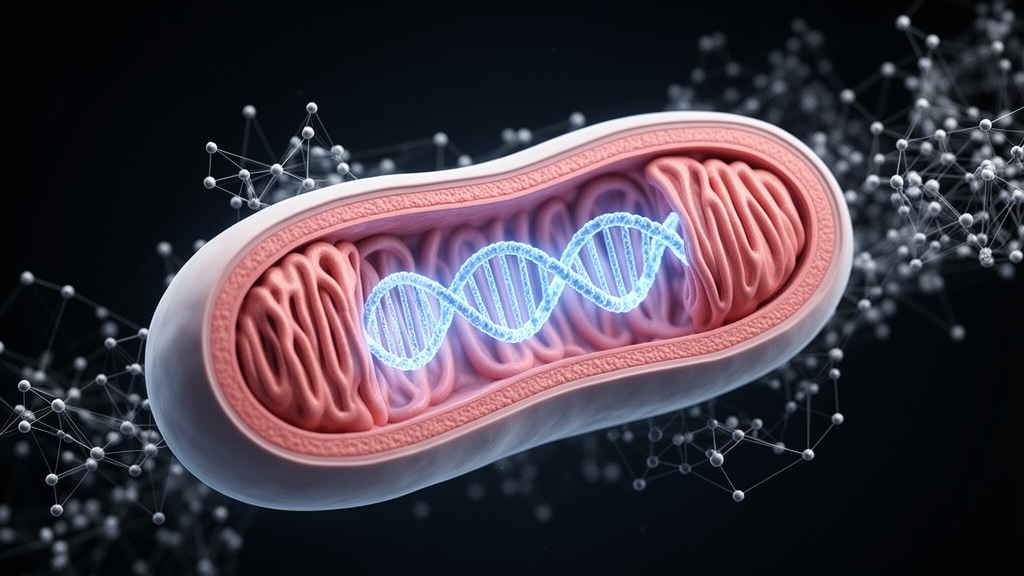
An integrative multi-omics investigation prioritizing brain-expressed mitochondrial genes has identified putative causal genes linked to schizophrenia and cross-disorder psychiatric risk. While mitochondrial dysfunction is increasingly implicated in psychiatric disorders, the regulatory mechanisms connecting brain-expressed mitochondrial genes to disease risk have remained unclear. To address this problem, researchers analyzed brain-derived quantitative trait locus datasets spanning DNA methylation, gene expression, and protein abundance. The study evaluated genetically predicted associations between mitochondria-related molecular traits and schizophrenia, bipolar disorder, major depressive disorder, cross-disorder phenotypes, and clinical subtypes.
The research team employed summary-data-based Mendelian randomization, heterogeneity in dependent instruments testing, and Bayesian colocalization analyses to evaluate potential causal candidates. These methodological steps fed into a study-specific three-tier prioritization framework designed to categorize putative causal genes systematically. Within this framework, ACADVL and SLC25A24 were prioritized as Tier 1 genes for schizophrenia. COX11 achieved classification as a Tier 2 gene for schizophrenia, while DLST, ENDOG, and PDF were categorized as Tier 3 genes for the disorder. Furthermore, ENDOG and PDF were also prioritized for the cross-disorder phenotype uniting bipolar disorder and schizophrenia.
Further summary-data-based Mendelian randomization analyses performed across molecular layers provided additional insight into regulatory dynamics. These cross-layer evaluations supported ENDOG as a methylation-linked regulatory signal. In contrast, examinations of expression-to-protein associations for COX11 and SLC25A24 yielded mixed statistical evidence: while both genes showed Bayesian colocalization support, neither met the formal heterogeneity in dependent instruments criterion. Single-cell analyses subsequently suggested context-dependent effects for ENDOG across diverse immune cell types, illustrating complex cell-specific behaviors among prioritized psychiatric candidate genes.
Taken together, the multi-omics findings support the widespread involvement of mitochondria-related genes across multiple molecular layers in major psychiatric disorders. By integrating quantitative trait loci from brain DNA methylation, gene expression, and protein abundance, the authors highlighted candidate genes with genetic support for psychiatric disease liability. However, the researchers noted that these findings reflect genetically predicted associations and computational prioritization rather than direct clinical interventions. Consequently, the authors emphasized that the identified candidate genes warrant future experimental validation to confirm their mechanistic roles and therapeutic relevance in psychiatric illness.
Subject of Research: Prioritization of mitochondria-related genes in psychiatric disorders using brain multi-omics
Article Title: Brain-derived multi-omics prioritization of mitochondria-related genes in schizophrenia, bipolar disorder, and major depressive disorder
Article References: Li, N., Chen, S., Wang, J., & Li, T. (2026). Brain-derived multi-omics prioritization of mitochondria-related genes in schizophrenia, bipolar disorder, and major depressive disorder. Translational Psychiatry, 16(1), Article 661. https://doi.org/10.1038/s41398-026-04586-2
Image Credits: AI Generated
DOI: 10.1038/s41398-026-04586-2
Keywords: schizophrenia, bipolar disorder, major depressive disorder, mitochondrial genes, multi-omics, DNA methylation, gene expression, protein abundance, quantitative trait loci, Mendelian randomization, HEIDI testing, Bayesian colocalization, ACADVL, SLC25A24, COX11, ENDOG, PDF gene, cross-disorder phenotypes
News Source: Juliet Wilcox. (November 20, 2026). Multi-Omics Study Prioritizes Key Mitochondrial Genes Linked to Schizophrenia Risk. Scienmag.